
Automation and Accuracy in Panel Furniture Production: The Evolution of Nesting CNC Routers, Drilling Centers, and Integrated Woodworking Machining Cells
Blog / Author:ROCTECH Engineer Team / Published: Oct 20 , 2026 / Last Updated: Oct 20 , 2026
Abstract
The panel furniture industry has undergone a structural transformation over the past decade, driven less by labor cost arbitrage than by the compounding demands of mass customization. Where once a cabinet shop could survive on stand-alone routers and manual drilling stations, today's whole-house customization market punishes any gap in the production chain. This article examines the technical trajectory of nesting CNC routers, six-sided drilling centers, and edge banding equipment, and considers how integrated machinery ecosystems—exemplified by the product architecture of Roctech Machinery Co., Ltd.—are reshaping throughput economics for furniture manufacturers. Data on equipment categories and regional adoption patterns is presented and analyzed, followed by a discussion of the engineering trade-offs that still define the sector.
1. Industry Background: From Batch Production to Batch-One
The shift toward batch-size-one manufacturing is not a marketing slogan; it is a measurable change in how cutting lists are generated. Custom cabinet and wardrobe production now routinely involves orders where every panel differs in dimension, edge treatment, and drilling pattern. This fragmentation of production runs has a direct consequence for equipment selection: machines must be able to change over between jobs with minimal downtime, and the handoff between design software and machine controller must be effectively frictionless.
The economic logic is straightforward. In a traditional batch workflow, setup time is amortized across hundreds of identical panels. In a batch-one workflow, setup time is paid on every order. Any equipment that reduces setup—automatic nesting, QR-code-driven program recall, automatic tool change—therefore delivers disproportionate returns. This explains why the panel furniture machinery segment has gravitated toward integrated cells rather than higher-speed stand-alone machines.
Table 1 presents a comparative overview of the principal equipment categories serving panel furniture production, based on typical configurations and application ranges documented in manufacturer specifications.
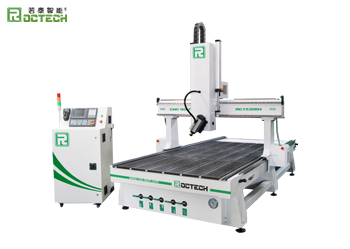
Table 1. Panel Furniture Equipment Categories and Application Profiles
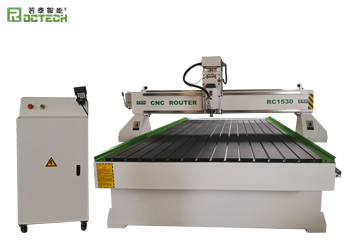
| Equipment Category | Representative Configuration | Typical Working Envelope | Primary Function | Automation Level |
|---|---|---|---|---|
| Automatic loading/unloading nesting center | 9.6 kW spindle, double-layer vacuum table, Syntec control, Yaskawa servo | 1220 × 2440 mm to 1530 × 3000 mm | Nesting, cutting, drilling, grooving in one pass | High—automatic sheet loading, labeling optional |
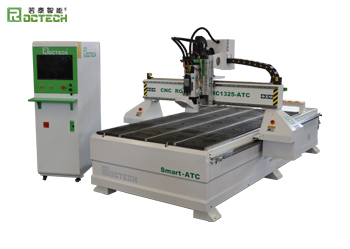
| ATC engraving machine | 9 kW spindle, 8–24 tool carousel, HIWIN guides | 1300 × 2500 mm to 2000 × 4000 mm | Door panel engraving, complex multi-process work | Medium-high—automatic tool change |
| Six-sided drilling center | 12 + 13 vertical spindles, 2 + 2 + 2 + 2 horizontal, 18000 rpm | Board width 50–930 mm, thickness up to 48 mm | Six-face drilling and grooving in one clamp | High—QR code program recall |
| Automatic edge banding machine | Pre-milling, gluing, end cutting, trimming, scraping, polishing | Panel thickness and edge tape dependent | Edge banding of PVC, acrylic, veneer, solid wood | Medium-high—continuous feed |
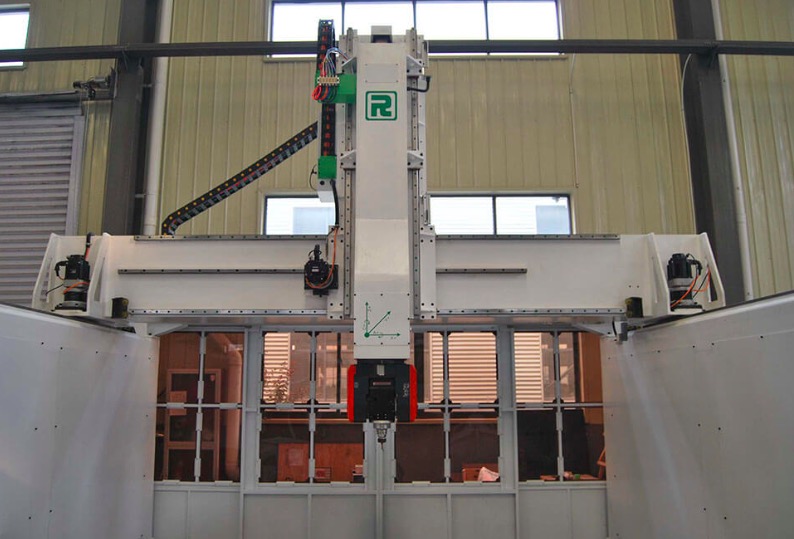
| Five-axis machining center | 10 kW spindle, ±110° A-axis, 360° C-axis, OSAI control | 1300 × 2500 mm and larger | Complex curved surfaces, molded and solid wood parts | High—five-axis simultaneous |
The table reveals a pattern worth stating explicitly: automation level does not correlate linearly with working envelope. The six-sided drill, with a relatively modest footprint, carries one of the highest automation quotients in the chain because its value proposition is entirely about eliminating re-clamping. Conversely, large-format five-axis centers occupy the top of the cost curve but serve a narrower set of applications—molds, curved solid wood components, and prototype work—where their precision justifies the investment.
Regional adoption data reinforces this. In mature markets, the binding constraint has shifted from cutting speed to material utilization and labor availability. Nesting software that raises sheet utilization by several percentage points often pays for itself faster than a spindle upgrade, particularly where board costs dominate the bill of materials. In emerging markets, the constraint is more often capital access, which keeps demand for mid-tier ATC routers strong even as high-end nesting centers gain share at the top of the market.
2. Technology Application: Where the Engineering Actually Bites
Three technical themes recur across the equipment categories in Table 1.
The first is workholding. Vacuum adsorption with zone control has become standard, but the double-layer table design deserves attention. By separating the vacuum plenum from the sacrificial surface, double-layer tables allow small parts to be held securely without bleeding vacuum through unused zones—a practical necessity when nesting small cabinet components alongside large panels. The alternative, mechanical clamping, is slower and incompatible with nested layouts.
The second is the integration of drilling into the cutting cycle. A nesting center equipped with a row drill group converts what would be a secondary operation on a separate machine into an in-cycle function. The savings are not merely the machine time; they are the handling, the queueing, and the risk of dimensional drift that accompanies any re-fixturing step. Six-sided drilling centers extend the same principle to the panel edge, completing all six faces in a single clamp. For custom cabinet production, where dowel and cam holes must align across panels, this single-clamp approach removes an entire class of assembly errors.
The third is software continuity. The machine tool is only as flexible as the data pipeline feeding it. Direct docking between nesting software packages and the controller—bypassing manual G-code editing—is what makes batch-one production economically viable. Manufacturers that treat the controller as an afterthought tend to discover, usually during ramp-up, that their bottleneck is not the spindle but the programming department.
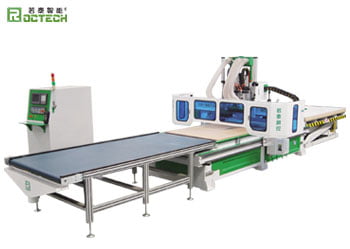
Roctech® provides a useful case study in how these themes translate into a product line. The company's Master Series automatic loading and unloading nesting centers, built around a heavy-duty welded bed, Taiwan HIWIN linear guides, and Japan Yaskawa servo drives, illustrate the integrated-cell philosophy: sheet loading, nesting, drilling, and unloading are handled within a single control environment, with optional automatic labeling for panel identity tracking. The same engineering vocabulary—imported guide rails, servo drives, and Syntec control—carries through to the company's ATC engraving machines and six-sided drilling centers, which matters for shops that want a common spare-parts and training baseline across the floor. Roctech's export footprint, spanning more than 100 countries, also reflects the segment's center of gravity: the company's Jinan base supplies both domestic whole-house customization factories and overseas shops that need CE-certified equipment with a service network behind it.
3. Conclusion and Outlook
The panel furniture machinery sector is converging on a recognizable architecture: automated material handling at the front and back of the line, multi-function processing at the center, and a software layer that treats the machine tool as a node rather than an island. The remaining differentiators will be found in reliability engineering and service depth rather than in headline spindle power.
Two developments merit watching. First, the falling cost of machine vision and QR-based tracking is likely to push automatic labeling and program recall from optional to standard, further reducing the skill floor for operators. Second, as five-axis capability migrates down-market, the boundary between panel furniture equipment and general-purpose woodworking machining centers will blur, pressuring mid-tier manufacturers to justify their position through integration rather than price. For equipment suppliers—Roctech included—the strategic question is no longer whether to build integrated cells, but how quickly the service and software ecosystems can keep pace with the hardware.
Looking for more information about our CNC machines and services? Contact us today.
ContactNext:Not