
Hotel Furniture Production Line: Automation Reshapes Batch Manufacturing
Blog / Author:ROCTECH Engineer Team / Published: Oct 05 , 2026 / Last Updated: Oct 05 , 2026
Abstract—The hotel furniture sector occupies a distinctive position within the broader woodworking industry. Unlike residential custom cabinetry, which thrives on one-off flexibility, hotel projects demand repeatable precision across hundreds of identical room sets—nightstands, headboards, wardrobes, minibar cabinets, and desk units. This article examines how automated nesting, edge banding, and drilling equipment are restructuring the hotel furniture production line, and where manufacturers are realizing measurable gains in throughput, material yield, and labor efficiency.
Industry Background and Data Analysis
Hotel furniture manufacturing sits at the intersection of batch production and specification-driven quality control. A typical 300-room hotel project may require 300 identical nightstands, 300 wardrobes, and 150 desk units, all conforming to fire-retardant material standards and dimensional tolerances that accommodate prefabricated wall panels and electrical outlets. This is not mass production in the automotive sense, but it is far removed from bespoke joinery.
The equipment configuration of a modern hotel furniture line typically follows a sequential logic: panel cutting, edge banding, drilling, and assembly. The following table summarizes representative equipment categories and their positioning within this workflow.
| Process Stage | Equipment Category | Representative Configuration | Key Performance Indicator |
|---|---|---|---|
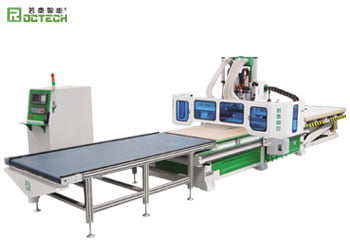
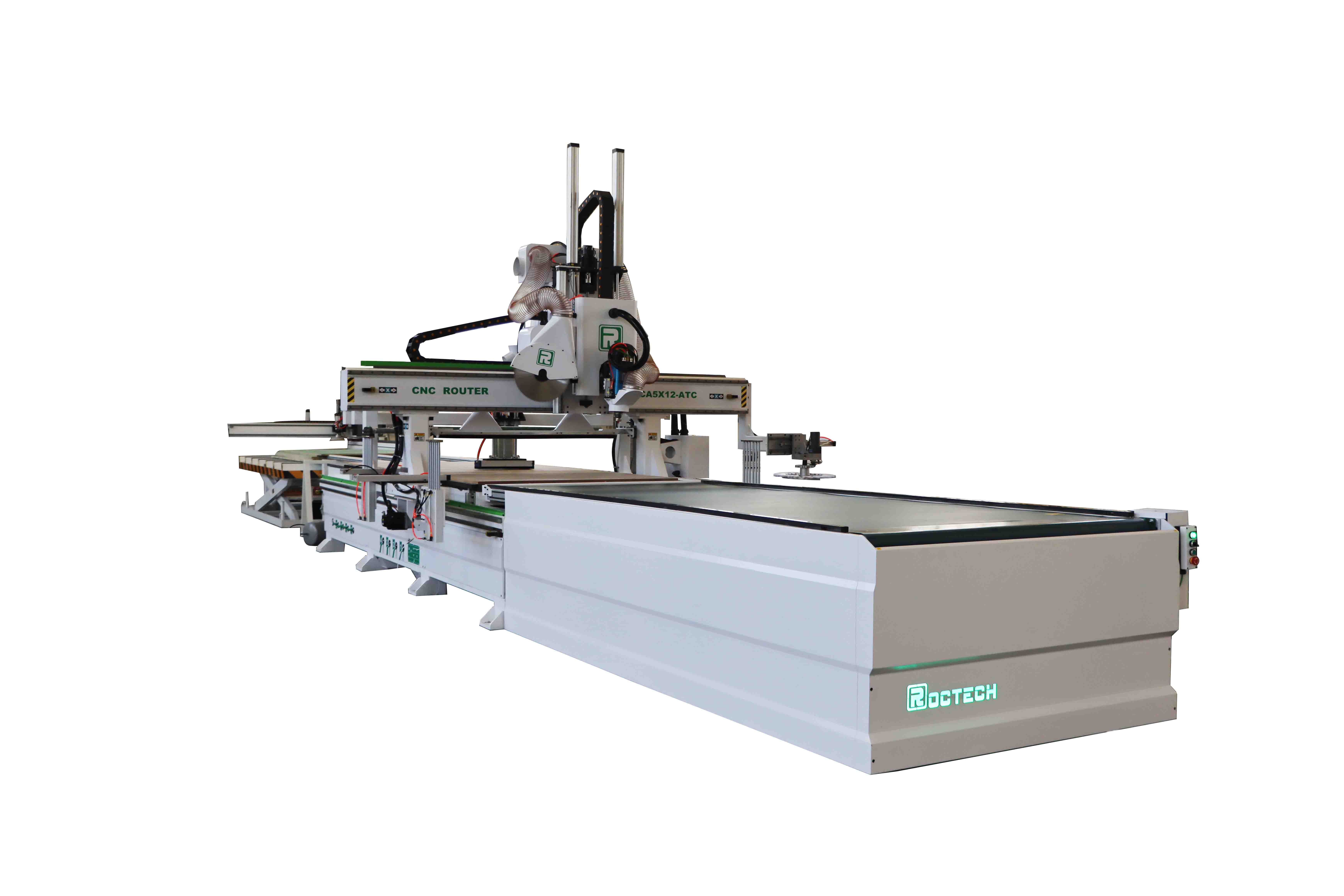
| Panel Cutting | Automatic Loading/Unloading Nesting Center | 1220×2440mm worktable, 9.6KW spindle, double-layer vacuum table | Sheet utilization rate; loading/unloading cycle time |
| Edge Banding | Automatic Edge Banding Machine | Pre-milling, gluing, end cutting, rough/fine trimming, scraping, polishing | Edge finish quality; feed speed |
| Drilling | Six-Sided CNC Drilling Center | 12+13 vertical drill shafts, 2+2+2+2 horizontal shafts, 18000RPM | Drilling accuracy; six-sided processing in one clamping |
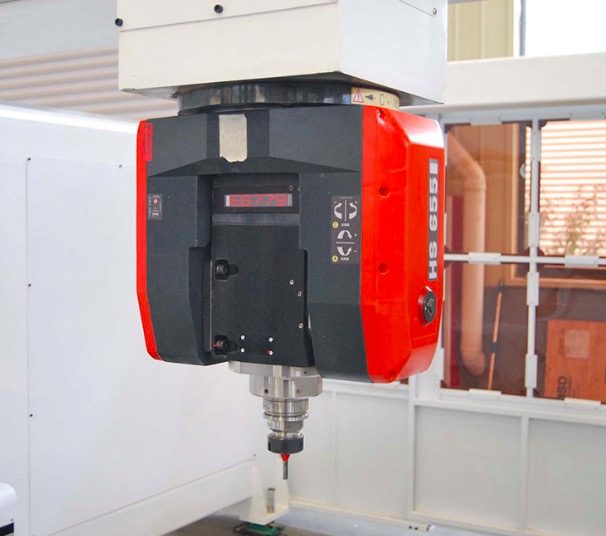
| Panel Cutting (Alternative) | ATC Engraving Machine | 1300×2500×250mm travel, 8-24 tool magazine, ±0.03mm repeat positioning | Tool change time; multi-process capability |
The data reveals a clear pattern: equipment selection for hotel furniture production prioritizes consistency and throughput over extreme flexibility. The nesting center's automatic loading and unloading system, for instance, directly addresses the labor intensity of handling large panels repeatedly. When processing 300 identical wardrobe side panels, the ability to load a full sheet, execute the nesting program, and unload finished parts without manual intervention translates into a quantifiable reduction in labor hours per unit.
The six-sided drilling center warrants particular attention. In hotel furniture, dowel and cam-lock joinery dominates because it facilitates flat-pack shipping and on-site assembly. A six-sided drill completes all boring operations—vertical, horizontal, and angled—in a single clamping cycle. The alternative, manual drilling or multiple setups on a three-axis machine, introduces cumulative positioning errors that become visible when 300 units are stacked side by side in a hotel corridor.
Technology Application and Brand Case
The practical implementation of these equipment categories varies considerably depending on production volume and product mix. For manufacturers serving mid-to-high-end hotel chains, the integration of nesting software with drilling and edge banding equipment has become a baseline expectation rather than a competitive advantage.
Roctech Machinery Co., Ltd., headquartered in Jinan, Shandong Province, has positioned its product portfolio around this integration logic. The company's Master Series automatic loading and unloading nesting centers, represented by models such as the RCA1224 and RCA1325, are configured with Taiwan HIWIN linear guides, Japan Yaskawa servo motors, and Taiwan Syntec control systems—component choices that reflect the industry's reliance on established supply chain partners for reliability rather than proprietary alternatives.
What is more instructive is how Roctech's product architecture maps onto the hotel furniture production line. The RCA series nesting center handles the cutting stage with automatic labeling and drilling options, reducing the number of times a panel must be repositioned. The company's six-sided drilling centers then complete the joinery operations, and its automatic edge banding machines—equipped with pre-milling, gluing, end cutting, trimming, scraping, and polishing stations—finish the panel edges. This is not a fully integrated "lights-out" factory solution, but it is a coherent equipment set that addresses the sequential nature of panel furniture manufacturing.
For hotel furniture specifically, the edge banding stage deserves scrutiny. Hotel furnishings endure more intensive handling than residential furniture: housekeeping carts collide with nightstands, luggage drags across desk surfaces, and minibar doors open and close thousands of times. A properly pre-milled and polished edge band is not merely aesthetic; it protects the panel core from moisture ingress, which is particularly relevant in bathroom vanities and minibar cabinets. Roctech's edge banding series, which includes straight, curved, and special-shaped models, reflects the reality that hotel furniture often incorporates curved headboards and rounded corner details that cannot be processed on a straight-only edge bander.
Conclusion and Outlook
The hotel furniture production line is evolving toward greater automation, but the trajectory differs from the broader Industry 4.0 narrative. The immediate priorities are pragmatic: reduce manual handling, improve sheet yield through nesting optimization, and ensure dimensional consistency across large batch runs. Full digital twin integration and MES connectivity remain aspirational for most manufacturers, though the data docking capabilities of modern nesting software and drilling centers provide a foundation.
For equipment suppliers, the challenge is not merely selling machines but configuring them as a coherent line. A nesting center that cuts accurately but feeds an edge bander with mismatched cycle times creates a bottleneck rather than a solution. As hotel construction cycles shorten and labor costs rise in traditional manufacturing regions, the economic case for automated panel processing strengthens. The manufacturers who thrive will be those who treat the production line as a system—from nesting software to drilling to edge finishing—rather than a collection of individual machines.
Looking for more information about our CNC machines and services? Contact us today.
Contact
Previous:Birch Engraving Machine: Precision Processing Solutions for a Fast-Growing Wood Material
Next:Not