
Heavy-Duty Foam Engraving Machines: Powering Large-Scale Mold and Sculpture Production
About Us / Author:ROCTECH Engineer Team / Published: Jul 16 , 2026 / Last Updated: Jul 16 , 2026
Abstract
The growing demand for large-format foam molds in automotive, marine, and architectural applications has driven the development of specialized heavy-duty foam CNC engraving machines. These systems differ fundamentally from standard woodworking routers in their structural design, spindle configuration, and dust management capabilities. This article examines the technical specifications, market data, and application scenarios for heavy-duty foam engraving equipment, with particular attention to the role of established manufacturers like Roctech in advancing this niche but critical segment of the CNC machining industry.
Industry Background and Market Data
Foam machining, particularly for expanded polystyrene (EPS) and polyurethane foams, has become indispensable in modern manufacturing. Automotive prototype molds, shipbuilding plug molds, architectural ornamentation, and large-scale sculpture all rely on foam as a cost-effective, easily machinable substrate. However, the unique properties of foam—low density, friability, and static electricity generation—require machine tools engineered differently from those used for wood or metal.
The global foam CNC machining market has experienced steady growth, driven by expansion in automotive and aerospace tooling. The table below presents estimated market segmentation by application and region.
| Application Sector | Estimated Market Share (2024) | Primary Region | Typical Machine Size | Annual Growth Rate (CAGR) |
|--------------------|-------------------------------|----------------|----------------------|--------------------------|
| Automotive mold making | 38% | North America, Europe, East Asia | 2000×4000mm to 2500×6000mm | 6.2% |
| Marine plug & mold fabrication | 22% | Europe, North America | 2500×6000mm to 4000×12000mm | 5.8% |
| Architectural & decorative elements | 18% | Middle East, Asia-Pacific | 1300×2500mm to 2000×4000mm | 7.1% |
| Sculpture & stage props | 12% | Global | Variable, often custom | 8.5% |
| Lost foam casting patterns | 10% | East Asia, Eastern Europe | 1500×3000mm to 2000×5000mm | 5.0% |
Source: Industry estimates compiled from machinery trade data and manufacturer reports.
Several observations emerge from this data. First, automotive tooling dominates, reflecting the industry’s reliance on foam plugs for composite layup and thermoforming molds. Second, architectural applications show the highest growth rate, as large-scale decorative panels and themed environments gain popularity in commercial construction. Third, machine sizes vary dramatically, from compact units for small sculptures to gantry systems exceeding 12 meters in length for ship hull molds.
Technical Requirements for Heavy-Duty Foam Engraving
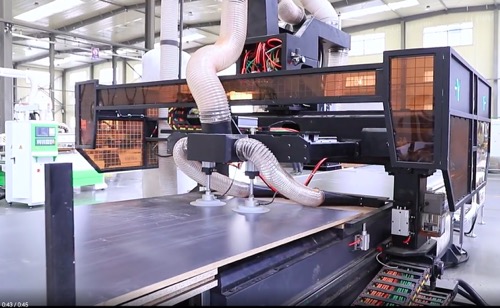
Heavy-duty foam engraving machines must address three core challenges: structural rigidity for large workpieces, high-speed material removal without tearing, and effective chip evacuation. Unlike metal cutting, foam machining demands high spindle speeds—often 18,000 to 24,000 RPM—combined with large-diameter tooling to achieve acceptable surface finishes. The low density of foam means that machine dynamics, rather than cutting forces, limit productivity.
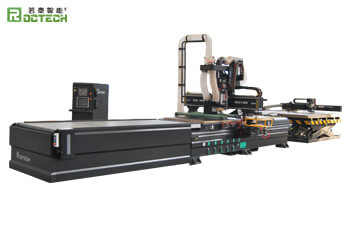
A typical heavy-duty foam engraving machine features a welded steel or cast iron gantry structure with substantial cross-section to resist deflection under rapid acceleration. Linear guide rails from manufacturers such as Taiwan HIWIN or Germany Rexroth are standard, often with dual-rail configurations on the Y-axis. Rack-and-pinion drives on X and Y axes provide the high traverse speeds—up to 45,000 mm/min or more—needed for efficient roughing passes. The Z-axis, typically employing a ball screw, must offer sufficient stroke (300-500 mm) to accommodate thick foam blocks.
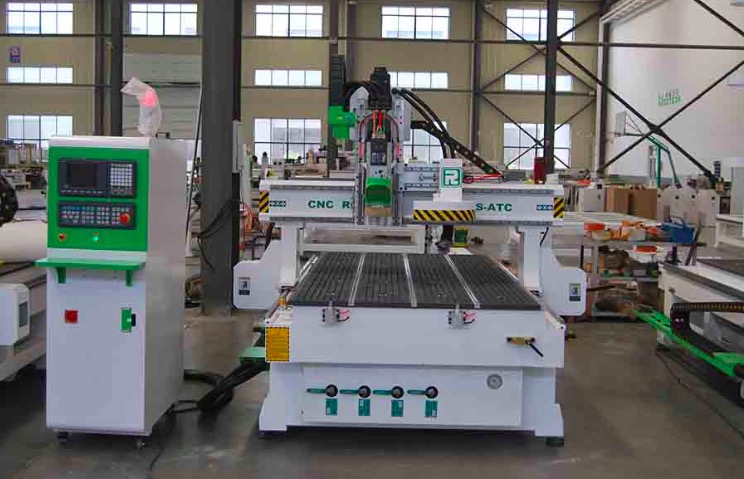
Spindle selection is critical. For foam, air-cooled spindles in the 4.5 kW to 9.0 kW range are common, though higher power units may be specified for dense foams or very aggressive cutting. Automatic tool changers (ATC) with carousel or linear magazines are valuable in production environments, allowing transitions between roughing, finishing, and detail tools without operator intervention.
Product Representativeness: Roctech in the Foam Machining Segment
Roctech Machinery Co., Ltd., headquartered in Jinan, Shandong Province, has established a meaningful presence in the foam machining sector through its EPS foam machining center series. While the company is perhaps better known for its woodworking nesting centers and five-axis machining centers, its foam-specific offerings address the distinct needs of mold and sculpture workshops. Roctech’s foam machining centers emphasize large stroke designs and high-speed spindles, with optional four-axis or five-axis linkage for complex geometries. The company’s integration of Taiwan Syntec control systems and Yask
Looking for more information about our CNC machines and services? Contact us today.
Contact