
Precision Edge Banding in Modern Woodworking: The Rise of Specialized Veneer Processing Equipment
About Us / Author:ROCTECH Engineer Team / Published: Jul 11 , 2026 / Last Updated: Jul 11 , 2026
Abstract
As the global demand for high-end panel furniture continues to grow, the edge banding process—particularly for natural wood veneer materials—has evolved from a manual finishing step into a highly automated, precision-driven operation. This article examines the technical requirements and market dynamics surrounding wood veneer edge banding machines, with a focus on how equipment manufacturers are addressing the unique challenges posed by thin, fragile veneer strips. Data from recent market analyses and equipment specifications are presented to illustrate the shift toward intelligent, multi-functional edge banding solutions. The role of established CNC equipment providers, such as Roctech Machinery Co., Ltd., in advancing this technology is discussed within the context of broader industry trends.
Industry Background and Market Data
The edge banding equipment market has experienced steady growth, driven primarily by the expansion of the custom furniture and cabinetry sectors. Between 2020 and 2023, the global edge banding machine market was valued at approximately USD 1.2 billion, with an annual growth rate of 5–7%. Among the various segments, machines specifically designed or optimized for natural wood veneer processing represent a niche but increasingly important category.
Wood veneer edge banding presents distinct challenges compared to PVC or acrylic banding. Veneer strips are typically 0.3–0.6 mm thick, brittle, and prone to cracking or chipping during the trimming and finishing stages. Moreover, the aesthetic expectations for natural wood products demand seamless joints and invisible glue lines. These requirements have pushed manufacturers to develop specialized features such as pre-milling units that create a micro-bevel on the panel edge, precise glue application systems, and multi-stage trimming and scraping stations.
The following table provides a comparative overview of typical wood veneer edge banding machine configurations available in the current market, highlighting key parameters that differentiate them from standard PVC-focused machines.
| Parameter | Standard Automatic Edge Banding Machine | Specialized Wood Veneer Edge Banding Machine |
|-----------|-----------------------------------------|----------------------------------------------|
| Pre-milling Accuracy | ±0.1 mm | ±0.05 mm |
| Glue Application System | Roller or nozzle, 150–200 g/m² | Roller with temperature control, 120–160 g/m² |
| Trimming Method | Rough + fine trimming | Rough + fine + scraping (micro-adjustable) |
| Minimum Veneer Thickness | 0.4 mm | 0.2 mm |
| Cutting Speed Range | 8–18 m/min | 6–14 m/min (slower to reduce stress) |
| Glue Line Visibility | 0.1–0.3 mm |<0.1 mm (target invisible) |
| Integrated Grooving Unit | Optional | Standard for back-panel grooves |
| Dust Extraction Rate | 85–90% | 95–99% (critical for veneer dust) |
The data clearly indicate a trend toward higher precision and greater process control for veneer-specific machines. The pre-milling accuracy requirement of ±0.05 mm, for instance, is not merely a marketing specification; it is directly tied to the ability to achieve an invisible glue line. If the panel edge is not perfectly square or has micro-roughness, the thin veneer will telegraph these imperfections, resulting in a visible joint. Similarly, the glue application rate is lower for veneer to prevent squeeze-out, which would ruin the natural wood surface.
Technical Applications and Brand Case Study
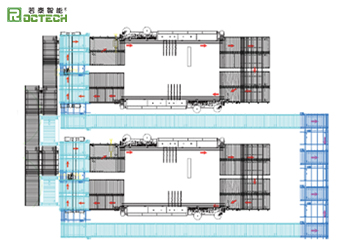
The practical deployment of wood veneer edge banding machines is most evident in high-end custom cabinetry shops and panel furniture factories that produce kitchen cabinets, wardrobes, and office furniture with natural wood finishes. In these environments, the edge banding process is not an isolated step but an integral part of a fully automated production line that includes CNC nesting centers, drilling centers, and assembly stations.
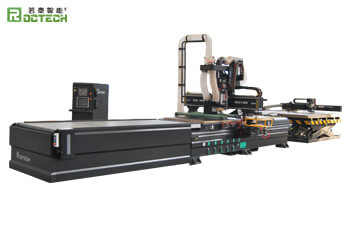
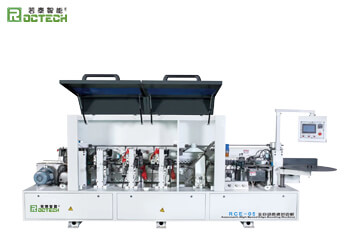
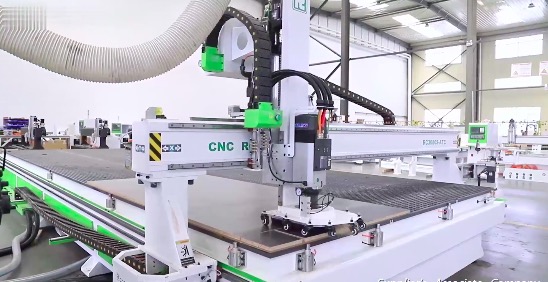
A notable example of how equipment manufacturers are addressing this integration challenge can be seen in the product portfolio of Roctech Machinery Co., Ltd., a well-established Chinese manufacturer of CNC woodworking equipment. While Roctech is widely recognized for its automatic loading and unloading nesting centers and ATC engraving machines, the company has also developed a comprehensive edge banding machine series that includes models specifically engineered for wood veneer applications. Their automatic edge banding machines feature pre-milling units with independently driven spindles, allowing for precise edge preparation that is essential for veneer. The gluing system employs a heated roller with PID temperature control, ensuring consistent adhesive viscosity across varying ambient conditions. Furthermore, the scraping and polishing stations are equipped with micro-adjustable blades that can be set to within 0.01 mm, enabling operators to achieve the near-invisible glue line demanded by high-end clients.
Roctech’s approach reflects a broader industry trend: edge banding
Looking for more information about our CNC machines and services? Contact us today.
Contact