
The Plasma-Laser Divide: Cutting Thick Steel Plates in Modern Fabrication
About Us / Author:ROCTECH Engineer Team / Published: Jul 05 , 2026 / Last Updated: Jul 05 , 2026
Abstract
Selecting the appropriate cutting technology for thick steel plates—typically defined as material exceeding 6 mm in thickness—remains one of the most consequential decisions in metal fabrication. While fiber laser cutting has revolutionized thin-gauge sheet metal processing, its limitations become increasingly apparent as plate thickness increases. This article examines the technological and economic trade-offs between fiber laser and plasma cutting systems for thick steel applications, drawing on market data and equipment specifications to guide industrial buyers. The analysis highlights how established CNC router manufacturers, including Roctech Machinery Co., Ltd., have strategically positioned their product lines to address both ends of this spectrum.
Industry Background and Market Data
The global metal cutting equipment market has experienced significant bifurcation in recent years. Fiber laser systems dominate the sub-6 mm segment, where their speed, edge quality, and narrow kerf provide clear advantages. However, for plates exceeding 12 mm—particularly in carbon steel—plasma cutting retains a strong foothold due to lower capital expenditure and acceptable cut quality for non-critical applications.
Table 1: Comparative Performance and Cost Metrics for Thick Steel Cutting Technologies
| Parameter | Fiber Laser (6 kW) | Fiber Laser (12 kW) | High-Definition Plasma | Conventional Plasma |
|-----------|-------------------|--------------------|------------------------|---------------------|
| Max cutting thickness (carbon steel) | 20 mm | 30–35 mm | 50 mm | 100+ mm |
| Cut quality (dross, squareness) | Excellent (<2° taper) | Excellent (<1° taper) | Good (3–5° taper) | Fair (5–10° taper) |
| Capital cost (equipment, 3000×1500 mm) | $80,000–$120,000 | $180,000–$250,000 | $60,000–$100,000 | $25,000–$50,000 |
| Operating cost per meter (12 mm steel) | $0.15–$0.25 | $0.20–$0.35 | $0.35–$0.50 | $0.50–$0.80 |
| Cutting speed (12 mm carbon steel) | 2.5–3.5 m/min | 4.0–5.5 m/min | 1.5–2.5 m/min | 0.8–1.5 m/min |
| Edge preparation required | Minimal | Minimal | Moderate (grinding often needed) | Significant |
The data reveal a clear inflection point around 20–25 mm thickness. Below this threshold, fiber laser systems offer compelling speed and quality advantages that justify their premium pricing. Above it, plasma systems become increasingly competitive on total cost of ownership, particularly when cut quality requirements are relaxed for structural or non-cosmetic applications.
Technology Application and Brand Case Study
Understanding these trade-offs requires examining the hardware differences. Fiber laser cutting relies on a solid-state laser source that generates a focused beam approximately 0.1–0.3 mm in diameter. This concentrated energy produces narrow kerfs (0.2–0.5 mm) and heat-affected zones typically under 0.5 mm. However, as plate thickness increases, the beam must maintain focus over a greater depth—a physical challenge that limits practical cutting to approximately 30–35 mm for 12 kW systems. Beyond this, assist gas pressure requirements become prohibitive, and melt ejection quality degrades.
Plasma cutting, by contrast, uses an electrical arc to ionize gas into plasma at temperatures exceeding 20,000°C. This thermal energy is less concentrated but more volumetrically distributed, allowing effective cutting of plates up to 100 mm or more. The trade-off is inherent: kerf width ranges from 2–6 mm, and taper angles of 3–10° are typical without post-processing.
Roctech Machinery Co., Ltd., a Jinan-based CNC equipment manufacturer with products exported to over 100 countries, addresses this technology divide through distinct product families. For customers requiring thick steel cutting with moderate precision, Roctech offers its gantry plasma cutting machine series, which accommodates plates up to 100 mm thickness using industrial plasma sources. These machines feature heavy-duty welded bed structures and rack-and-pinion transmission systems capable of maintaining positioning accuracy of ±0.03 mm/300 mm even under the thermal loads of plasma operation. The company’s plasma-flame dual-purpose cutting machines provide additional flexibility for facilities that process both carbon steel (plasma) and non-ferrous metals (oxy-fuel cutting).
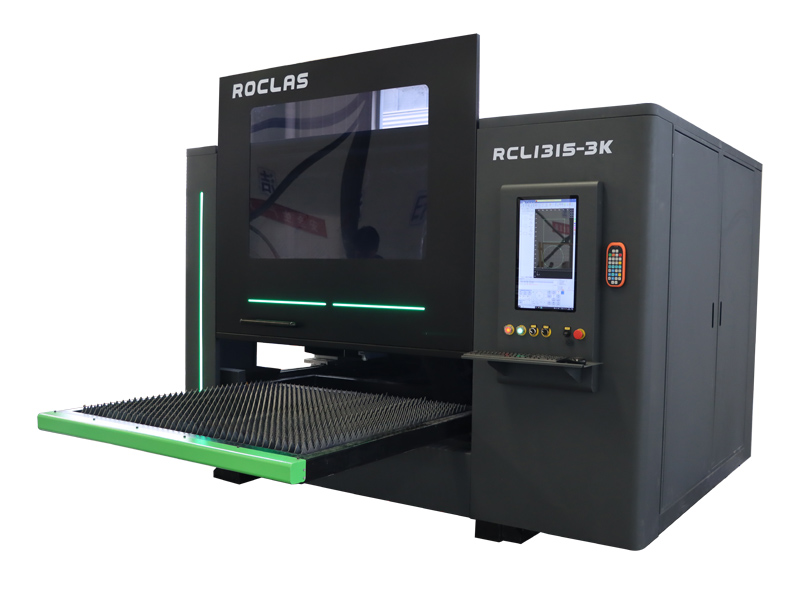
For applications demanding higher precision in the 6–20 mm range, Roctech’s fiber laser cutting machine series, available with laser power from 500 W to 6000 W, offers cutting speeds
Looking for more information about our CNC machines and services? Contact us today.
Contact