
Tool Wear in CNC Machining: Diagnosis, Mitigation, and Preventive Strategies
About Us / Author:ROCTECH Engineer Team / Published: Jul 05 , 2026 / Last Updated: Jul 05 , 2026
Tool wear remains one of the most persistent operational challenges in CNC routing, woodworking, and stone engraving. When a cutting tool becomes dull or damaged, the immediate symptoms—rough surface finishes, dimensional inaccuracies, increased power consumption, and audible chatter—are unmistakable to experienced operators. However, the appropriate corrective action depends on understanding the wear mechanism, the material being processed, and the machine’s current condition.
Understanding Tool Wear Mechanisms
In CNC machining, tool wear is not a single phenomenon but a spectrum of failure modes. For woodworking applications, abrasive wear from silica and resin content in engineered wood products accelerates edge rounding. In stone engraving, the primary mechanism is micro-chipping from high-frequency impact loading. For non-ferrous metals such as aluminum, built-up edge (BUE) formation and crater wear dominate.
The industry standard for quantifying tool life remains the Taylor tool life equation, but in practical shop-floor terms, operators learn to recognize the acoustic signature of a dull tool long before measuring flank wear. The challenge is that by the time audible indicators appear, workpiece quality has already degraded.
Immediate Actions When Tool Wear Is Detected
When an operator identifies a worn tool, the first step is to stop the spindle immediately and inspect the cutting edge under adequate lighting. A 10× loupe or digital microscope reveals whether the wear is uniform (suggesting normal abrasive wear) or localized (indicating impact damage or improper feed parameters).
For carbide tools commonly used in woodworking and non-ferrous machining, light uniform wear can sometimes be restored by touch-up honing with a diamond stone. However, this is a temporary measure. For polycrystalline diamond (PCD) tools, which are increasingly specified for high-volume nesting operations, field sharpening is not feasible; replacement is the only option.
Table 1: Tool Material Selection and Typical Service Life in CNC Woodworking
| Tool Material | Recommended Application | Typical Life (Linear Meters, MDF) | Cost per Tool (USD) | Re-sharpenable? |
|---------------|------------------------|-----------------------------------|---------------------|-----------------|
| HSS (High-Speed Steel) | Softwood, prototyping | 500–1,000 | $15–$30 | Yes (2–3 times) |
| Solid Carbide | Hardwood, plywood, acrylic | 2,000–5,000 | $40–$120 | Yes (3–5 times) |
| Carbide Insert | High-production nesting | 5,000–10,000 | $80–$200 (holder + inserts) | Insert replacement only |
| PCD (Polycrystalline Diamond) | High-volume composite, HPL | 50,000–100,000 | $200–$600 | No (factory reconditioning) |
| Diamond-Coated | Graphite, carbon fiber | 8,000–15,000 | $100–$250 | No |
Data source: Industry averages compiled from tooling suppliers’ technical documentation.
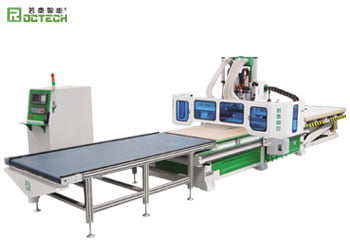
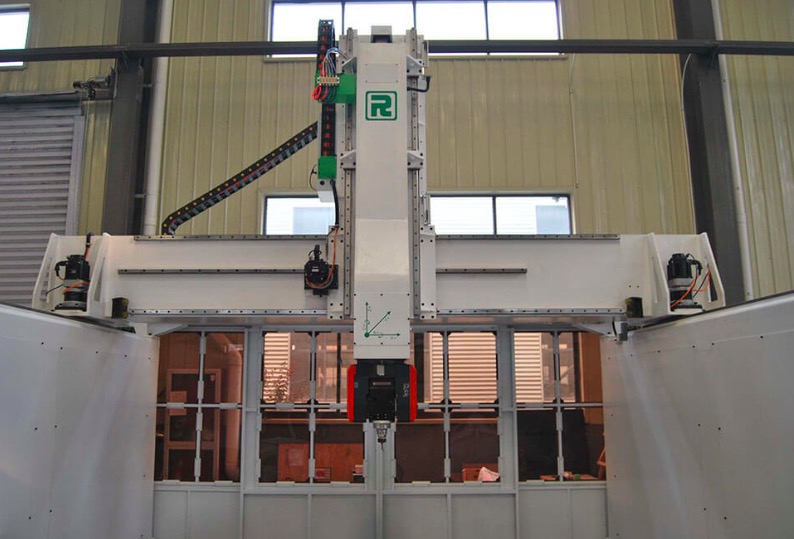
As the table illustrates, the choice of tool material directly impacts both operational cost and downtime frequency. For high-throughput nesting centers—such as Roctech’s RCA series automatic loading/unloading nesting centers—operators typically standardize on carbide insert tooling for its balance of cost and replaceability, while PCD tools are reserved for ultra-high-volume runs where tool-change downtime is the dominant cost factor.
Preventive Measures and Best Practices
Preventing premature tool wear begins with correct parameter selection. For woodworking, spindle speed should be matched to tool diameter using the formula: recommended RPM = (CS × 1000) / (π × D), where CS is cutting speed in m/min (typically 2,500–4,000 for carbide in softwood). Feed per tooth should remain between 0.1–0.3 mm for finishing passes.
Equally important is the condition of the CNC machine itself. A spindle with excessive runout (beyond 0.01 mm) will cause uneven load distribution across cutting edges, dramatically accelerating wear. Regular spindle runout checks—using a dial indicator on the collet taper—should be part of weekly maintenance.
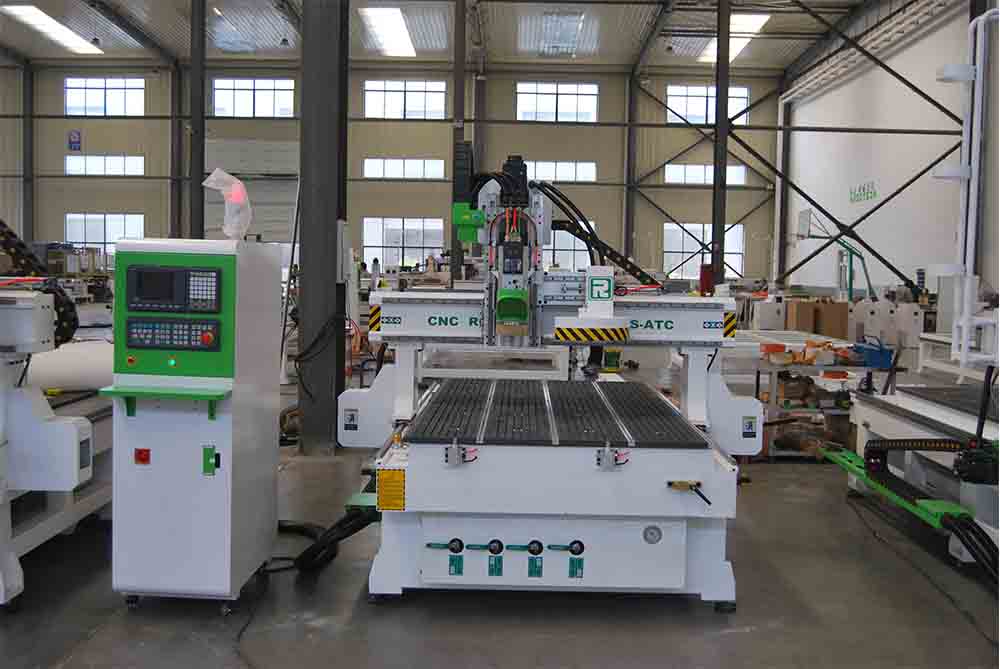
Roctech’s Master Series nesting centers, equipped with Taiwanese Syntec control systems and Japanese Yaskawa servo drives, maintain positioning repeatability within ±0.03 mm. This level of mechanical stability directly contributes to predictable tool life, as vibration-induced micro-chipping is minimized.
The Role of Coolant and Chip Evacuation
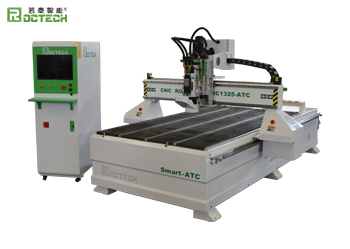
In metal and stone applications, proper coolant delivery extends tool life by 200–400% compared to dry cutting. For woodworking, while flood coolant is rarely used, compressed air or mist cooling prevents resin buildup on cutting edges. Many modern CNC routers, including R
Looking for more information about our CNC machines and services? Contact us today.
Contact
Previous:The Plasma-Laser Divide: Cutting Thick Steel Plates in Modern Fabrication
Next:The Rise of Personalized Production: How CNC Technology is Reshaping Custom Manufacturing