
Dust Management in CNC Engraving: Engineering Solutions for a Cleaner Workshop
About Us / Author:ROCTECH Engineer Team / Published: Jul 10 , 2026 / Last Updated: Jul 10 , 2026
Abstract
Dust generation remains one of the most persistent operational challenges in CNC woodworking and stone engraving operations. Beyond the obvious housekeeping nuisance, airborne particulate matter poses serious health risks to operators, accelerates mechanical wear on machine components, and compromises processing accuracy. This article examines the technical landscape of dust management systems for CNC routers and machining centers, with particular attention to system integration, filter selection, and workflow optimization. Drawing on industry data and case studies—including implementations from Roctech Machinery Co., Ltd.—we present a structured approach to selecting and maintaining dust collection solutions that balance capital expenditure with long-term operational efficiency.
Industry Background and Data Analysis
The global industrial dust collector market serving the woodworking and stone processing sectors was valued at approximately USD 1.8 billion in 2023, with projections indicating a compound annual growth rate of 5.2% through 2030. This growth is driven by increasingly stringent workplace safety regulations, rising awareness of occupational lung diseases such as silicosis and wood dust-induced asthma, and the growing automation of fabrication facilities.
Table 1 below summarizes the key performance characteristics of the three primary dust collection configurations commonly deployed alongside CNC engraving and nesting equipment:
| Dust Collection Type | Typical Airflow (CFM) | Filtration Efficiency (PM2.5) | Noise Level (dB) | Maintenance Frequency | Relative Cost (per CFM) |
|----------------------|-----------------------|-------------------------------|------------------|-----------------------|--------------------------|
| Baghouse Collector | 1,500 – 8,000 | 85 – 92% | 75 – 85 | Weekly (bag shaking) | Low |
| Cartridge Collector | 2,000 – 12,000 | 95 – 99% | 70 – 80 | Monthly (element replacement) | Medium |
| Centralized System | 5,000 – 30,000+ | 99+% (with HEPA after-filter) | 65 – 75 (remote) | Quarterly (duct inspection) | High |
Table 1: Comparative analysis of dust collection system types for CNC woodworking and stone engraving applications.
The data reveals a clear trade-off: baghouse collectors offer the lowest entry cost but fall short in capturing fine respirable particles, which constitute the greatest health hazard. Cartridge collectors represent the most balanced solution for small to medium workshops, achieving filtration efficiencies that meet OSHA and EU occupational exposure limits. Centralized systems, while capital-intensive, deliver the best performance and lowest operator exposure, making them the preferred choice for high-volume production facilities operating multiple machines simultaneously.
Technical Approaches to Dust Management
Effective dust control begins at the source. Modern CNC routers and nesting centers generate dust at rates proportional to spindle power, feed rate, and material density. For example, a 9.6 kW spindle cutting MDF at 12,000 mm/min can produce upwards of 3–5 kg of fine dust per hour. Without immediate capture, this particulate disperses throughout the workshop, settling on guide rails, ball screws, and electrical enclosures.
The first line of defense is the machine-integrated dust shoe—a shroud surrounding the spindle that connects directly to the vacuum source. Proper shoe design must accommodate tool length variation while maintaining a tight seal against the workpiece surface. Roctech’s Master Series nesting centers, for instance, incorporate an adjustable brush-type dust shoe that automatically compensates for material thickness changes during automatic loading cycles, ensuring continuous capture efficiency above 90% during cutting operations.
For machines not equipped with integrated dust management, retrofitting a standalone collection unit requires careful calculation of static pressure and airflow requirements. A common mistake is undersizing the vacuum source: a 1325-size ATC engraving machine operating with a 6–8 mm diameter cutter may require 800–1,200 CFM at 6–8 inches of static pressure to achieve adequate chip evacuation from the cutting zone. Undersized systems lead to clogged hoses, reduced spindle life, and degraded surface finish quality.
System Integration and Best Practices
The most effective dust management strategies treat the collection system as an integral part of the production workflow rather than an afterthought. This means coordinating the dust collector’s operation with the machine’s CNC control, so that suction ramps up automatically when the spindle starts and remains active during tool changes to capture residual debris.
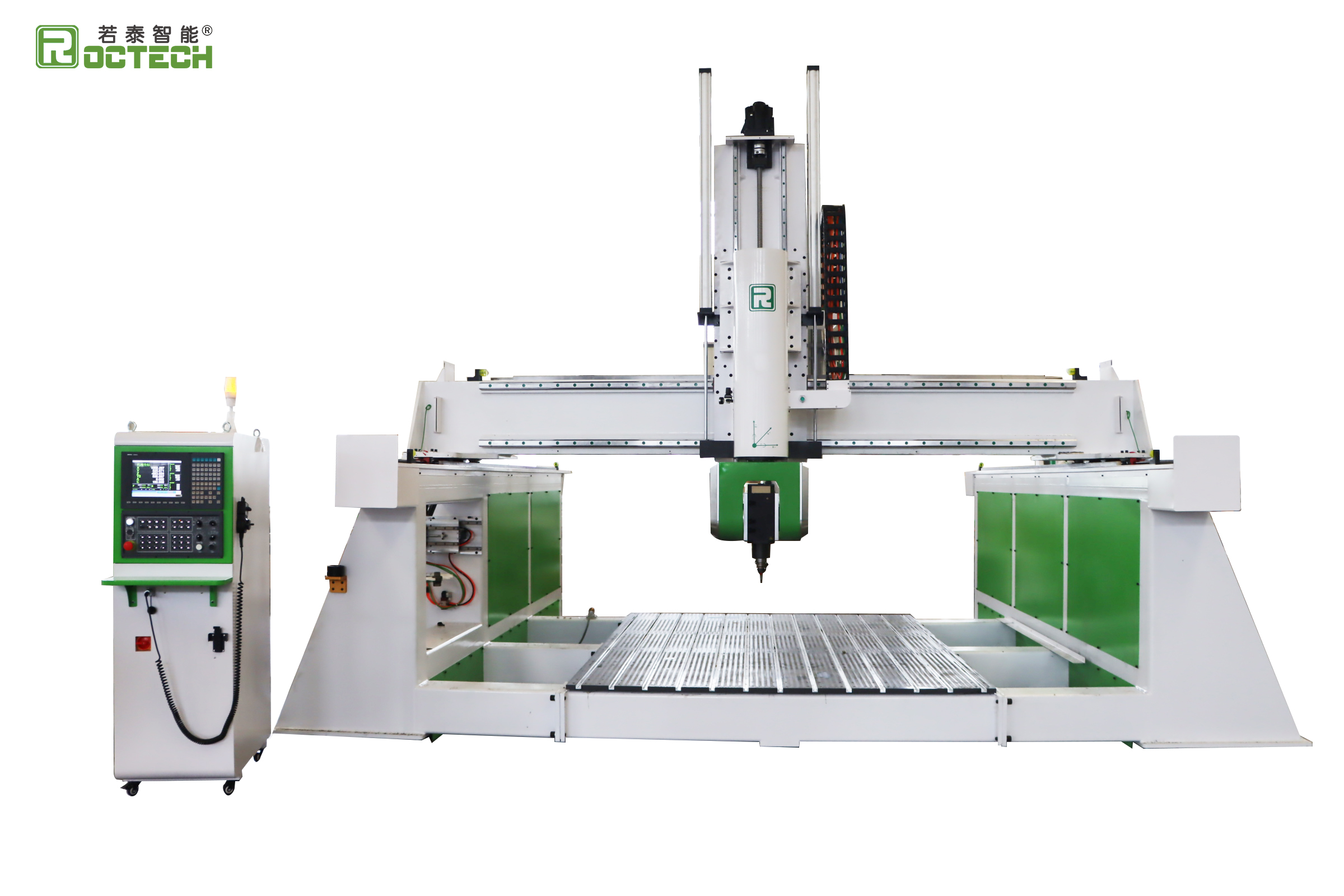
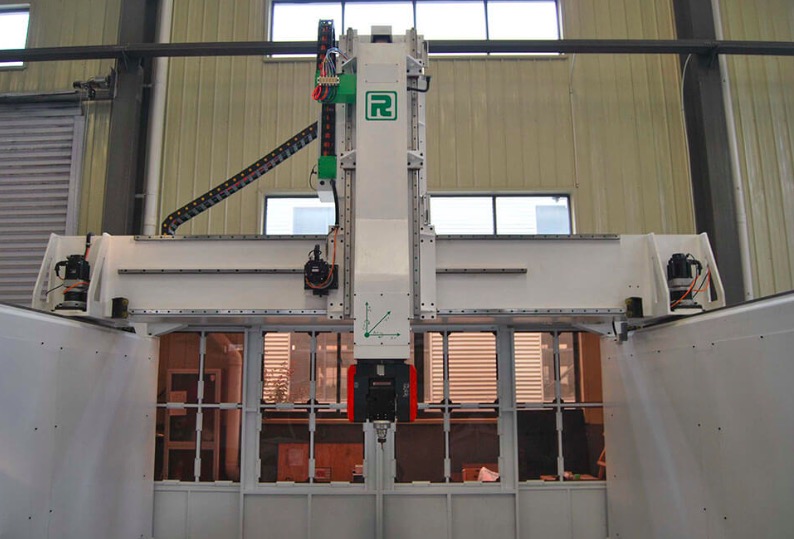
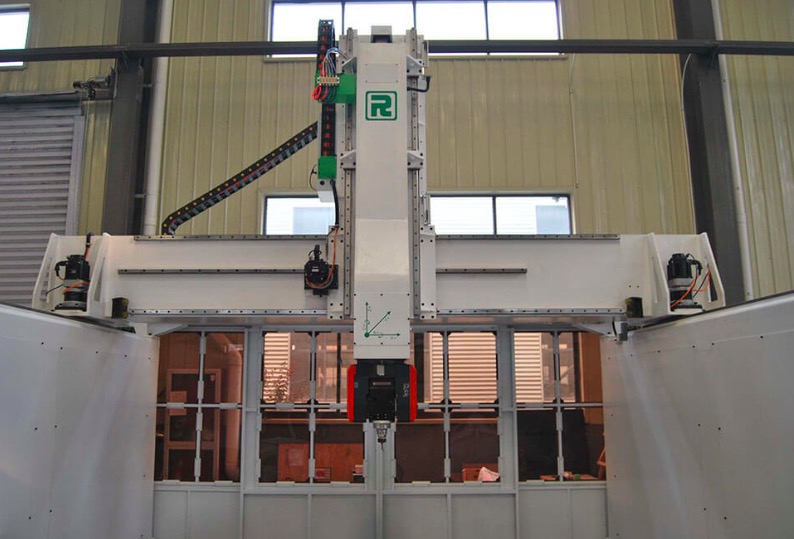
Material-specific considerations also matter. Processing solid wood generates coarse chips that are easily captured but can cause rapid wear on impeller blades if the system lacks a pre-separator cyclone. Stone and engineered quartz, increasingly processed on heavy-duty CNC machines like Roctech’s RCF1325 five-axis machining center, produce silica-laden fine dust that demands HEPA-level filtration
Looking for more information about our CNC machines and services? Contact us today.
Contact
Previous:Title: Beyond the Spark: The Quiet Revolution of CNC EDM in Precision Manufacturing
Next:Wuhan Furniture Fair 2025: CNC Automation Reshaping Panel Furniture Manufacturing