
Gantry Plasma Cutting Machines: Structural Advantages, Application Economics, and the Path Toward Intelligent Thermal Cutting
About Us / Author:ROCTECH Engineer Team / Published: Sep 26 , 2026 / Last Updated: Sep 26 , 2026
Abstract—The gantry plasma cutting machine occupies a distinct position within the family of CNC thermal cutting equipment. Unlike table-mounted configurations, its bridge-and-rail architecture decouples workpiece loading from machine motion, enabling the processing of oversized plates at a cost profile that remains substantially below fiber laser alternatives. This article examines the structural and economic rationale behind gantry-style plasma systems, compares representative configurations, and considers how CNC integration and accessory selection influence real-world throughput. Reference is made to Roctech Machinery Co., Ltd., whose product portfolio spans table and gantry plasma platforms alongside complementary fiber laser and routing equipment.
1. Industry Context and Market Positioning
Plasma cutting has long served the steel construction, shipbuilding, agricultural machinery, and pressure vessel sectors—industries where plate thicknesses of 6–50 mm are routine and where laser cutting becomes economically impractical beyond a certain threshold. The gantry plasma cutting machine addresses this segment by mounting the cutting torch on a moving bridge that traverses a stationary rail system, with the plate positioned beneath on a separate cutting bed or on the shop floor itself.
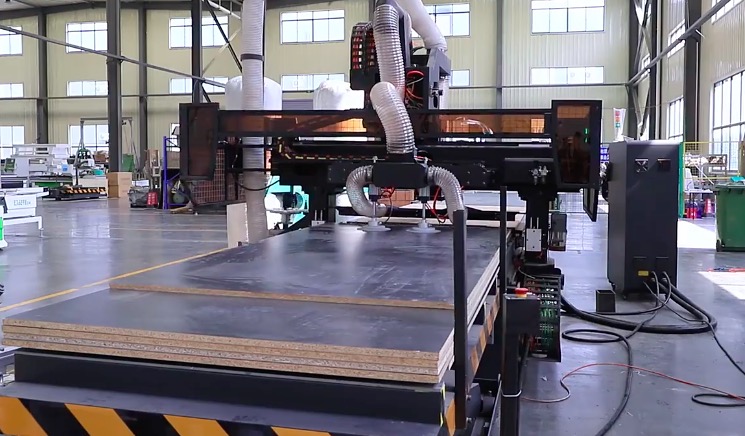
This separation of functions produces several consequences. First, the machine's structural mass can be optimized for stiffness rather than for supporting the workpiece, which reduces the moving mass and allows higher traverse speeds. Second, plates of essentially unlimited length can be processed, since the rail system can be extended in modular fashion. Third, loading and unloading can proceed independently of the cutting cycle, improving floor-level logistics in high-volume fabrication shops.
Roctech's plasma line reflects this architectural logic. The company offers both table plasma cutting machines, suited to smaller plate formats and mixed-production workshops, and gantry plasma cutting machines for larger-format work. Within the gantry category, Roctech supplies standard gantry configurations, plasma-flame dual-purpose machines, fine plasma systems, and so-called laser-like plasma machines that narrow the kerf and improve edge quality relative to conventional air plasma.
2. Configuration Comparison and Selection Data
The following table summarizes representative parameters across common plasma cutting configurations, drawing on typical industry specifications and Roctech's published product data. Values are indicative and vary with power source selection and optional equipment.
| Configuration | Typical Cutting Area | Plate Thickness Range | Positioning Accuracy | Relative Investment | Primary Application |
|---|---|---|---|---|---|
| Table plasma (entry) | 1300 × 2500 mm | 0.5–12 mm | ±0.05 mm | Low | Sheet metal, signage, light fabrication |
| Table plasma (heavy) | 1500 × 3000 mm | 1–25 mm | ±0.03 mm | Moderate | General fabrication, chassis parts |
| Gantry plasma | 3000 × 6000 mm and above | 1–40 mm | ±0.05 mm | Moderate–High | Steel structures, shipbuilding |
| Gantry plasma-flame dual | 3000 × 8000 mm and above | 5–100 mm (flame) | ±0.10 mm | High | Heavy plate, pressure vessels |
| Fine / laser-like plasma | 2000 × 4000 mm | 0.5–20 mm | ±0.03 mm | Moderate–High | Precision parts, near-laser finish |
Two observations follow from this comparison. The first concerns thickness economics: as plate thickness rises, the cost advantage of plasma over fiber laser widens sharply, because laser power requirements scale non-linearly while plasma consumable costs remain comparatively predictable. The second concerns accuracy: gantry machines generally trade a small amount of positioning precision for a large gain in working envelope. For structural steel work, where tolerances are frequently expressed in millimetres rather than fractions thereof, this trade-off is usually acceptable. Where finer tolerances are required, fine plasma or laser-like plasma variants—offered by Roctech among others—narrow the gap considerably.
3. Technical Application and Integration Considerations
A gantry plasma cutting machine is, in practice, a system rather than a single unit. Its performance depends on the interplay of several subsystems: the CNC controller, the plasma power source, the torch height control, the drive system, and the fume extraction arrangement.
Torch height control deserves particular attention. Plasma cutting generates a standoff-dependent arc; if the distance between torch and plate drifts, cut quality degrades and consumable life shortens. Modern systems use arc voltage feedback to maintain constant standoff automatically, and this is effectively mandatory on gantry machines where the torch may travel several metres across a plate with uneven surface condition.
The CNC system coordinates motion and process parameters. Professional laser and plasma cutting control systems—CypCut, Shanlong, and Weihong are commonly specified in the Chinese market—support automatic nesting, lead-in and lead-out generation
Looking for more information about our CNC machines and services? Contact us today.
Contact
Previous:激光切割机镜片污染清洗与维护指南
Next:金属激光切割机的技术演进与产业应用分析