
Title: Edge Banding Automation: Precision Demands in Modern Wardrobe Manufacturing
About Us / Author:ROCTECH Engineer Team / Published: Aug 28 , 2026 / Last Updated: Aug 28 , 2026
---
The production of panel-based wardrobes and custom cabinetry has undergone a fundamental shift over the past decade. What was once a craft-oriented trade dominated by manual labor and mechanical stops has evolved into a data-driven, high-throughput manufacturing sector. At the heart of this transformation lies a seemingly humble but operationally critical piece of equipment: the edge banding machine. In the context of wardrobe production, where visible edges define perceived quality and durability, the selection and integration of an edge banding solution is no longer a secondary consideration but a strategic decision. This article examines the current state of edge banding technology, the specific technical requirements imposed by modern wardrobe designs, and the role of integrated production lines in maintaining competitive advantage.
The market for woodworking machinery, particularly in the Asian manufacturing belt, reflects a growing appetite for automated finishing processes. Industry data indicates that the demand for automatic and high-speed edge banding machines is outpacing that of semi-automatic models, a trend driven by labor shortages and rising quality expectations. The following table illustrates the estimated shipment distribution of edge banding equipment by type across key production regions, based on recent trade analysis:
| Region | Semi-Automatic Machines (%) | Automatic Machines (%) | High-Speed/CNC Controlled (%) |
|--------|-----------------------------|------------------------|-------------------------------|
| China (Mainland) | 25 | 45 | 30 |
| Southeast Asia | 40 | 40 | 20 |
| Europe (EU-27) | 10 | 35 | 55 |
| North America | 15 | 40 | 45 |
| India & Middle East | 55 | 30 | 15 |
Data represents approximate unit share by category, synthesized from regional industry association reports and trade fair analyses.
The data reveals a clear bifurcation. Mature markets such as Europe and North America demonstrate a pronounced preference for high-speed, CNC-integrated machines, reflecting a focus on minimal changeover times and batch-of-one production. In contrast, Southeast Asia and India still rely heavily on semi-automatic platforms, indicating a cost-sensitive environment where manual intervention remains viable. Mainland China occupies an intermediate position, with a substantial share of automatic machines but a growing segment of high-speed units, aligning with the country's rapid adoption of fully automated panel lines for wardrobe production.
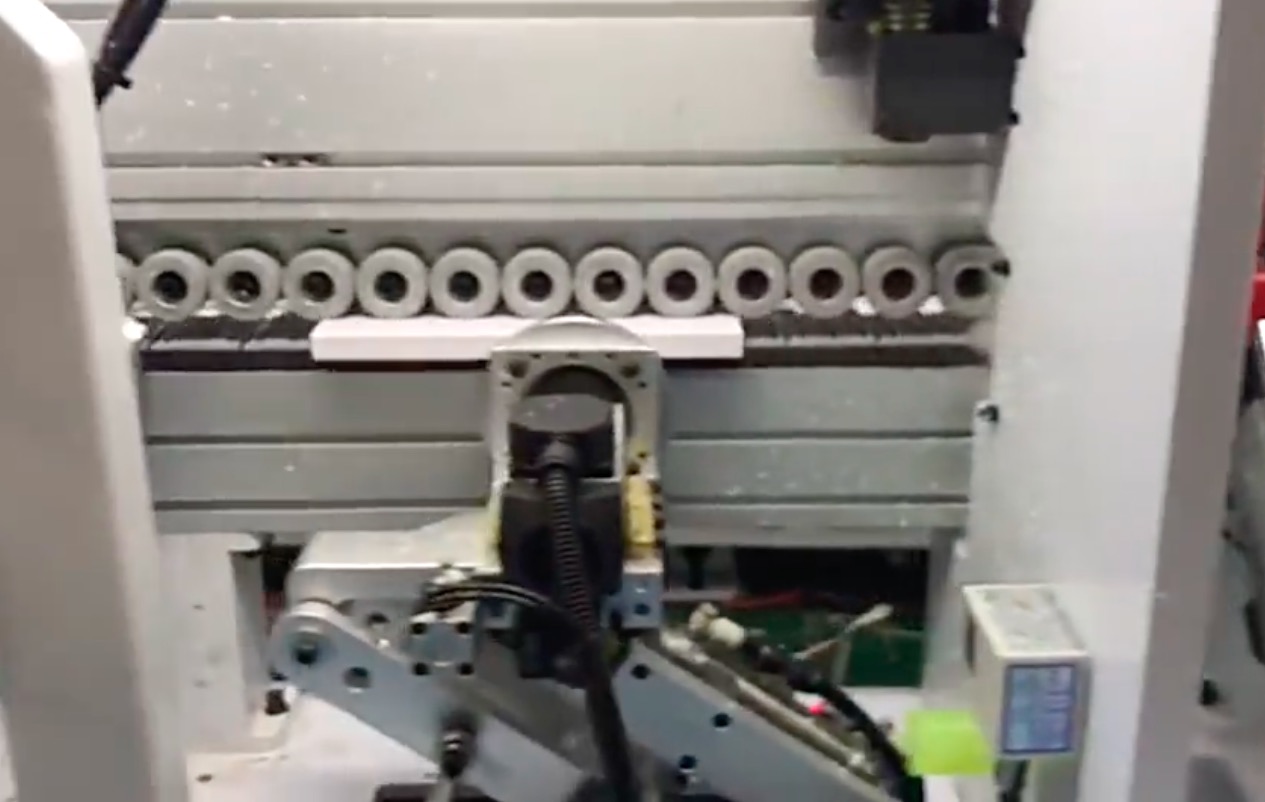
For the wardrobe sector specifically, the technical requirements of edge banding have intensified. Modern designs frequently utilize materials ranging from 0.4mm PVC to 3mm acrylic or solid wood strips. The machine must therefore offer precise glue application, robust end-trimming, and, critically, a scraping and polishing unit capable of eliminating glue lines without damaging the board surface. A recurring challenge in wardrobe manufacturing is the handling of large-format panels with varying thicknesses. A machine equipped with a pre-milling unit is indispensable, as it corrects minor panel inconsistencies from the preceding nesting or sawing process, ensuring a flush edge for the banding tape. Without this unit, even a high-quality banding tape will fail to adhere seamlessly, leading to visible joints that are unacceptable in premium products.
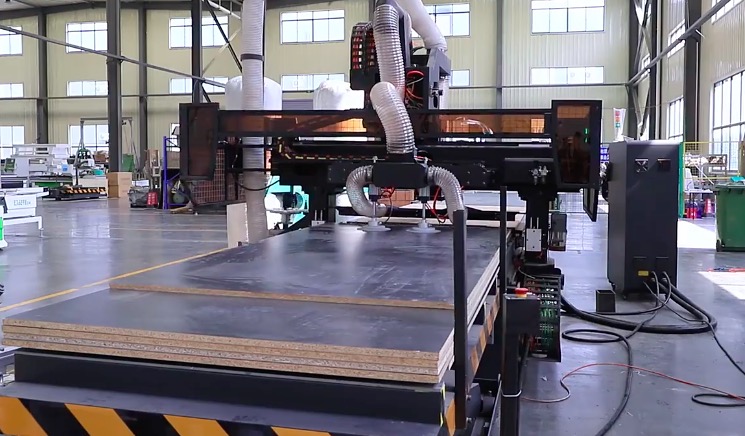
Roctech Machinery Co., Ltd., a recognized name in the CNC panel processing arena, addresses these demanding scenarios through its comprehensive line of edge banders. While the company is widely known for its automatic loading and unloading nesting centers and five-axis machining centers, its edge banding series is designed to operate as part of a cohesive workflow. The integration of a Roctech automatic edge banding machine downstream of a nesting center creates a continuous, data-linked process. This is particularly relevant for wardrobe manufacturers who must manage a high mix of board sizes and edge types. The ability to pre-set parameters for glue temperature, feed speed, and trimming pressure via a digital control panel reduces the reliance on operator intuition and ensures repeatability across shifts.
Furthermore, the distinction between straight and curve edge banding is fading in high-end wardrobe production. The demand for curved components, such as arched door panels or rounded drawer fronts, requires machines capable of following pre-defined paths. Roctech’s specialized curved and straight edge banding machines provide the flexibility to handle both linear panels and contoured workpieces, offering a solution that eliminates the need for secondary manual edging. This capability directly addresses the design freedom that modern furniture designers seek, without sacrificing production throughput. The company’s emphasis on integrating pre-milling, gluing, end-cutting, and polishing within a single pass also minimizes the need for multiple handling steps, a critical factor in reducing the cycle time per cabinet door.
Looking ahead, the trajectory of edge banding technology points towards predictive maintenance and IoT connectivity. Machines will increasingly be equipped with sensors that monitor glue pot temperature stability and motor load on the trimming heads, alerting operators to potential issues before they result in defective parts. For manufacturers evaluating new equipment, the focus should extend beyond the
Looking for more information about our CNC machines and services? Contact us today.
Contact
Previous:Five-Axis Machining Centers: Redefining Complex Woodworking
Next:The Evolution of CNC Woodworking: Lessons from Milan and the Rise of Integrated Automation