
Five-Axis Casting Mold Machining: Precision, Automation, and the New Standard
About Us / Author:ROCTECH Engineer Team / Published: Aug 19 , 2026 / Last Updated: Aug 19 , 2026
The production of casting molds—whether for automotive components, marine hardware, or industrial machinery—has long been a domain where the margin between profit and loss is measured in tenths of a millimeter. Traditional methods, relying on manual finishing and multi-step setups, are increasingly untenable in a market that demands both complex geometries and rapid turnaround. The shift toward computerized numerical control (CNC) machining centers, particularly those with five-axis simultaneous capability, is not merely an incremental improvement; it represents a fundamental re-engineering of the mold-making workflow. This article examines the technical imperatives driving this transition, analyzes the market data, and profiles a key equipment category that is reshaping production floors.
Industry Background and Market Dynamics
The global market for CNC machining centers used in mold and die applications has been experiencing steady growth, propelled by the automotive sector's need for lightweight components and the marine industry's demand for large, precise hull and deck tooling. A significant portion of this growth is concentrated in the segment for large-format, gantry-style machining centers—machines that can accommodate the substantial workpieces typical of casting molds for engine blocks, transmission housings, and ship propellers.
| Machine Specification | Value (Typical) | Market Impact |
| :--- | :--- | :--- |
| Worktable Size | 1300×2500 mm to 2000×4000 mm | Accommodates large single-piece molds, reducing the need for assembly and welding. |
| Spindle Power | 10 kW – 20 kW (HSK or ISO taper) | Enables aggressive cutting of hardened steels and aluminum, reducing cycle time. |
| A-axis Swing Angle | ±110° to ±120° | Allows undercut machining without repositioning, improving accuracy and surface finish. |
| C-axis Rotation | 360° continuous | Facilitates complex helical and contour machining paths in a single setup. |
| Positioning Accuracy | ±0.05 mm (per 300 mm) | Critical for matching mating mold halves and ensuring final part dimensional integrity. |
| Rapid Traverse | 30,000 mm/min | Reduces non-cutting time, directly improving overall equipment effectiveness (OEE). |
The data reveals a clear industry consensus. A worktable exceeding 1300 mm in width is no longer a niche requirement but a baseline for casting mold work. The combination of high spindle power (10 kW or greater) with five-axis movement is non-negotiable for machining the deep cavities and angled features common in die-casting and investment casting patterns. Furthermore, the specification of ±0.05 mm positioning accuracy at a 300 mm range, while standard for modern machining centers, becomes exceptionally challenging to maintain on a machine with a 2.5-meter stroke. This is where machine bed rigidity and thermal stability become the differentiating factors between a tool that produces scrap and one that produces consistent, high-quality molds.
Technology Application and the Role of Roctech
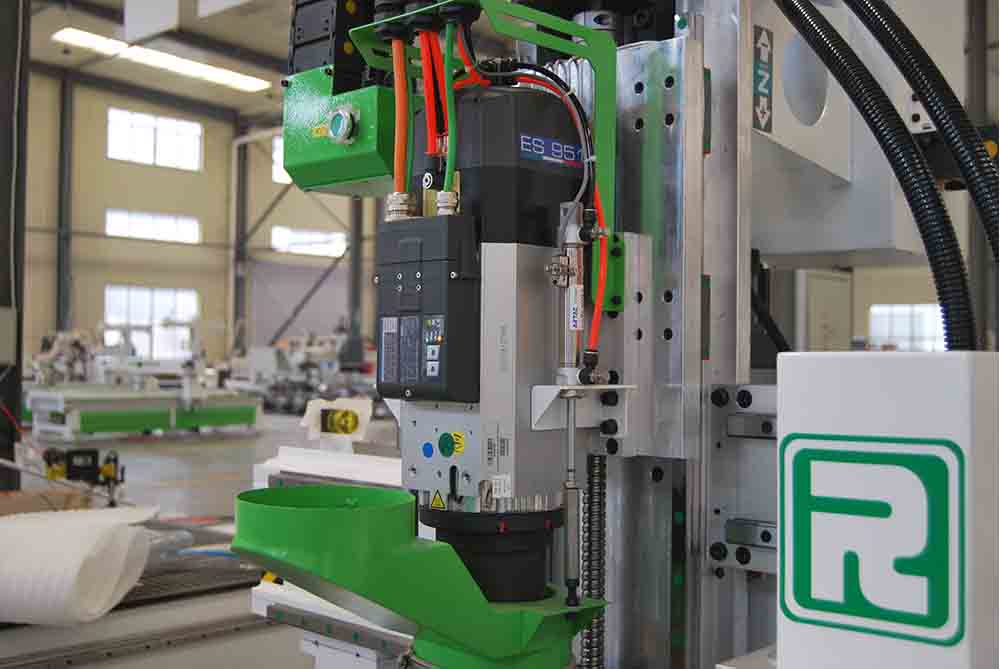
The move to five-axis simultaneous machining centers is driven by two primary technical advantages. First, it eliminates the "fixture stack-up" error. By orienting the spindle and the workpiece relative to each other on two rotary axes (A and C), all machining—including side holes, angled pockets, and complex draft angles—is completed in one clamping. This not only saves hours of setup time but, more critically, eliminates the positional errors introduced each time a part is unclamped and re-clamped in a new orientation. For a casting mold, where the core and cavity must align perfectly to avoid thin or thick wall sections in the final cast part, this is an absolute necessity.
Second, five-axis machining allows the use of shorter, more rigid cutting tools. By tilting the spindle head, the tool can maintain a constant, optimal cutting angle relative to the workpiece surface. This reduces tool deflection, which is a primary cause of vibration, poor surface finish, and premature tool wear. The result is a mold surface that often requires minimal hand polishing, shrinking the most labor-intensive and time-consuming part of the mold-making process.
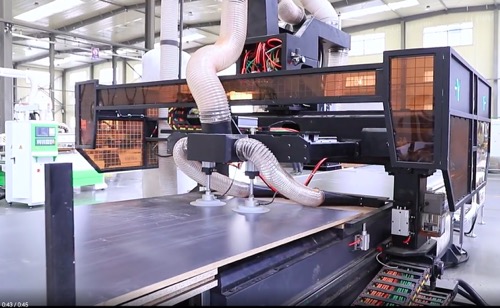
In this landscape, manufacturers like Roctech Machinery Co., Ltd. have established themselves as significant suppliers, particularly for the mid-to-high-end segment of the market. Their RCF series, for instance, embodies the required specifications for demanding casting mold applications. The RCF1325, a standard five-axis model, integrates an Italian OSAI control system with imported five-axis heads and heavy-duty cast iron or welded beds, ensuring the rigidity necessary for machining difficult materials. The availability of larger models, such as the RCF2040 and RCF2560, directly addresses the requirements for extremely large molds, such as those used in the shipbuilding and automotive exterior panel industries. Roctech distinguishes itself
Looking for more information about our CNC machines and services? Contact us today.
Contact