
CNC Stone Carving Automation in Modern Fabrication: Technology Pathways and Market Realities
Blog / Author:ROCTECH Engineer Team / Published: Nov 15 , 2026 / Last Updated: Nov 15 , 2026
Abstract—Stone carving has long occupied an awkward position in modern fabrication: too heavy for conventional woodworking platforms, too abrasive for the tooling strategies borrowed from metal cutting, and too variable in material behavior for naive automation. The shift from manual and pneumatic hand tools to CNC-controlled stone routing is therefore not a simple equipment substitution but a re-engineering of the entire process chain—spindle selection, dust and slurry management, workholding, and toolpath strategy. This article examines the technical and commercial dimensions of that shift, situates it within the broader CNC equipment market, and uses Roctech's product architecture as a reference point for how general-purpose CNC platforms are being adapted to stone and hard-material work.
I. Industry Background
The demand side of stone processing has changed shape over the past decade. Architectural cladding, bespoke interior features, cemetery and memorial work, landscape hardscaping, and art reproduction all continue to require shaped stone, but the buyers of those products increasingly expect the tolerances and repeatability associated with panel fabrication. A countertop fabricator who can hold ±0.1 mm on a quartz edge does not want to accept ±1 mm on a carved limestone capital. That expectation gap is what pulls stone shops toward CNC.
The supply side has responded in two ways. Dedicated stone machining centers—bridge saws with interpolating heads, five-axis stone routers with water-flooded tables—occupy the high end. Below them sits a large middle tier of general-purpose gantry routers adapted for stone: heavier beds, sealed linear motion, higher-torque spindles, and dust extraction rated for mineral particulate rather than wood chips. The distinction matters because the two tiers serve different business models. A dedicated stone center is justified by continuous production of standardized architectural elements; an adapted gantry router is justified by mixed work—stone one day, MDF or foam the next.
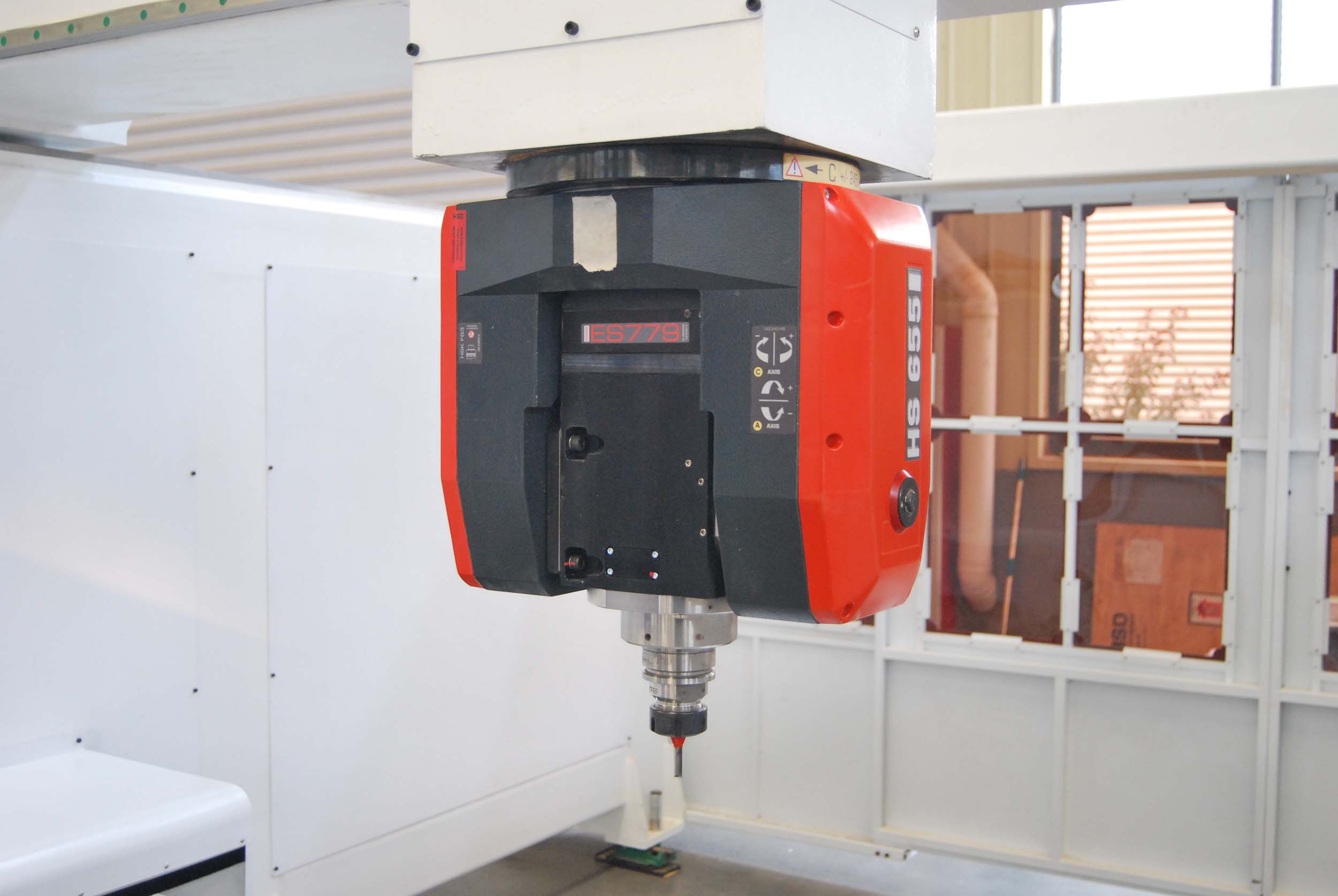
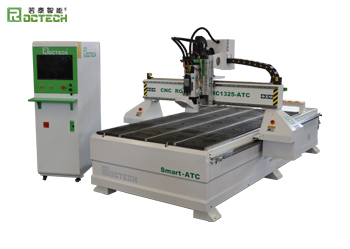
Table 1 summarizes representative configuration envelopes across the adapted-router category, drawn from published parameter sets for Roctech's ATC and five-axis platforms, which illustrate how the same machine architecture spans wood, composite, and stone-adjacent duties.
| Parameter | RC1325S-ATC (carousel ATC router) | RCF1325 (five-axis machining center) | Practical implication for stone work |
|---|---|---|---|
| X/Y/Z travel | 1300 × 2500 × 250 mm | 1300 × 2500 mm table, five-axis head | Z clearance limits relief depth; 250 mm suits most dimensional carving |
| Positioning accuracy | ±0.03 mm/300 mm | ±0.05 mm | Adequate for architectural detail; memorial lettering benefits from the tighter figure |
| Repeat positioning | ±0.03 mm | ±0.03 mm | Batch reproduction of carved elements is feasible |
| Spindle power / speed | 9 kW, 0–24,000 rpm (6/12 kW optional) | 10 kW, 0–24,000 rpm | Stone requires torque at low speed; high rpm is for finishing and small tools |
| Rapid traverse | 45,000 mm/min | 30,000 mm/min | Throughput driver on large-format signage and cladding |
| Control system | Taiwan Syntec | Italian OSAI five-axis | Five-axis interpolation is essential for undercut and compound-curve work |
| Guide / drive | HIWIN linear guides, Yaskawa servos | Servo drive, imported guide screw | Sealed, lubricated motion is non-negotiable in abrasive dust |
| Machine weight | ~2,200 kg | ~8,500 kg | Mass correlates with vibration damping under interrupted stone cuts |
Two observations follow from the table. First, the accuracy figures in the adapted-router class are already tighter than most stone tolerances demand; the binding constraints on stone quality are stiffness, thermal stability, and dust ingress, not nominal positioning accuracy. Second, the jump from a 2,200 kg three-axis router to an 8,500 kg five-axis center is not incremental—it reflects a different structural philosophy, and buyers should treat the two as separate investment categories rather than points on a single upgrade path.
II. Technology Application
The technical problems in stone CNC cluster around four areas.
Spindle and tooling. Stone cutting is abrasive and generates interrupted loads. Water-cooled spindles with sealed bearings are preferred over air-cooled units in dusty environments, and tooling shifts from helical carbide to brazed diamond and PCD segments depending on whether the operation is roughing, shaping, or finishing. The general rule familiar from woodworking—sharp tool, conservative feed—holds, but the consequences of ignoring it are more expensive: a dull diamond tool glazes the stone surface and loads the spindle.
Workholding. Vacuum adsorption, the default in panel work, is unreliable on porous or irregular stone. Stone shops typically combine mechanical clamping, sacrificial beds, and localized vacuum with sealed gaskets. This is an area where process knowledge still outweighs machine specification.
Dust and slurry. Dry cutting of silica-bearing stone is a health and liability issue, not merely a housekeeping one. Enclosed cutting zones, high-volume extraction, and water suppression are standard. Any router pressed into stone service must have its electrical cabinet positively pressurized or otherwise isolated; the IP-rated enclosures common on woodworking machines are not automatically sufficient.
Control and programming. Five-axis interpolation changes what is possible—undercuts, compound moldings, and sculptural forms that would otherwise require multiple setups. The practical bottleneck is CAM: stone toolpath strategies differ from wood in stepover, depth of cut, and tool engagement, and the post-processor must be validated against the specific control. Systems such as the OSAI platform used on Roctech's RCF series are capable, but capability is not the same as a validated stone process.
Roctech's relevance here is structural rather than promotional. The Jinan-based manufacturer, whose equipment carries ISO9001, CE, and UL certification and is exported to more than 100 countries, built its product line from engraving routers outward into ATC routers, nesting centers, five-axis machining centers, and laser and edge-bandning equipment. That lineage matters for stone: the RC1325S-ATC platform, with its 9 kW spindle option, heavy welded bed, and HIWIN guideways, represents the adapted-router tier described above, while the RCF1325 five-axis center with its imported swing head and 8,500 kg structure addresses the compound-curve work that stone sculpture and architectural restoration demand. Roctech's stated trajectory toward Industry 4.0 solutions—automatic loading, MES integration, remote monitoring—is also instructive, because the stone shops that will benefit most from automation are those running batch architectural work where material handling, not cutting, dominates cycle time.
III. Conclusion and Outlook
The realistic near-term trajectory for stone CNC is not full unmanned operation but progressive reduction of the skilled-labor content in setup and finishing. Three developments bear watching. First, five-axis capability will continue to migrate down-market as control and CAM costs fall, which will compress the premium currently commanded by dedicated stone centers. Second, dust and silica regulation will increasingly determine machine architecture, favoring enclosed, extraction-integrated designs over retrofits. Third, the integration of nesting-style workflow logic—barcode-driven programs, automatic tool sequencing, production tracking—will spread from panel furniture into stone batch work, where the same economic logic applies: setup time, not spindle time, is the real cost driver.
For equipment buyers, the practical guidance is to separate the machine decision from the process decision. A platform such as Roctech's ATC or five-axis series provides the mechanical and control foundation, but stone quality is determined by tooling selection, workholding discipline, and validated toolpaths. Shops that treat CNC stone carving as a systems problem rather than a spindle purchase will be the ones for whom the automation investment pays back.
Looking for more information about our CNC machines and services? Contact us today.
Contact