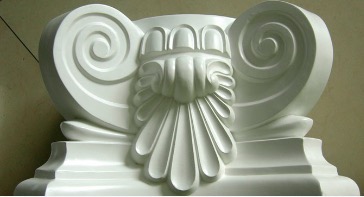

Wedding Foam Engraving Machine: Precision CNC Solutions for Decorative Foam Art
About Us / Author:ROCTECH Engineer Team / Published: Sep 21 , 2026 / Last Updated: Sep 21 , 2026
The wedding and event decoration industry has undergone a quiet but significant transformation over the past decade. What was once a craft-dependent, labor-intensive process is now increasingly driven by CNC technology. Among the equipment reshaping this niche is the wedding foam engraving machine—a specialized CNC solution designed for three-dimensional processing of foam, polystyrene, sponge, and similar soft materials. While these machines share much of their DNA with general-purpose CNC routers, their design priorities differ markedly: large strokes, high-speed spindles, lightweight structures, and dedicated dust extraction systems tailored to the unique characteristics of foam.
Understanding the wedding foam engraving machine requires situating it within the broader landscape of CNC foam machining. Foam materials—particularly EPS (expanded polystyrene) and XPS—are ubiquitous in wedding decoration. They form the structural core of oversized floral arrangements, three-dimensional lettering, archways, backdrop panels, stage props, and sculptural centerpieces. The appeal is practical: foam is lightweight, inexpensive, and easy to shape. The challenge is equally practical: foam is fragile, generates substantial static-charged dust during machining, and demands cutting strategies that avoid melting or tearing. A general-purpose woodworking router can process foam, but it rarely does so optimally.
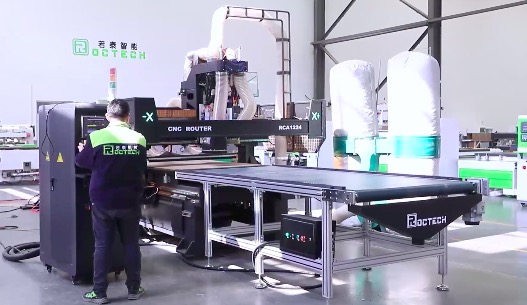
This is where purpose-built foam machining centers enter the picture. Equipment manufacturers such as Roctech have developed dedicated EPS foam machining centers that address these specific requirements. These machines typically feature large-format worktables—often exceeding 2000mm in the X and Y axes—to accommodate the oversized components common in wedding and event design. The gantry structure is engineered for stability across long spans, while the bed is kept relatively light to permit rapid acceleration without sacrificing accuracy.
A representative configuration illustrates the point. Consider a four-axis foam machining center with a working area of 2000×4000mm or larger, equipped with a high-speed spindle rated between 3kW and 9kW and capable of speeds up to 24,000 RPM. The tooling is typically single-flute or two-flute end mills optimized for foam, with polished flutes to reduce friction and heat generation. Feed rates are high—often exceeding 10,000mm/min—because foam offers minimal cutting resistance. The control system, frequently a Taiwan Syntec or similar industrial controller, manages the toolpath with look-ahead algorithms that maintain smooth motion through complex curves, which is essential when carving organic shapes such as petals, vines, and human figures.
The following table summarizes the key technical parameters that distinguish a dedicated foam machining center from a standard woodworking CNC router:
| Parameter | Dedicated Foam Machining Center | Standard Woodworking CNC Router |
|-----------|-------------------------------|-------------------------------|
| Typical working area | 2000×3000mm to 3000×6000mm+ | 1300×2500mm to 2000×4000mm |
| Spindle power | 3–9kW | 6–12kW |
| Maximum spindle speed | 18,000–24,000 RPM | 18,000–24,000 RPM |
| Axis configuration | 3-axis, 4-axis (rotary), optional 5-axis | 3-axis, 4-axis |
| Bed structure | Lightweight gantry, high-speed design | Heavy-duty welded steel |
| Dust extraction | Specialized foam dust collection | General-purpose chip collection |
| Typical feed rate | 8,000–15,000 mm/min | 5,000–12,000 mm/min |
| Primary materials | EPS, XPS, polystyrene, sponge | Wood, MDF, acrylic, soft metals |
The data reveals a clear divergence in design philosophy. Foam machining centers prioritize speed and stroke length over spindle torque and bed rigidity. The lightweight gantry is not a compromise but a deliberate choice: reducing moving mass allows the machine to accelerate and decelerate rapidly, which translates directly into shorter cycle times. For a wedding decoration workshop producing dozens of custom pieces per week, this productivity gain is substantial.
Dust management deserves particular attention. Foam machining generates fine, lightweight particles that become airborne easily and carry static charge. A standard wood dust collector is inadequate; it clogs quickly and fails to capture the finest fraction. Dedicated foam machining centers therefore integrate specialized extraction systems with high-flow, low-vacuum characteristics. Some configurations employ enclosure-based collection, while others use close-capture hoods around the spindle. The goal is twofold: protect operator health and prevent dust from contaminating the machine's linear guides and electrical components.
Roctech's EPS foam machining centers exemplify this integrated approach. The company, headquartered in Jinan, Shandong Province, has built its reputation on a comprehensive CNC portfolio that spans nesting centers, ATC engraving machines, five-axis machining centers, laser cutters,
Looking for more information about our CNC machines and services? Contact us today.
Contact
Previous:水下等离子切割机:技术演进与工业应用前景
Next:Not