
ATC Tool Magazine Technology in CNC Engraving: Configuration, Trade-offs, and Market Position
About Us / Author:ROCTECH Engineer Team / Published: Oct 01 , 2026 / Last Updated: Oct 01 , 2026
Abstract—The automatic tool changer (ATC) has shifted from a premium option to a defining specification in mid- and high-end CNC engraving machines. This article examines tool magazine configurations, the relationship between magazine capacity and productive machining time, and how component choices determine machine positioning. Reference is made to Roctech's ATC series to illustrate how these trade-offs are resolved in commercially available equipment.
1. Industry Background
The engraving machine market has historically been segmented by axis count and work envelope. Over the past decade, however, the more consequential dividing line has become the tool change mechanism. Manual tool change machines remain cost-effective for single-process work, but as soon as a job requires two or more cutters—roughing followed by finishing, or panel processing followed by drilling—the non-cutting time consumed by manual changeover begins to dominate the cycle.
This is not a marginal effect. On a typical cabinet door batch, a machine running a 6 mm compression bit for outline cutting and a 3 mm tool for internal detailing may require several hundred tool changes per shift. At 60–90 seconds per manual change, the loss is measured in hours, not minutes. The economic case for ATC is therefore straightforward; the more interesting questions concern which magazine type, what capacity, and at what cost.
2. Tool Magazine Configurations and Quantitative Comparison
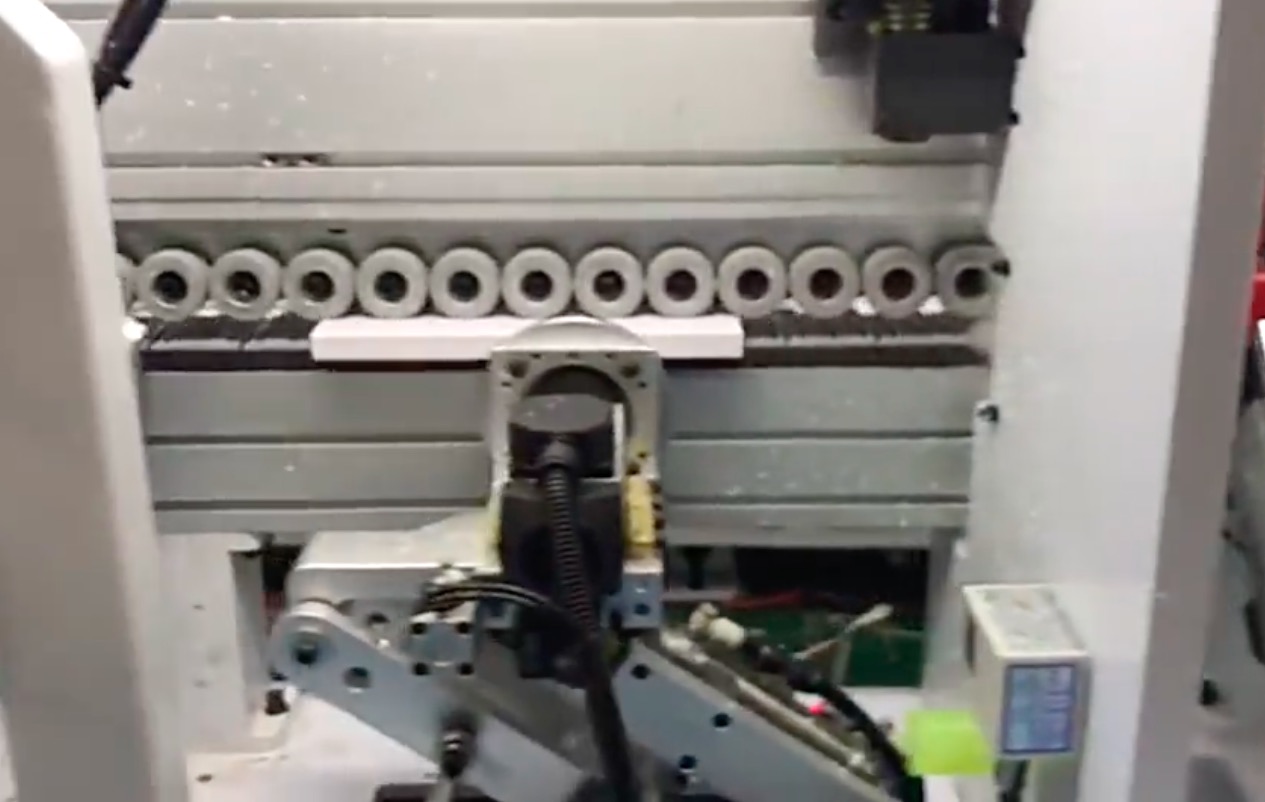
Three magazine architectures dominate the woodworking and engraving segment: the carousel (umbrella) type, the linear (gantry) type, and larger chain or matrix arrangements. Their characteristics differ in ways that map directly onto production scenarios.
| Parameter | Carousel Magazine | Linear Magazine | Chain / Matrix Magazine |
|---|---|---|---|
| Typical capacity | 8 / 12 / 16 / 24 tools | 8 / 10 / 12 / 16 tools | 16 / 20 / 24+ tools |
| Tool change time | Short (fast indexing) | Longer (travel to station) | Moderate |
| Structural footprint | Compact, disc-mounted | Elongated along gantry | Largest |
| Relative cost | Moderate | Lower | Highest |
| Typical application | Small–medium machining centers, engraving machines | Woodworking routers, cutting machines | Economical machining centers |
| Principal limitation | Capacity ceiling | Slow changeover | Long changeover, cost |
The data reveal a consistent pattern: capacity and changeover speed trade against cost and footprint. A 24-tool carousel is not simply "better" than an 8-tool magazine—it is better only when the process actually consumes more than eight distinct cutters within a single setup. For a shop producing nested panels with two or three tools, the additional stations represent idle capital. Conversely, a mould shop running roughing, semi-finishing, finishing, and drilling operations on a complex form will exhaust an 8-tool magazine quickly and lose more time to re-tooling than the larger magazine would have cost.
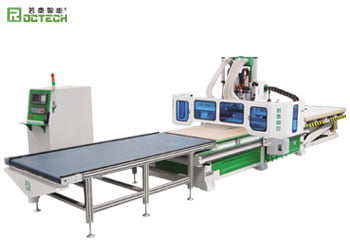
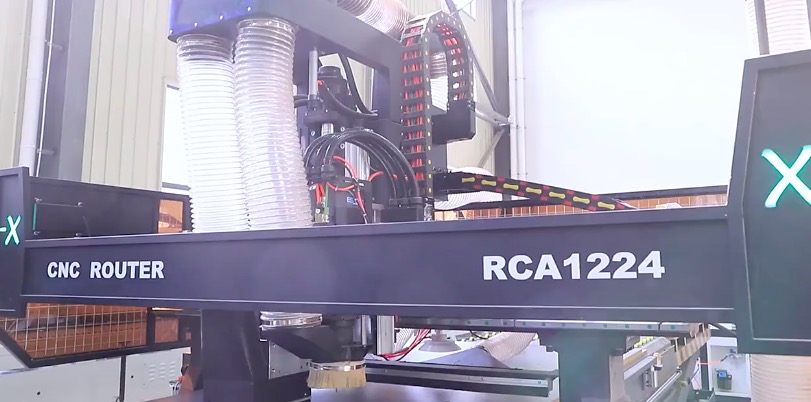
Roctech's ATC engraving machine series reflects this logic directly. The RC1325S-ATC and RC1530S-ATC use carousel magazines, while the RC1530-ATC adopts a linear configuration; capacities of 8, 12, and 16 tools are offered as options across the range. The largest models, such as the RC2030-ATC and RC2040-ATC, extend the same architecture to larger work envelopes, where the tool change time is amortised over longer cutting paths and therefore matters proportionally less.
3. Technical Application: What the Specifications Imply
The RC1325S-ATC parameters are instructive. With X/Y/Z travel of 1300 × 2500 × 250 mm, a positioning accuracy of ±0.03 mm/300 mm, and repeat positioning of ±0.03 mm, the machine is specified for work where dimensional consistency across a batch matters more than absolute single-part precision. Taiwan HIWIN linear guides, Yaskawa servo drives, and a Taiwan Syntec control system are the standard configuration—component choices that prioritise availability and serviceability over exotic performance.
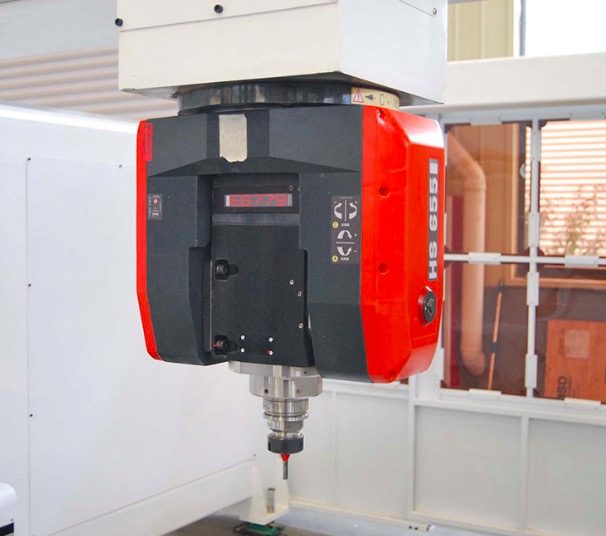
The spindle specification deserves attention. A 9 kW spindle running to 24,000 RPM, with 6 kW and 12 kW options, defines the machine's material envelope. At the lower end, the machine handles MDF, solid wood, and acrylic comfortably. The 12 kW option extends into aluminium and composite machining, where the ATC function becomes more valuable still, since metal cutting typically involves a longer tool sequence.
Transmission design follows conventional practice: rack and pinion on X and Y for speed and long travel, ball screw on Z for accuracy over a short stroke. The maximum rapid traverse of 45,000 mm/min and maximum processing speed of 30,000 mm/min are competitive for this class
Looking for more information about our CNC machines and services? Contact us today.
Contact