
Single-Sided CNC Drills: Precision, Efficiency, and Market Dynamics in Panel Furniture Production
About Us / Author:ROCTECH Engineer Team / Published: Jul 06 , 2026 / Last Updated: Jul 06 , 2026
The panel furniture manufacturing industry has undergone a profound transformation over the past decade, driven by the dual pressures of rising labor costs and increasing demand for customization. While multi-sided CNC drilling centers—particularly six-sided and five-sided drills—have captured significant attention for their ability to process all sides of a panel in a single clamping, the single-sided CNC drill remains a workhorse for many production environments. This article examines the role, technical evolution, and market positioning of single-sided drills, with a focus on how manufacturers like Roctech are delivering cost-effective solutions without compromising core functionality.
Market Context and Data Analysis
Single-sided CNC drills occupy a distinct niche within the broader panel processing equipment market. They are typically employed for high-volume drilling operations on one face of a panel, often in conjunction with other machines such as nesting centers or edge banders. To understand their market relevance, it is useful to examine the broader drilling equipment landscape.
| Equipment Type | Typical Price Range (USD) | Average Daily Output (panels/shift) | Positioning Accuracy (mm) | Primary Application |
|----------------|---------------------------|-------------------------------------|---------------------------|---------------------|
| Single-sided CNC Drill | 8,000 – 25,000 | 200 – 400 | ±0.10 | Standard drilling on one face |
| Four-sided Drill | 20,000 – 50,000 | 300 – 500 | ±0.08 | Multi-face drilling, moderate complexity |
| Five-sided Drill | 40,000 – 80,000 | 400 – 600 | ±0.05 | Complex drilling, grooving on five sides |
| Six-sided Drill | 60,000 – 120,000 | 500 – 700 | ±0.03 | Full six-sided processing, high automation |
The data reveals a clear trade-off between capability and cost. Six-sided drills offer the highest throughput and accuracy but at a price point that can be prohibitive for small-to-medium enterprises (SMEs). In contrast, single-sided drills provide a much lower entry barrier while still delivering respectable accuracy and productivity for many standard drilling tasks. According to industry estimates, single-sided drills account for nearly 40% of all CNC drilling equipment sold globally by volume, underscoring their enduring importance.
Technical Considerations and Application Scenarios
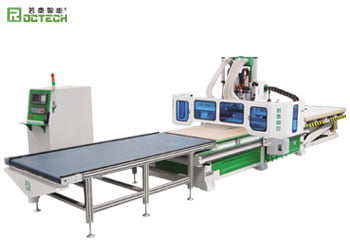
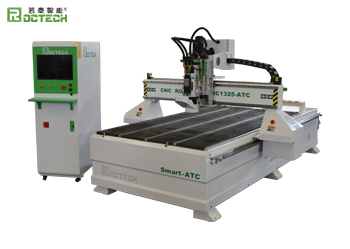
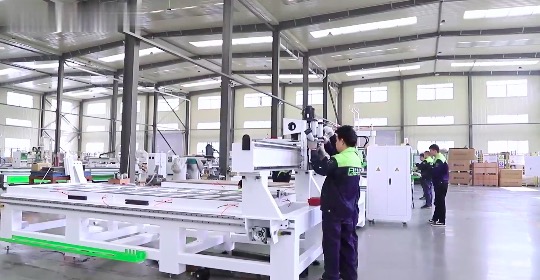
The design of a single-sided CNC drill is relatively straightforward compared to its multi-sided counterparts. Typical configurations include a fixed or movable gantry, one or multiple vertical drill spindles, and a vacuum or pneumatic workholding system. The control system, often from brands like Syntec or LNC, manages drill positioning, depth control, and pattern execution.
A key advantage of the single-sided drill is its simplicity. Fewer moving parts reduce maintenance requirements and improve reliability. For applications such as drilling dowel holes, shelf pin holes, or connector holes on a single face of cabinet panels, a single-sided drill can achieve cycle times competitive with more expensive machines. Furthermore, when integrated into a production line with a nesting center and edge bander, the single-sided drill can serve as a dedicated station for specific drilling operations, optimizing workflow.
Roctech’s product line includes several single-sided drill configurations that exemplify this approach. For instance, their entry-level single-sided CNC drill features a compact footprint, Yaskawa servo drives for precise positioning, and a user-friendly Syntec control interface. This combination allows operators to quickly program and execute drilling patterns for custom cabinet orders. Roctech has positioned these machines as a pragmatic solution for workshops that require reliable drilling without the complexity or cost of multi-sided systems.
The Role of Automation and Software Integration
One of the most significant trends affecting single-sided drills is the push toward greater automation and software integration. Modern single-sided drills are increasingly equipped with automatic positioning systems, barcode or QR code readers, and direct data interfaces with nesting software. This enables seamless communication between design and production, reducing setup time and human error.
For example, when a nesting center produces a batch of panels with pre-assigned barcodes, a single-sided drill equipped with a scanner can automatically load the corresponding drilling program. This eliminates the need for manual program selection and ensures that each panel is drilled according to its unique specification. Roctech has implemented such integration in several of its single-sided drill models, allowing customers to achieve a degree of automation that was previously only available on higher-end multi-sided machines.
Challenges and Limitations
Despite their advantages, single-sided drills have inherent limitations. The most obvious is that they can only process one face of a panel at a time. For panels requiring drilling on multiple sides—common in modern cabinet construction—additional handling steps are necessary. This can involve manual flipping of panels or the use of a secondary drilling station, both of which introduce inefficiencies and potential for error.
Moreover,
Looking for more information about our CNC machines and services? Contact us today.
Contact