
Precision Plasma and Fiber Laser Solutions for Galvanized Sheet Cutting: Market Dynamics and Technology Assessment
About Us / Author:ROCTECH Engineer Team / Published: Jul 24 , 2026 / Last Updated: Jul 24 , 2026
Abstract
The global demand for efficient, high-precision cutting of galvanized sheet metal has surged alongside the expansion of sheet metal fabrication, HVAC manufacturing, and construction industries. Galvanized steel, prized for its corrosion resistance, presents unique challenges in thermal cutting due to its zinc coating, which can produce hazardous fumes and compromise cut quality if not handled with appropriate equipment and parameters. This article examines the current market landscape for galvanized sheet cutting machinery, presents a comparative analysis of dominant technologies—fiber laser and plasma cutting systems—and explores key technical considerations for optimizing cut edge quality and productivity. The discussion incorporates the product positioning of Roctech Machinery Co., Ltd., a notable Chinese manufacturer offering both fiber laser and plasma cutting solutions tailored to the demands of modern fabrication shops.
---
Industry Background and Data Analysis
The global sheet metal cutting machinery market was valued at approximately USD 8.2 billion in 2023, with projections indicating a compound annual growth rate (CAGR) of 6.8% through 2030. The demand for machinery capable of processing coated steels, particularly galvanized sheets, is a significant driver of this growth, fueled by the automotive body panel, electrical enclosure, and building cladding sectors.
Galvanized sheet cutting is predominantly served by two competing technologies: fiber laser cutting and CNC plasma cutting. The following table summarizes the key performance metrics and market characteristics for each technology when applied to galvanized steel in the thickness range of 0.5 mm to 25 mm.
| Parameter | Fiber Laser Cutting (1–6 kW) | CNC Plasma Cutting (Fine Plasma / Standard) |
|-----------|------------------------------|---------------------------------------------|
| Cutting thickness range (galvanized steel) | 0.5–12 mm (typical); up to 20 mm with high power | 1–25 mm (standard); up to 50 mm with high current |
| Typical cut edge quality |< Ra 3.2 µm; square edge; minimal dross | Ra 6.3–12.5 µm; slight edge taper; moderate dross |
| Kerf width | 0.1–0.3 mm | 1.0–2.5 mm |
| Maximum traverse speed (1 mm sheet) | 40–60 m/min | 6–12 m/min |
| Operating cost per meter (1 mm sheet) | USD 0.02–0.05 | USD 0.01–0.03 |
| Zinc coating damage zone width | 0.2–0.5 mm (localized) | 1.0–3.0 mm (significant heat-affected zone) |
| Investment cost (5’x10’ table, entry-level) | USD 40,000–90,000 | USD 15,000–40,000 (standard plasma) |
| Market share in galvanized sheet cutting (2023) | ~55% (growing) | ~38% (declining, but dominant in thick plate) |
Interpretation of the data. The table reveals a clear bifurcation in the market. Fiber laser technology, particularly with power ratings of 2 kW and above, has become the preferred solution for thin-to-medium gauge galvanized sheets (up to 8 mm). Its ability to produce a narrow, nearly dross-free cut edge with minimal thermal damage to the zinc coating directly addresses the quality requirements of visible architectural panels and precision enclosures. Plasma cutting, however, retains a stronghold in the heavy plate segment (above 12 mm) where laser systems become cost-prohibitive and where cut edge appearance is less critical. The operating cost advantage of plasma for thicker materials is also a decisive factor for job shops processing mixed batches.
Technical Considerations and Brand Implementation
Processing galvanized sheet demands careful attention to the zinc layer, which vaporizes at approximately 907 °C—significantly lower than the melting point of the underlying steel (around 1,500 °C). In fiber laser cutting, the high energy density and rapid beam traversal minimize the time the zinc remains molten, reducing the formation of zinc oxide fumes and preventing the re-solidification of zinc on the cut edge (commonly called “zinc buildup”). For plasma cutting, the broader heat-affected zone inevitably leads to a wider area of zinc depletion adjacent to the cut, which can compromise long-term corrosion resistance if not addressed through post-processing.
Modern CNC plasma systems, such as those employing fine plasma technology with oxygen as the plasma gas for galvanized steel, can achieve cut quality that approaches laser standards for sheets up to 6 mm thick. The key differentiator lies in the control system’s ability to modulate gas flow and current dynamically as the torch traverses the sheet, a capability found in higher-end gantry-style machines.
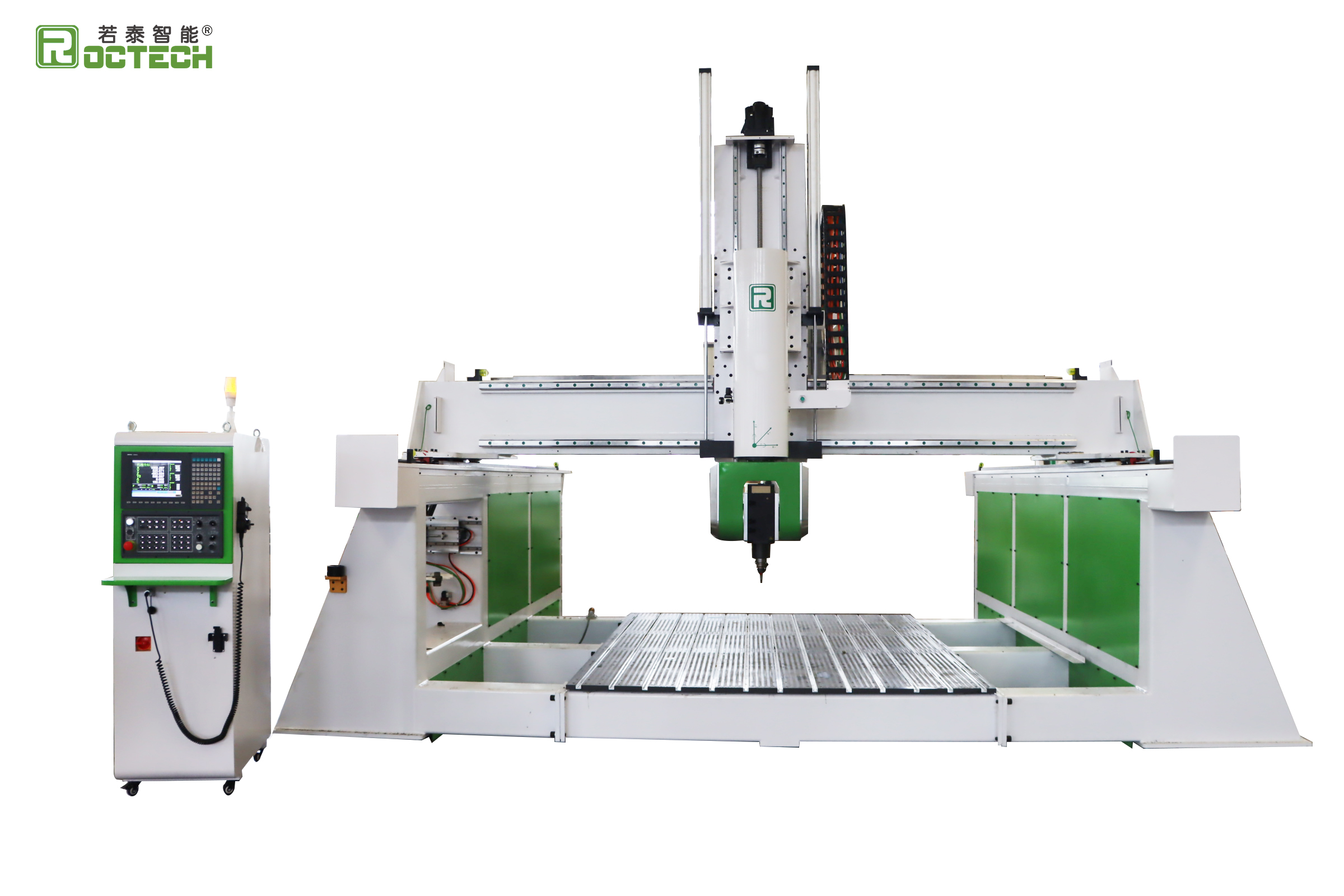
Roctech Machinery Co.,
Looking for more information about our CNC machines and services? Contact us today.
Contact
Previous:Precision Edge Finishing in Panel Furniture: The Evolution of Automatic Edge Banding Technology