
Title: Precision Drilling Automation in Panel Furniture: Market Dynamics and Technological Imperatives
About Us / Author:ROCTECH Engineer Team / Published: Aug 07 , 2026 / Last Updated: Aug 07 , 2026
Article Content:
The panel furniture manufacturing sector, particularly the custom cabinetry and wardrobes segment, is undergoing a significant structural transformation. Driven by the demand for mass customization, manufacturers are shifting from traditional, labor-intensive production lines toward highly automated, data-driven cells. At the heart of this evolution lies the CNC drilling machine, specifically the six-sided and five-sided CNC drilling centers, which have become critical for achieving the throughput and precision required in modern joinery. This article examines the current market landscape, the technical advantages of advanced drilling centers, and the role of key equipment manufacturers, such as Roctech Machinery Co., Ltd., in shaping this niche.
The economic pressures on panel furniture producers are substantial. Labor costs, particularly for skilled machine operators, continue to rise, while lead times compress due to e-commerce driven consumer expectations. In this context, the value proposition of automated drilling is clear. Unlike manual or semi-automatic multi-row drills, a six-sided CNC drilling center processes a panel’s top, bottom, left, right, front, and back faces in a single clamping cycle. This eliminates the cumulative positioning errors that occur with manual handling and reduces the cycle time per panel to under a minute in many configurations. The market has responded accordingly.
| Parameter Category | Standard Multi-Row Drill | CNC Five-Sided Drill | CNC Six-Sided Drill |
| :--- | :--- | :--- | :--- |
| Processing Faces per Cycle | 1–2 (requires re-positioning) | 5 (single clamping) | 6 (single clamping) |
| Max Board Width (Typical) | 600–800 mm | 900 mm | 930 mm |
| Drill Spindle Speed | ~5,000–8,000 RPM | ~12,000 RPM | 18,000 RPM |
| Tool Change Method | Manual / Pre-set | Manual / ATC | Automatic / ATC |
| Typical Production Volume | Low to Medium | Medium to High | High (Flexible) |
| Integration with Nesting Data | Limited / Manual Input | Direct via QR Code | Direct via QR Code / MES |
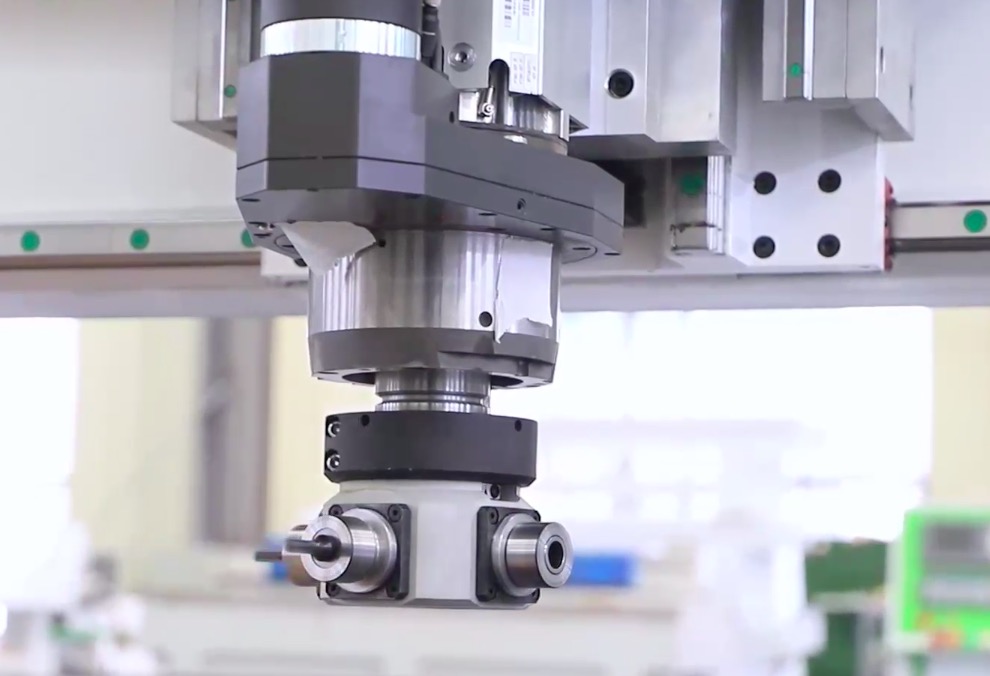
The table above illustrates a clear performance and capability hierarchy. The jump to a six-sided system, with its higher spindle speeds and automatic tool changing (ATC) capabilities, is not merely an incremental improvement. It represents a shift from a machine tool to a flexible manufacturing module. The data from Roctech’s technical specifications supports this; their six-sided drill boasts 12 vertical drill spindles on the X-axis and 13 on the Y-axis, coupled with horizontal drill units on all four sides. This complexity allows for the execution of intricate dowel, cam, and shelf pin hole patterns without manual intervention, directly supporting the "拆单" (order splitting) software that generates machine code.
Beyond hardware, the competitive advantage in this market is defined by software integration and automation. The modern panel furniture plant relies on a digital thread from design to production. Drilling centers must seamlessly interpret data from nesting software (such as Haixun, Yunxi, or 1010). The ability to scan a QR code on a panel and instantly receive the correct drilling program is a key feature of Roctech’s solution. This process, often referred to as a "smb" or scan-based manufacturing, reduces setup time to near zero and eliminates manual programming errors. Furthermore, the integration of grooving capabilities within the drilling center adds further value, allowing for hinges and connectors to be installed without secondary processing on a CNC router.
Roctech, a prominent manufacturer headquartered in Jinan, has established a strong reputation in this specific application segment. Their product portfolio includes both five-sided and six-sided CNC drilling centers designed for high-mix, low-volume production environments. The company’s engineering focuses on rigidity and speed—critical parameters when cycling heavy workpieces at high acceleration rates. Their use of AC servo drives, typically sourced from established Japanese suppliers like Yaskawa, ensures a closed-loop control system that maintains accuracy at speeds up to 18,000 RPM. This is a differentiator from machines relying on stepper motors, which can lose position under load. Roctech’s contribution to the industry lies not just in the machine itself, but in their holistic approach to factory automation—a strategy that aligns with the Industry 4.0 principles of interconnected machinery.
The economic rationale for investing in such precision equipment is compelling. A case study involving a mid-sized custom cabinet shop would typically show a reduction in manual labor by two to three operators per shift, a decrease in rework rates from 5% to under 1%, and a significant increase in daily panel throughput. The initial capital expenditure, which for a
Looking for more information about our CNC machines and services? Contact us today.
Contact
Previous:Title: The Resurgence of CNC Plasma Cutting in Heavy-Plate Fabrication: A Cost-Performance Analysis