
Edge Banding Machine Accessories: Selection Criteria and Their Role in Modern Panel Furniture Lines
About Us / Author:ROCTECH Engineer Team / Published: Sep 04 , 2026 / Last Updated: Sep 04 , 2026
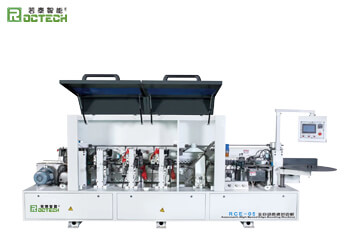
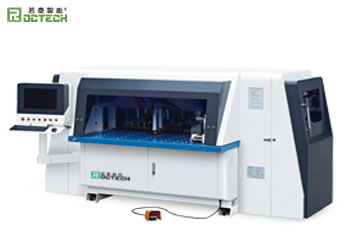
The panel furniture industry has undergone a quiet but decisive transformation over the past two decades. What was once a craft-dominated sector, reliant on skilled manual labour for edge finishing, is now a high-throughput manufacturing environment where cycle times are measured in seconds and surface quality tolerances in fractions of a millimetre. At the heart of this shift sits the edge banding machine—a piece of equipment that, while often overshadowed by more conspicuous CNC routers and nesting centres, determines the perceived quality of nearly every cabinet, shelf, and worktop produced today. Yet the machine itself is only half the story. Its performance, reliability, and finished-part aesthetics are overwhelmingly dictated by a comparatively small set of consumable and wear components.
Understanding these accessories is not merely a procurement exercise. For production managers and process engineers, the correct selection and maintenance of edge banding tooling directly influence reject rates, adhesive consumption, and overall equipment effectiveness (OEE). This article examines the critical accessory categories—pre-milling cutters, glue application systems, trimming and scraping units, and polishing heads—and offers practical guidance grounded in the realities of contemporary panel processing.
Operational Context and the Cost of Compromise
Before delving into components, it is worth quantifying why accessory selection warrants such attention. The edge banding station is typically positioned downstream of the nesting process, often following a CNC machining centre that has already cut, drilled, and grooved the panel. At this stage, the workpiece carries significant accumulated value; a failure in edge banding—be it a visible glue line, a chipped laminate, or a misaligned tape—can render an entire panel unsalvageable. In a production environment processing, say, 800 panels per shift, even a 2% defect rate attributable to edge finishing translates to sixteen scrapped or reworked parts daily. Over a month, that figure represents a substantial financial leak.
Furthermore, the trend toward thinner, high-gloss, and textured surfaces—driven by modern interior design preferences—has made edge finishing more demanding than ever. These materials are less forgiving of dull tooling or inconsistent adhesive application. Consequently, the margin for error in accessory specification and upkeep has narrowed considerably.
| Accessory Category | Primary Function | Typical Service Interval | Impact of Neglect |
|---|---|---|---|
| Pre-milling cutters (HW/PCD) | Square panel edge, remove compression marks | 15–30 km of linear run | Visible glue line; poor tape adhesion |
| Glue roller & scraper blade | Apply uniform adhesive film | Roller: 1–2 shifts (cleaning) | Starved joints; adhesive build-up |
| Trimming cutter heads (top/bottom) | Flush-trim excess tape flush to panel | 10–20 km of linear run | Edge chipping; over/under-trim |
| Scraping blades (straight/radius) | Remove glue residue; final finish | Daily inspection | Rough edge; rejects on gloss panels |
| Polishing wheels (flock/sisal) | Achieve matte-to-gloss transition | 2–4 weeks (replaceable) | Dull finish; heat-induced marking |
Critical Accessory Categories Explained
Pre-milling units are the first point of contact and arguably the most consequential. The saw-cut edge left by a nesting operation is rarely perfect; compression marks from the tool entry point and micro-fractures in the board core are common. Pre-milling cutters—typically two or three-wing tools with replaceable carbide or polycrystalline diamond (PCD) inserts—clean this edge to a true 90-degree surface. For melamine-faced boards, PCD tooling, though initially more expensive, often outperforms carbide by a factor of ten to fifteen in tool life. This makes PCD the economically rational choice for high-volume lines where downtime for tool changes is a direct cost.
The glue application system deserves equal scrutiny. The consistency of the adhesive film is governed by the glue roller, its associated scraper blade, and the temperature control of the glue pot. A worn or improperly gapped scraper blade produces an uneven adhesive layer—too thick in some zones, starved in others. This leads to classic defects: bleed-out at the tape edge or, conversely, failure of the tape to bond under subsequent machining stress. Operators should verify glue roller surface condition every shift and replace the scraper blade at the first sign of uneven wear. Many modern machines use EVA or PUR adhesives, and the latter, being moisture-reactive, requires even stricter attention to application temperature and roller cleanliness.
Trimming and scraping stations are where the visible quality of the finished edge is determined. The top and bottom trimmer heads remove the excess tape overhang, and their cutter geometry—hook angle, clearance, and helix
Looking for more information about our CNC machines and services? Contact us today.
Contact
Previous:Title: Medium Machining Centers Reshape the Customization Landscape: A Technical and Market Primer