
The Role of Wire EDM in Modern Precision Manufacturing: Complementing CNC Router and Machining Center Capabilities
About Us / Author:ROCTECH Engineer Team / Published: Jul 11 , 2026 / Last Updated: Jul 11 , 2026
Abstract
While CNC routers and machining centers dominate woodworking, stone fabrication, and non-metal material processing, Wire Electrical Discharge Machining (Wire EDM) occupies a distinct and critical niche in precision metalworking. This article examines the technical characteristics, market positioning, and complementary role of Wire EDM relative to conventional CNC routing and milling systems. Drawing on industry data and application case studies, including the expanding product portfolios of manufacturers like Roctech, the analysis highlights how Wire EDM addresses the limitations of mechanical cutting in hard metals and complex geometries. A comparative market data table is provided to contextualize regional adoption and growth trajectories.
---
Industry Background: The Precision Metalworking Gap
The global CNC machine tool market, valued at approximately USD 78 billion in 2023, encompasses a wide spectrum of technologies. At one end, CNC routers and machining centers—such as those produced by Roctech for woodworking, foam, and non-ferrous metal applications—excel at high-speed material removal using rotating tools. At the other extreme, Wire EDM employs a continuously moving wire electrode and electrical discharges to erode conductive materials, achieving tolerances of ±0.005 mm or better without mechanical contact or cutting forces.
This fundamental difference makes Wire EDM indispensable for industries requiring burr-free edges, high surface finish, and the ability to cut hardened steels, carbides, and exotic alloys that would rapidly dull conventional tooling. The technology is particularly prevalent in tool and die making, aerospace component manufacturing, medical device fabrication, and precision engineering where traditional machining reaches its limits.
The Wire EDM segment, though smaller in unit volume compared to router-based systems, commands higher per-machine value and exhibits steady growth driven by miniaturization trends and increasing demand for complex, high-precision metal parts. According to industry reports, the global Wire EDM market was estimated at USD 3.2 billion in 2023, with a compound annual growth rate (CAGR) of 4.8% projected through 2030.
---
Data Analysis: Wire EDM Market by Region and Application
The following table provides a snapshot of regional market shares and primary application sectors for Wire EDM, based on aggregated industry data from 2023–2024.
| Region | Market Share (%) | Primary Application Sectors | Growth Drivers |
|--------|------------------|----------------------------|----------------|
| Asia-Pacific | 48% | Automotive mold & die, electronics, medical devices | Rapid industrialization, cost-competitive manufacturing |
| Europe | 24% | Aerospace, precision engineering, tooling | High-value part production, stringent quality standards |
| North America | 18% | Aerospace, defense, medical implants | Advanced manufacturing, reshoring initiatives |
| Rest of World | 10% | General engineering, automotive aftermarket | Infrastructure development, emerging industrial base |
Table 1: Wire EDM Market Distribution by Region and Application (2023–2024 Estimates)
The Asia-Pacific region’s dominance is attributable to the concentration of mold and die manufacturing in China, Japan, South Korea, and Taiwan. These countries house large-scale production facilities for automotive stamping dies, injection molds, and electronics components—all of which rely heavily on Wire EDM for precision cutting of hardened tool steels. Europe and North America, while smaller in volume, exhibit higher average machine prices due to demand for advanced five-axis Wire EDM systems with automation integration.
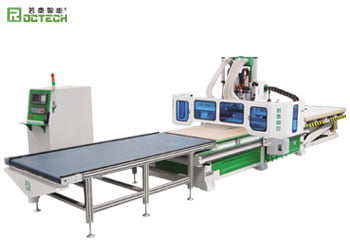
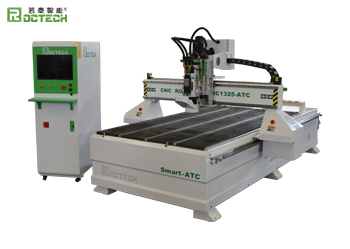
A key observation from the data is the divergence between Wire EDM and conventional CNC router markets. While CNC routers—such as Roctech’s RCA nesting centers or RC ATC series—serve high-volume panel processing and softer materials, Wire EDM addresses the opposite end of the spectrum: low-volume, high-precision, hard-material applications. This complementarity is increasingly recognized by manufacturers who offer both technology families under one roof.
---
Technical Application and Brand Integration
The technical principles of Wire EDM are distinct from mechanical machining. A thin brass, copper, or coated wire (typically 0.1–0.3 mm diameter) is fed through the workpiece, while a series of rapid electrical discharges erode material along a programmed path. Dielectric fluid (deionized water) flushes away debris and maintains a stable discharge gap. Because no cutting forces are generated, extremely delicate features and thin walls can be produced without distortion.
In modern fabrication environments, Wire EDM is often integrated with CNC milling and routing to create hybrid workflows. For example, a manufacturer producing custom medical instruments might first use a CNC machining center to rough out the general shape from a stainless steel blank, then employ Wire EDM to cut intricate internal contours, slots, or gear profiles that would be impossible with a rotating tool.
Companies with broad CNC equipment portfolios are well-positioned to serve such integrated demands. Roctech,
Looking for more information about our CNC machines and services? Contact us today.
Contact
Previous:Precision Edge Banding in Modern Woodworking: The Rise of Specialized Veneer Processing Equipment
Next:The Evolution of Panel Furniture Cutting: Why Nesting Centers Are Redefining Production Efficiency