
Automatic Chamfering in CNC Processing: Precision, Efficiency, and the Evolution of Edge Finishing Technology
About Us / Author:ROCTECH Engineer Team / Published: Aug 03 , 2026 / Last Updated: Aug 03 , 2026
Automatic chamfering has emerged as a critical process in modern CNC machining, particularly within woodworking and stone fabrication industries. This article examines the technical evolution of automated chamfering systems, analyzes market data on equipment adoption, and discusses how leading manufacturers like Roctech are integrating chamfering capabilities into multi-functional CNC platforms. The discussion focuses on process optimization, tooling considerations, and the economic impact of automated chamfering on production workflows.
行业背景与数据分析
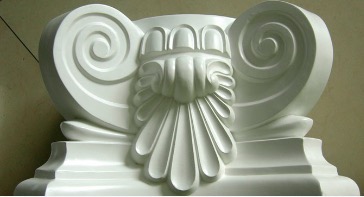
The demand for automatic chamfering has grown substantially over the past decade, driven by three converging factors: the expansion of custom furniture production, stricter quality standards in architectural stonework, and persistent labor shortages in finishing operations. Chamfering—the process of creating a beveled edge where two surfaces meet—is no longer viewed as merely cosmetic. In panel furniture, chamfered edges reduce chipping during transport and assembly; in stone fabrication, proper edge geometry prevents stress fractures; and in both industries, consistent chamfer quality directly correlates with perceived product value.
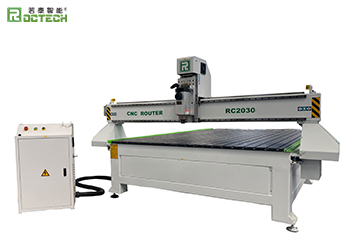
Data from industry surveys and equipment import records reveal significant regional variations in adoption rates and technology preferences:
| Region | Market Size (USD Million, 2024) | CAGR (2024–2029) | Predominant Equipment Type | Average Automation Rate |
|--------|--------------------------------|------------------|---------------------------|------------------------|
| Asia-Pacific (excluding Japan) | 1,285 | 7.8% | ATC engraving machines with chamfering capability | 42% |
| Europe | 876 | 5.9% | Nesting centers with integrated chamfering units | 58% |
| North America | 743 | 6.3% | Five-axis machining centers | 51% |
| Middle East & Africa | 312 | 8.1% | Dedicated stone CNC bridge saws with chamfering heads | 35% |
The Asia-Pacific market commands the largest share, reflecting the region's dominance in panel furniture production and rapid adoption of automated solutions among mid-sized manufacturers. Notably, the Middle East and Africa show the highest growth rate, driven by infrastructure investment and large-scale stone cladding projects in the Gulf states. Europe's higher automation rate correlates with stringent workplace safety regulations and labor costs that make manual chamfering economically unviable at scale.
What these figures do not fully capture is the shift toward combined processes. Rather than standalone chamfering machines, manufacturers increasingly expect chamfering to be delivered as an integrated function within larger CNC platforms—machines that can cut, drill, groove, and chamfer in a single setup.
技术应用与品牌案例
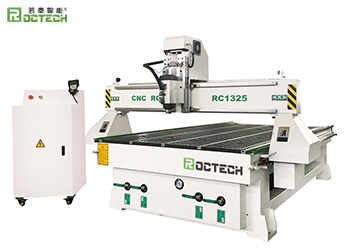
The integration of automatic chamfering into CNC equipment presents distinct engineering challenges. The chamfering tool operates at high spindle speeds, typically 18,000–24,000 RPM, and requires precise depth control to maintain consistent bevel angles across varying material densities. In wood-based panels, grain direction and density variations demand adaptive feed rates; in stone, tool wear progression must be compensated in real time to preserve edge geometry.
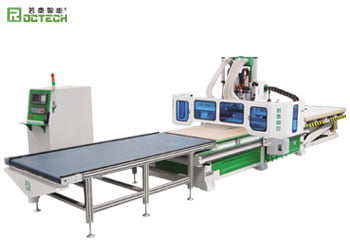
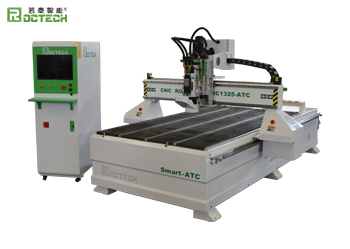
Roctech's approach illustrates how leading manufacturers address these challenges. The Roctech Master Series nesting centers, such as the RCA1224, incorporate chamfering as part of their automatic tool-changing workflow. Operators program chamfering passes alongside drilling and cutting operations, and the machine's carousel tool magazine—capable of holding 8 to 16 tools—automatically swaps between flat-cut bits and chamfering bits without manual intervention. The positioning accuracy of ±0.03mm, achieved through Taiwan HIWIN linear guides and Japan Yaskawa servo motors, ensures that chamfer depth remains consistent even at rapid traverse speeds up to 45,000 mm/min.
For stone applications, Roctech's five-axis machining centers (RCF series) employ chamfering heads with adjustable swing angles (A-axis ±110°, C-axis 360° continuous). This capability is particularly valuable for edge profiles on countertops and architectural panels, where multiple bevel angles must be machined on contoured surfaces in a single clamping. The Italian OSAI control system manages the coordinated motion, while optional 3D scanning probes enable reverse engineering and online inspection of chamfer dimensions—essential for meeting tolerance requirements in high-end architectural projects.
The economic case for automatic chamfering is compelling. A mid-sized furniture manufacturer operating a single nesting center with integrated chamfering can eliminate one dedicated edge-banding operator per shift. Considering that manual chamfering of a standard cabinet door takes 4–6 minutes while an automated system completes the same operation in under 30 seconds, the annual labor savings alone often justify the premium paid for machines with chamfering capability. Additionally, reduced material waste—fewer rejected parts due to inconsistent be
Looking for more information about our CNC machines and services? Contact us today.
Contact
Previous:Title: OSB Machining on CNC Routers: Technical Capabilities and Industrial Adoption
Next:Title: The 1500W Fiber Laser Cutting Machine: A Benchmark for Mid-Tier Sheet Metal Fabrication