
The Economics of Imported Fiber Laser Cutting: Market Trends, Performance Benchmarks, and Strategic Sourcing
About Us / Author:ROCTECH Engineer Team / Published: Jul 15 , 2026 / Last Updated: Jul 15 , 2026
Abstract. The global market for fiber laser cutting machines has experienced a compound annual growth rate of approximately 8–10% over the past five years, driven by the expansion of sheet metal fabrication, automotive, and consumer electronics sectors. While domestic Chinese manufacturers have captured significant market share in the mid-range segment, imported laser cutting machines—particularly those from IPG Photonics (Germany), Trumpf (Germany), and Coherent (USA)—continue to dominate high-precision, high-power applications. This article examines the current market structure, provides a quantitative comparison of imported versus domestic laser systems, and discusses the strategic considerations for fabricators evaluating capital equipment investments. The role of integrated CNC router manufacturers such as Roctech Machinery Co., Ltd. in bridging the gap between imported laser technology and cost-effective production solutions is also analyzed.
Market Structure and Demand Drivers
The fiber laser cutting machine market can be segmented into three tiers based on laser source origin, power output, and control system sophistication. At the high end, imported laser sources—typically IPG or Trumpf—are paired with premium gantry systems, linear motors, and advanced CNC controllers from Siemens or Fanuc. These systems command price premiums of 30–60% over comparable domestic configurations but offer superior beam quality, longer diode lifespan, and guaranteed power stability over 100,000 operating hours.
The mid-range segment, which accounts for roughly 45% of global unit sales, is increasingly contested. Chinese manufacturers using domestic laser sources from Raycus, Maxphotonics, or JPT have narrowed the performance gap significantly. However, for applications requiring cutting edge quality below 0.1 mm kerf width on reflective metals such as copper or brass, or for continuous duty cycles exceeding 20 hours per day, imported laser systems remain the preferred choice.
Quantitative Comparison of Laser Cutting Machine Configurations
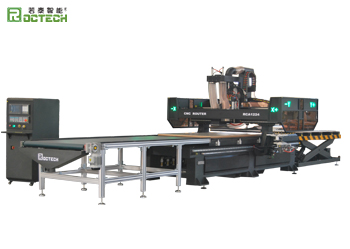
The following table presents a comparative analysis of typical specifications across three representative system configurations available in the market today.
| Parameter | Imported High-End (e.g., IPG 6kW + Trumpf Gantry) | Domestic Premium (e.g., Raycus 6kW + High-End Gantry) | Domestic Economical (e.g., Raycus 3kW + Standard Gantry) |
|-----------|----------------------------------------------------|--------------------------------------------------------|----------------------------------------------------------|
| Laser Source Lifespan (hours) | 100,000+ | 80,000–100,000 | 60,000–80,000 |
| Beam Quality (BPP, mm·mrad) |<1.1 | 1.3–1.8 | 2.0–2.5 |
| Max. Cutting Speed (1mm SS, m/min) | 35–40 | 28–32 | 20–25 |
| Positioning Accuracy (mm) | ±0.02 | ±0.03 | ±0.05 |
| Repeatability (mm) | ±0.01 | ±0.02 | ±0.03 |
| System Price (USD, approx.) | 250,000–400,000 | 120,000–180,000 | 60,000–90,000 |
| Typical Duty Cycle (hours/day) | 22–24 | 16–20 | 10–14 |
Analysis. The data reveals a clear trade-off between initial capital investment and long-term operational capability. Imported systems justify their cost through extended laser source lifespan and superior beam quality, which translates directly into higher cutting speeds and better edge quality—particularly critical in industries such as aerospace and medical device manufacturing where secondary finishing is costly or impractical. For small-to-medium enterprises serving the general sheet metal or signage markets, a domestic premium configuration often provides the best return on investment, especially when combined with automated material handling systems.
Integration and Automation: The Role of CNC Ecosystem Providers
It is important to recognize that a laser cutting machine does not operate in isolation. Modern fabrication facilities require seamless integration between the laser cutting cell, upstream nesting software, downstream edge banding or drilling stations, and overall production management systems. This is where companies with comprehensive product portfolios, such as Roctech Machinery Co., Ltd., offer a strategic advantage.
Roctech, a high-tech enterprise headquartered in Jinan, Shandong Province, has built its reputation on delivering integrated CNC solutions for furniture manufacturing, advertising, and mold processing. While Roctech’s core expertise lies in CNC routers, nesting centers, and edge banding machines, the company’s understanding of complete production workflows—from automatic loading and unloading systems to six-sided drilling centers—positions it as a valuable partner for fabricators seeking to balance imported laser performance with overall production efficiency. Roctech’s own fiber laser cutting machine series, available with power options from 500W to 6000W
Looking for more information about our CNC machines and services? Contact us today.
Contact