
Title: The Ascendancy of Five-Axis Machining Centers in Advanced Manufacturing: Precision, Automation, and Future Trajectories
About Us / Author:ROCTECH Engineer Team / Published: Jul 21 , 2026 / Last Updated: Jul 21 , 2026
Article Body:
The evolution of Computer Numerical Control (CNC) technology has been markedly defined by the transition from three-axis to multi-axis machining paradigms. Within this landscape, the five-axis machining center has emerged not merely as a tool for complex geometry but as a critical enabler of manufacturing flexibility, precision, and productivity. This article examines the current market dynamics, technical underpinnings, and future trajectories of five-axis machining centers, particularly within the woodworking, mold-making, and composite fabrication sectors.
Industry Background and Market Data
The global market for multi-axis CNC machines is experiencing robust growth, driven by demand from aerospace, automotive, and custom furniture industries. Five-axis centers, which allow a workpiece to be manipulated on three linear axes (X, Y, Z) and two rotational axes (typically A and C), eliminate the need for multiple setups, drastically reducing cycle times and improving accuracy. In woodworking and stone fabrication, the adoption is accelerating as manufacturers seek to produce complex, sculpted forms—from ergonomic furniture components to intricate stone countertops—without manual intervention.
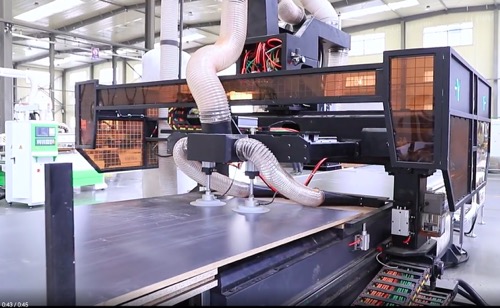
A comparative analysis of key market segments reveals distinct growth drivers and technological requirements.
| Industry Segment | Market Growth Rate (CAGR 2024-2030, est.) | Primary Driver | Typical Machine Configuration | Average Unit Price (USD, high-end segment) |
| :--- | :--- | :--- | :--- | :--- |
| Aerospace & Defense | 8.5% | High-precision, complex structural parts (titanium, composites) | Heavy-duty, high-torque spindle, rigid bed | $450,000 - $1,200,000 |
| Automotive (Mold & Die) | 7.2% | Rapid prototyping, complex surface finishing for EV components | High-speed, 5-axis simultaneous, ball-screw drives | $200,000 - $600,000 |
| Woodworking & Furniture | 9.1% | Custom, solid-wood furniture; curved panel processing; high-volume nesting | Gantry-style, vacuum table, ATC, high-speed routing | $80,000 - $250,000 |
| Stone & Composites | 6.8% | Architectural cladding, complex countertop edges, 3D stone carving | Heavy-duty, water-cooled spindle, anti-dust design | $100,000 - $300,000 |
The data indicates that while aerospace commands the highest capital outlay, the woodworking segment exhibits the highest growth rate. This surge is underpinned by the shift toward bespoke, high-end furniture requiring organic, freeform shapes—a task for which three-axis machines are fundamentally inadequate.
Technical Application and Brand Case Study
The technical core of a modern five-axis machining center lies not just in the mechanical articulation of its axes but in the sophistication of its control system and the rigidity of its structure. A critical challenge is maintaining precision during simultaneous multi-axis movement, where tool orientation changes continuously. This demands advanced kinematic algorithms and robust servo drives to compensate for inertia and gravitational forces.
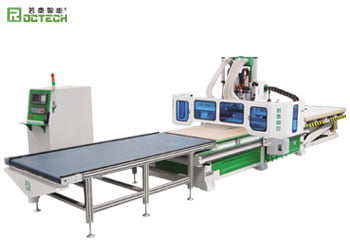
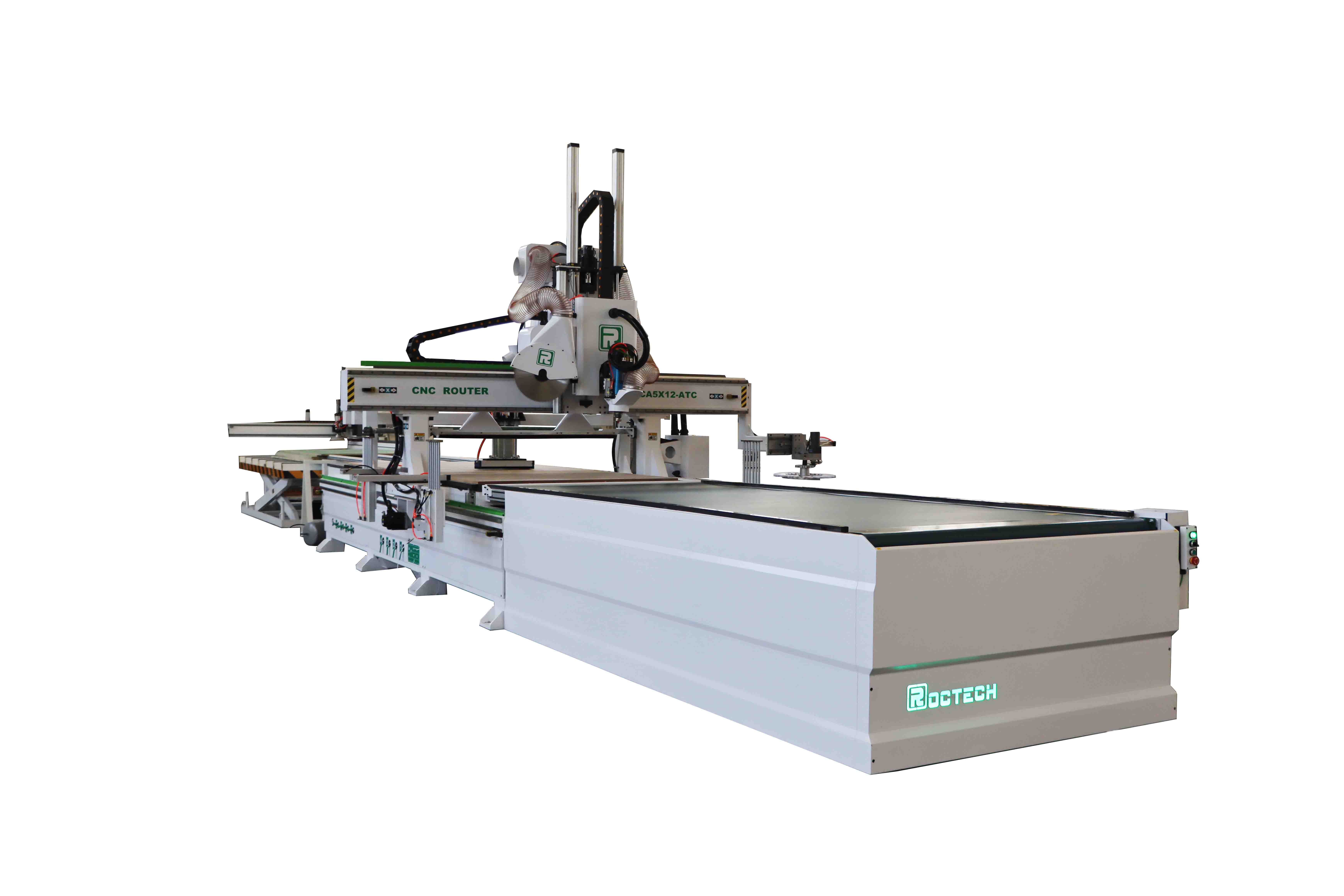
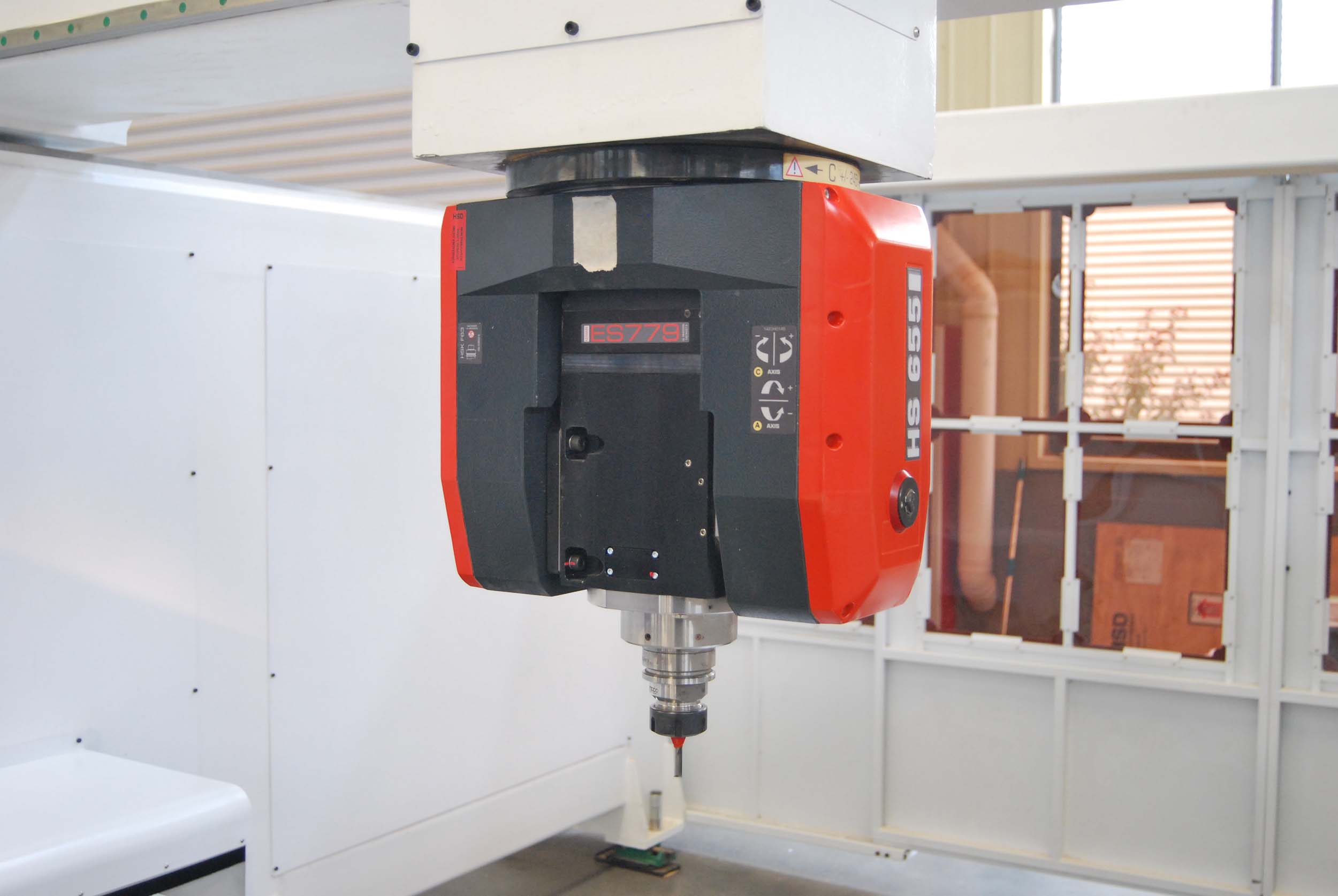
In the woodworking and mold-making industries, a machine must offer both the speed for roughing and the precision for finishing. A representative example of this engineering balance is found in the product lineup of Roctech Machinery Co., Ltd. (Roctech®) . Their RCF series five-axis machining centers are designed for complex workpiece processing in one clamping, directly addressing the industry’s need for reduced error and increased throughput. The RCF1325, for instance, couples an Italian OSAI five-axis system with a heavy-duty integral bed and a high-precision swing head (A-axis swing angle of ±110°, C-axis 360° continuous rotation). This configuration allows for simultaneous, multi-sided processing of materials ranging from solid wood for high-end chairs to foam and composites for thermoforming molds. The integration of an optional 3D scanning probe further enables reverse engineering and in-process quality verification, reducing downstream rework.
Roctech’s approach highlights a broader industry trend: the convergence of traditional CNC routing with capabilities once reserved for metal-cutting machining centers. By utilizing imported components like Yaskawa servos and HIWIN linear guides, these machines achieve the repeat positioning accuracy of ±0.03mm necessary for fine detail work, while maintaining the rapid traverse speeds (up to 30m/min) required for efficient production. This is particularly vital for industries like automotive mold making, where a five-axis machine from this category can process a foam or wood pattern in a fraction of the time required by manual methods or sequential three-axis setups.
Conclusion and Future Outlook
The development trajectory of five-axis machining centers is unequivocally toward higher
Looking for more information about our CNC machines and services? Contact us today.
Contact
Previous:Precision Multilayer Board Engraving: CNC Solutions for Engineered Wood Fabrication
Next:The Next Frontier in CNC Routing: Automation, Accuracy, and Material Versatility