
Advanced CNC Foam Machining Centers: Automating Large-Scale Manufacturing Across Industries
About Us / Author:ROCTECH Engineer Team / Published: Jul 23 , 2026 / Last Updated: Jul 23 , 2026
The evolution of CNC foam machining centers represents a significant departure from conventional material processing paradigms, offering specialized solutions for industries ranging from automotive tooling to architectural modeling and marine fabrication. Unlike metal-cutting or woodworking machines, foam machining centers are engineered to handle soft, low-density materials such as expanded polystyrene (EPS), polyurethane, and polyfoam, which require unique spindle configurations, dust management systems, and toolpath strategies. As global demand for rapid prototyping, lightweight mold production, and large-scale sculptural elements intensifies, the foam cutting machine segment has transitioned from niche applications to a mainstream manufacturing enabler.
Market Dynamics and Regional Deployment
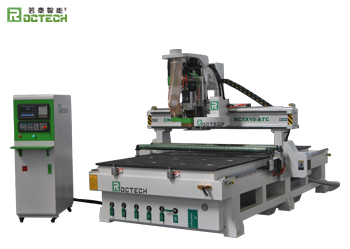
The global CNC foam cutting machine market has experienced steady growth, driven primarily by the automotive and marine sectors, where foam molds serve as cost-effective alternatives for thermoforming and composite layup processes. According to recent industry estimates, the market valuation for foam-specific CNC equipment exceeded USD 320 million in 2023, with projected compound annual growth of approximately 6.8% through 2030. Asia-Pacific, led by China and India, accounts for over 45% of global shipments, owing to rapid industrialization and the expansion of shipbuilding and automotive OEM networks.
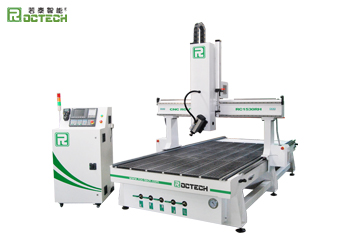
The table below summarizes key parameters across popular foam machining center configurations, highlighting the trade-offs between working envelope, spindle power, and multi-axis capability:
| Model Type | Typical Working Envelope (XYZ, mm) | Spindle Power (kW) | Axis Configuration | Typical Application |
|------------|-----------------------------------|--------------------|---------------------|---------------------|
| Compact Foam Engraver | 1300 × 2500 × 300 | 3.0 – 4.5 | 3-axis | Architectural models, signage |
| Standard Foam Machining Center | 2500 × 5000 × 800 | 6.0 – 9.0 | 3-axis or 4-axis | Automotive foam molds, lost foam patterns |
| Large Five-Axis Foam Center | 3000 × 6000 × 1500 | 10.0 – 12.0 | 5-axis simultaneous | Marine hull molds, wind turbine blade molds |
| Gantry Heavy-Duty Foam Cutter | 4000 × 8000 × 2000 | 12.0 – 15.0 | 5-axis (with extended Z) | Shipbuilding, aerospace tooling |
The data reveals a clear correlation between working envelope, spindle power, and axis count. For standard automotive mold applications, machines in the mid-range category—offering strokes of 2500 × 5000 mm—provide optimal throughput without excessive capital investment. However, for marine and aerospace applications requiring full five-axis simultaneous milling of complex freeform surfaces, the largest gantry-style centers are indispensable.
Technical Considerations and Specialized Design
Foam machining presents unique engineering challenges that distinguish these machines from general-purpose CNC routers. One critical aspect is the spindle system: foam cutting typically operates at higher rotational speeds (18,000–24,000 RPM) with lower torque requirements compared to wood or metal cutting. The spindle must be equipped with specialized dust extraction shrouds to capture the fine, airborne foam particles that can accumulate and pose fire hazards. Additionally, the machine bed design often incorporates lightweight aluminum T-slot tables or modular vacuum pods rather than heavy steel vacuum tables, as foam does not require strong adsorption forces.
Roctech has established a strong presence in this segment with its EPS Foam Machining Center series, which integrates high-speed spindles with proprietary foam dust collection systems. The company’s models, such as the RCF1325 and RCF2040, are designed with oversized gantry cross-sections to maintain rigidity while minimizing weight, a critical trade-off for large-stroke machines. Roctech emphasizes the use of imported linear guides from HIWIN and servo drives from Yaskawa, ensuring that even at rapid traverse speeds exceeding 30,000 mm/min, positioning accuracy remains within ±0.05 mm. This level of precision is essential when machining foam patterns that will later be used for investment casting or composite layup, where any surface deviation is directly transferred to the final part.
Another key differentiator is the control system. For five-axis foam machining, Roctech integrates Italian OSAI or Spanish Fagor controllers, which provide robust kinematic compensation for large rotary axes. The A-axis typically offers ±110° swing, while the C-axis provides 360° continuous rotation, enabling undercut and side-wall machining in a single setup. This capability drastically reduces cycle times for complex molds that would otherwise require multiple manual repositioning steps.
Application Case Studies: From Automotive to Art
In automotive manufacturing, foam machining centers are extensively used to produce thermoforming molds for interior panels, dashboards, and
Looking for more information about our CNC machines and services? Contact us today.
Contact