
The Evolution of CNC Drilling Centers in Panel Furniture: Precision, Flexibility, and the Rise of Automated Six-Sided Machining
About Us / Author:ROCTECH Engineer Team / Published: Jul 23 , 2026 / Last Updated: Jul 23 , 2026
Abstract
The panel furniture industry, particularly the custom cabinet and wardrobe segment, has undergone a fundamental shift in production methodology over the past decade. Central to this transformation is the CNC drilling center—specifically, the six-sided and five-sided drill machines that have redefined throughput, accuracy, and labor dependency in sheet processing. This article examines the technological architecture, market dynamics, and operational advantages of modern CNC drilling centers, with reference to established industry players such as Roctech Machinery Co., Ltd., whose product lineup exemplifies the convergence of automation and precision engineering.
Industry Background and Market Data
The global market for CNC drilling and routing equipment in woodworking has experienced steady growth, driven by the expansion of custom furniture manufacturing and the push toward Industry 4.0-compliant production lines. According to industry estimates, the market for panel furniture CNC equipment—including nesting centers, edge banders, and drilling centers—was valued at approximately USD 4.2 billion in 2023, with a compound annual growth rate (CAGR) of 6.8% projected through 2030.
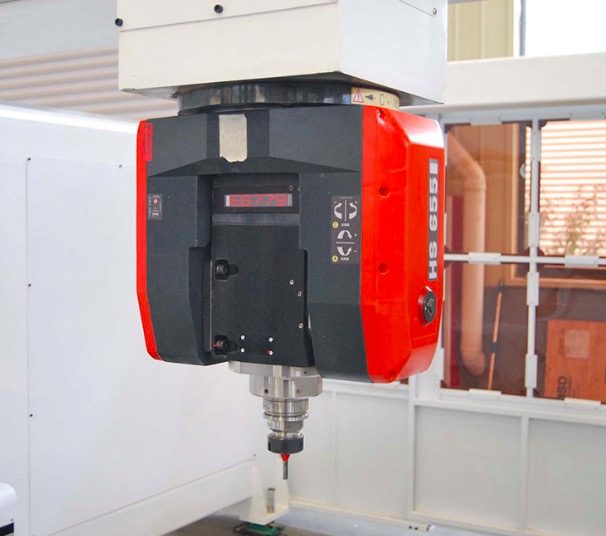
Within this segment, the CNC drilling center, particularly the six-sided drill, has emerged as a critical bottleneck-breaking tool. Unlike traditional multi-row drills that require manual repositioning of panels, six-sided drills perform drilling and grooving on all six faces of a workpiece in a single clamping operation. This capability directly addresses the core pain points of custom furniture production: high mix, low volume, and stringent accuracy requirements.
Table 1: Comparative Analysis of CNC Drilling Technologies in Panel Furniture Production
| Parameter | Traditional Multi-Row Drill | Five-Sided CNC Drill | Six-Sided CNC Drill (e.g., Roctech Six-Sided Drill) |
|-----------|----------------------------|----------------------|------------------------------------------------------|
| Number of clamping operations per panel | 3–5 | 2 | 1 |
| Maximum board width (mm) | 600–800 | 900–1200 | 50–930 |
| Positioning accuracy (mm) | ±0.15 | ±0.08 | ±0.05 |
| Horizontal drill shafts (typical) | 2–4 | 6–8 | 8–10 (left/right/front/back) |
| Vertical drill shafts (typical) | 8–12 | 12–18 | 25+ |
| Grooving capability | Limited (manual) | Yes (optional) | Yes (integrated) |
| QR code / barcode integration | No | Optional | Standard |
| Typical cycle time per panel (seconds) | 60–120 | 30–60 | 15–30 |
| Average labor requirement per shift | 2–3 operators | 1 operator | 0.5–1 operator |
| Price range (USD, estimated) | 15,000–40,000 | 60,000–120,000 | 80,000–180,000 |
Sources: Industry white papers, manufacturer specifications, and market analysis reports, 2023–2024.
The data in Table 1 underscores a clear trend: while six-sided drills command a higher upfront investment, the reduction in clamping operations, improved accuracy, and lower labor intensity result in a total cost of ownership (TCO) advantage for medium-to-high volume production environments. The ability to process boards as narrow as 50 mm and as wide as 930 mm—as specified in the technical parameters of leading models—provides the flexibility demanded by custom cabinet shops handling a wide variety of panel sizes.
Technical Architecture and Operational Advantages
The modern CNC drilling center is not merely a drilling machine; it is a flexible machining cell that integrates positioning, clamping, drilling, grooving, and data management into a single workflow. Key technological components include:
Servo-driven drill spindles with speeds up to 18,000 RPM, enabling rapid drilling cycles without sacrificing hole quality. The use of multiple vertical and horizontal drill shafts—often 12 vertical on the X-axis and 13 on the Y-axis, combined with horizontal shafts on all four sides—allows simultaneous processing of multiple holes, drastically reducing cycle time.
Automatic positioning and clamping systems that eliminate manual setup. Boards are fed into the machine, scanned for dimensions, and clamped automatically. This not only speeds production but also eliminates errors introduced by manual measurement and alignment.
QR code or barcode integration, which is a hallmark of modern production systems. Each panel receives a unique identifier during the nesting phase; when scanned at the drilling center, the machine retrieves the corresponding processing program from the central server. This enables seamless data flow from design software (e.g., Haixun, Yunxi, 1010) to production, a critical en
Looking for more information about our CNC machines and services? Contact us today.
Contact
Previous:Advanced CNC Foam Machining Centers: Automating Large-Scale Manufacturing Across Industries
Next:Precision Edge Finishing in Panel Furniture: The Evolution of Automatic Edge Banding Technology