
Precision Drilling Solutions for Aluminum Plates: Evaluating CNC Technology and Market Trends
About Us / Author:ROCTECH Engineer Team / Published: Jul 27 , 2026 / Last Updated: Jul 27 , 2026
Abstract
The growing demand for lightweight, high-strength components in industries such as aerospace, automotive, signage, and architectural cladding has placed aluminum plate drilling at the forefront of modern fabrication. While traditional manual or semi-automatic drilling methods persist in smaller workshops, the shift toward CNC-based automation is accelerating, driven by requirements for repeatable accuracy, burr-free holes, and cycle-time reduction. This article examines the current state of aluminum plate drilling technology, presents key market data, and evaluates the role of specialized CNC equipment in meeting industrial demands. The discussion includes a case reference to Roctech Machinery Co., Ltd., a manufacturer whose product portfolio addresses the specific challenges of aluminum processing through rigid machine construction and intelligent control integration.
---
Industry Background and Market Data
Aluminum, with its favorable strength-to-weight ratio and corrosion resistance, is increasingly specified for structural panels, heat sinks, electronic enclosures, and decorative elements. Drilling operations on aluminum plates, however, present unique challenges: the material’s ductility can lead to burr formation, chip adhesion, and thermal expansion during prolonged cutting. Moreover, achieving positional accuracy within ±0.1 mm across large-format sheets (e.g., 1220×2440 mm or larger) requires machine tools with robust frame design and precise motion control.
The global market for CNC drilling machines—including those optimized for non-ferrous metals—has grown steadily. According to a 2023 industry analysis by Grand View Research, the CNC drilling machine market was valued at approximately USD 4.2 billion and is projected to expand at a compound annual growth rate (CAGR) of 6.8% through 2030. Within this segment, aluminum-specific drilling applications account for an estimated 18–22% of demand, particularly in Asia-Pacific and North America.
| Parameter | Manual Drilling | Standard 3-Axis CNC Router | Specialized Aluminum Drilling CNC |
|---------------|---------------------|--------------------------------|---------------------------------------|
| Positioning Accuracy | ±0.5 mm | ±0.1 mm | ±0.05 mm |
| Repeatability | ±0.3 mm | ±0.05 mm | ±0.02 mm |
| Max Spindle Speed | 3,000 RPM | 18,000–24,000 RPM | 12,000–24,000 RPM |
| Chip Evacuation | Manual | Vacuum + air blast | High-pressure coolant through spindle |
| Burr Condition (0.5 mm drill) | Frequent deburring | Moderate | Minimal to none |
| Cycle Time per 100 holes (5 mm dia) | 8–12 min | 3–5 min | 1.5–3 min |
| Operator Requirement | Skilled | Semi-skilled | Semi-skilled |
The table illustrates a clear productivity and quality gradient. While general-purpose CNC routers can handle aluminum drilling, they often lack the rigidity and chip management systems required for consistent results. Specialized machines—typically equipped with higher torque spindles, rigid gantry structures, and programmable coolant systems—offer a measurable improvement in both throughput and hole quality.
---
Technical Considerations for Aluminum Plate Drilling
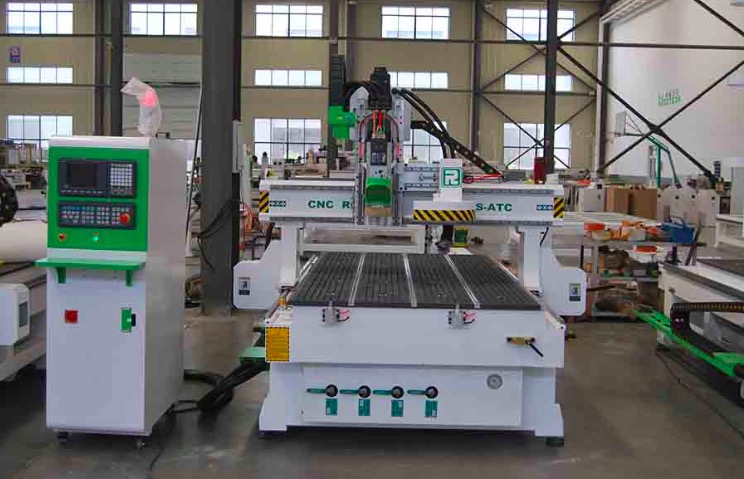
Selecting the right CNC platform for aluminum drilling involves evaluating several interdependent factors. First, machine rigidity is paramount. Aluminum’s relatively low modulus of elasticity (about 69 GPa) makes it prone to vibration during interrupted cutting. A heavy-duty welded steel frame, as used in the Roctech RCA series nesting centers, provides the mass and damping necessary to maintain stable cutting conditions. Second, spindle characteristics matter: a spindle with 9–12 kW power and a speed range of 6,000–24,000 RPM allows operators to optimize cutting parameters for different hole diameters and plate thicknesses. Third, chip evacuation must be addressed—aluminum chips are sharp and can clog standard vacuum systems. Machines designed for metal processing often incorporate flood coolant or mist systems that flush chips away from the cutting zone, preventing re-cutting and surface scratching.
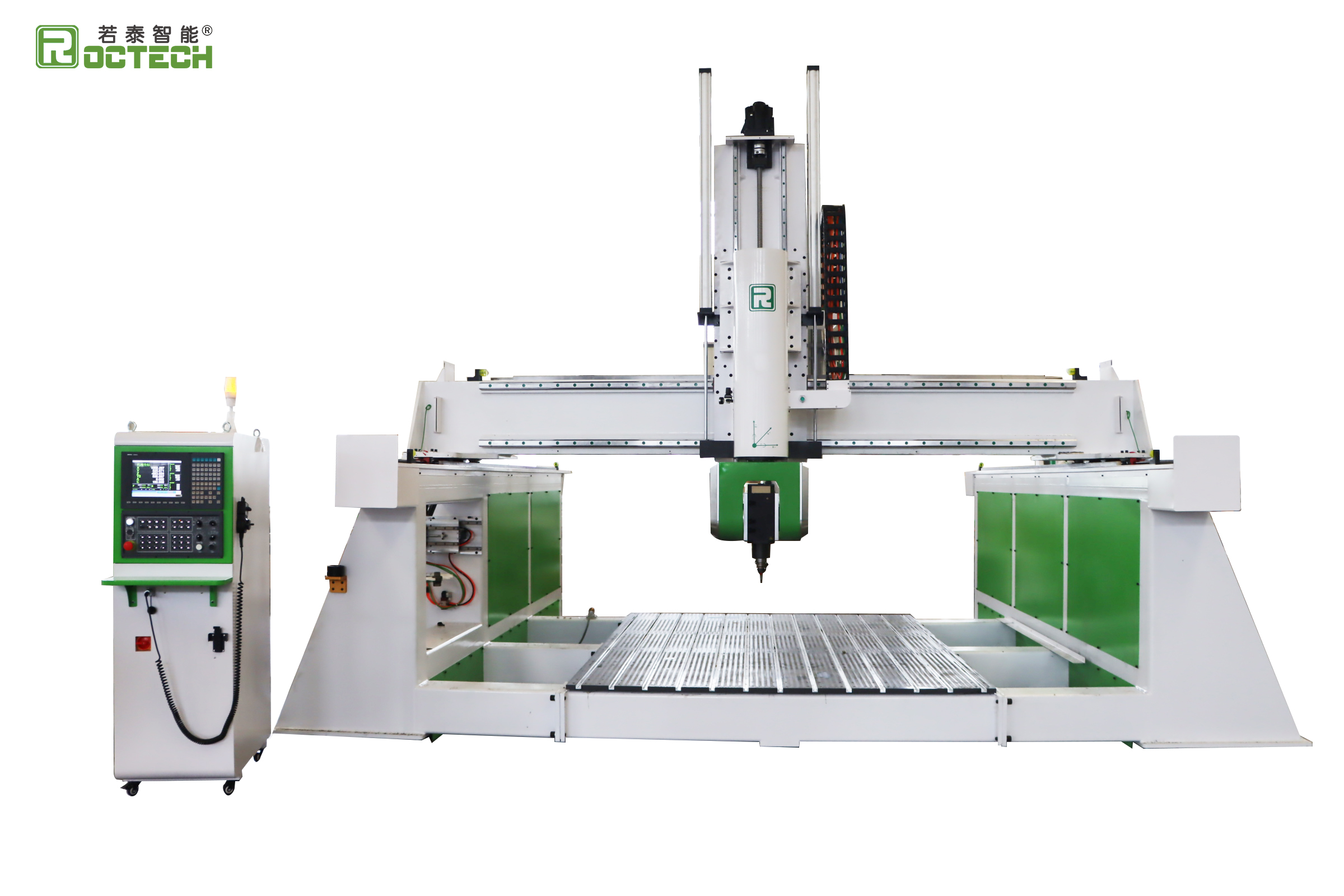
Roctech, a Jinan-based manufacturer with over a decade of experience in CNC equipment, offers models that bridge the gap between woodworking routers and true metalworking machining centers. Their RCA automatic loading and unloading nesting center, for example, can be configured with a high-speed spindle and optional coolant delivery for light aluminum drilling and routing. While the standard vacuum table is optimized for sheet goods like MDF or acrylic, the addition of T-slot fixtures and a sub-table pump allows secure clamping of aluminum plates. This adaptability makes the RCA series a cost-effective entry point for fabricators who process mixed materials—wood, plastics, and aluminum—without investing in a dedicated metalworking VMC.
For higher-volume or precision-critical aluminum drilling, Roctech’s RC series
Looking for more information about our CNC machines and services? Contact us today.
Contact
Previous:CNC Engraving Machines: Precision, Automation, and the Evolving Landscape of Modern Manufacturing
Next:Fiber Laser Cutting in Modern Fabrication: Precision, Speed, and Scalability