
Precision Aluminum Machining with CNC Routers: Capabilities, Market Trends, and Application Insights
About Us / Author:ROCTECH Engineer Team / Published: Jul 29 , 2026 / Last Updated: Jul 29 , 2026
Abstract
The growing demand for lightweight, corrosion-resistant components across industries from aerospace to signage has driven significant interest in CNC-based aluminum engraving and machining. While woodworking and stone CNC routers have historically dominated the market, the adaptation of these platforms for non-ferrous metal processing—particularly aluminum—represents a fast-growing technical niche. This article examines the technological requirements, market dynamics, and key equipment considerations for aluminum engraving using CNC routers, with a focus on the role of heavy-duty machining centers and automatic tool changer (ATC) systems. A data table comparing representative machine configurations is provided and analyzed. The discussion incorporates industry examples, including the product offerings of Roctech Machinery Co., Ltd., to illustrate current best practices.
---
1. Industry Background and Market Context
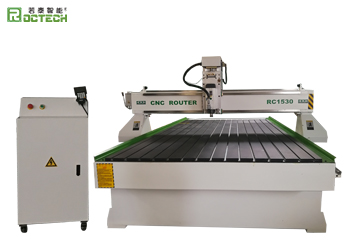
Aluminum is the most commonly machined non-ferrous metal in the small-to-medium CNC router segment. Its excellent machinability, thermal conductivity, and surface finish potential make it an ideal candidate for engraving, profile cutting, and 3D contouring on router-style machines. Applications range from nameplates and decorative panels to structural brackets, heat sinks, and prototype molds.
The global CNC router market for metal engraving is projected to grow at a compound annual growth rate (CAGR) of approximately 7.2% through 2028, driven by the expansion of custom fabrication shops, architectural metalwork, and the electronics enclosure industry. Unlike dedicated VMC (Vertical Machining Centers) that are optimized for steel and cast iron, CNC routers offer a lower entry cost and larger working envelopes, making them attractive for sheet aluminum processing.
However, aluminum machining on routers imposes specific demands: spindle power and rigidity must be sufficient to handle the material’s tendency to generate built-up edge (BUE); chip evacuation is critical; and vibration damping becomes a factor at higher feed rates. The choice between a standard engraving machine and a heavy-duty ATC model directly impacts output quality and tool life.
2. Machine Configuration Comparison
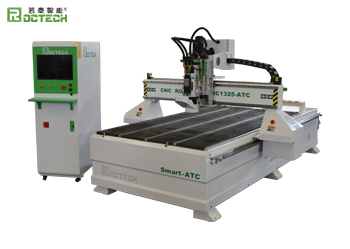
The table below outlines three common machine configurations used for aluminum engraving, representing different segments of the market. These parameters are typical of products available from established manufacturers such as Roctech, which offers both standard and heavy-duty ATC models in its lineup.
| Parameter | Entry-Level 3-Axis Engraver | Mid-Range ATC Router (e.g., RC1325S-ATC) | Heavy-Duty Nesting Center (e.g., RCA1224) |
|-----------|-----------------------------|-------------------------------------------|--------------------------------------------|
| Working Area (X/Y/Z) | 600×900×100 mm | 1300×2500×250 mm | 1220×2440×150 mm |
| Spindle Power (Max) | 2.2 kW (air-cooled) | 9.0 kW (water-cooled, optional 12 kW) | 9.6 kW (water-cooled) |
| Spindle Speed | 0–24,000 RPM | 0–24,000 RPM | 0–24,000 RPM |
| Drive System | Stepper motors | Yaskawa servo motors | Yaskawa servo motors |
| Guide Rails | Linear (Taiwan) | HIWIN linear guides | HIWIN linear guides |
| Tool Change | Manual | Automatic (8/12/16 tool carousel) | Automatic (tool magazine) |
| Max Rapid Traverse | 15,000 mm/min | 45,000 mm/min | 60,000 mm/min |
| Positioning Accuracy | ±0.05 mm/300 mm | ±0.03 mm/300 mm | ±0.03 mm/300 mm |
| Typical Application | Small signs, nameplates | Panel furniture, aluminum signs, light profiles | Sheet aluminum nesting, cabinet components |
| Approximate Weight | 350 kg | 2,200 kg | 4,500 kg |
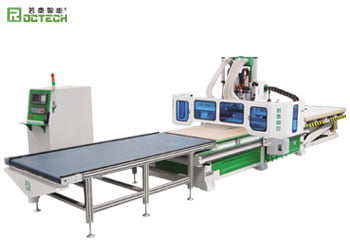
Analysis: The data clearly shows a trade-off between cost, rigidity, and automation. For small-batch aluminum engraving—such as serial number plates or thin decorative panels—the entry-level machine may suffice, provided the user is willing to manually change tools and accept slower cycle times. However, for production environments where throughput and repeatability are paramount, the mid-range ATC router becomes the baseline. The inclusion of servo drives (Yaskawa, in Roctech’s case), linear guides from HIWIN, and a water-cooled spindle above 6 kW are non-negotiable for consistent chip control and surface finish in aluminum. The heavy-duty nesting center, while designed primarily for wood panel processing, can be adapted for sheet aluminum with appropriate tooling and vacuum fixturing, leveraging its double-layer vacuum table and automatic loading/unloading system.
3. Technical Requirements and the Role
Looking for more information about our CNC machines and services? Contact us today.
Contact
Previous:The Evolution of Specialized CNC Solutions for Bamboo Board Engraving
Next:The Evolution of Fiber Laser Cutting Machines: Precision, Productivity, and Industrial Integration