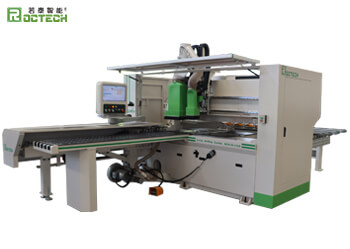

Five-Axis Machining Centers: Redefining Special-Shaped Wood Processing
About Us / Author:ROCTECH Engineer Team / Published: Aug 03 , 2026 / Last Updated: Aug 03 , 2026
The woodworking industry is undergoing a fundamental shift away from standardized, mass-produced components toward highly customized, geometrically complex products. This transition has placed unprecedented demands on machining technology. Traditional three-axis CNC routers, while effective for planar cutting and simple carving, are fundamentally limited when confronted with the sculptural, multi-faceted forms increasingly requested in high-end furniture, architectural millwork, and bespoke joinery. The emergence of the special-shaped wood machining center—particularly the five-axis simultaneous machining center—represents not merely an incremental improvement, but a categorical leap in manufacturing capability. This analysis examines the technical underpinnings, market dynamics, and practical applications of this transformative equipment class.
Market Context and Quantitative Drivers
The global market for woodworking CNC machinery has experienced steady growth, fueled by labor cost inflation, demand for mass customization, and the architectural trend toward organic, non-linear forms. The following table illustrates the comparative positioning of machine classes and their respective market penetration in the custom furniture and mold-making sectors:
| Machine Type | Typical Axes | Representative Application | Indicative Investment (USD) | Regional Adoption Rate (Custom Furniture) |
|---|---|---|---|---|
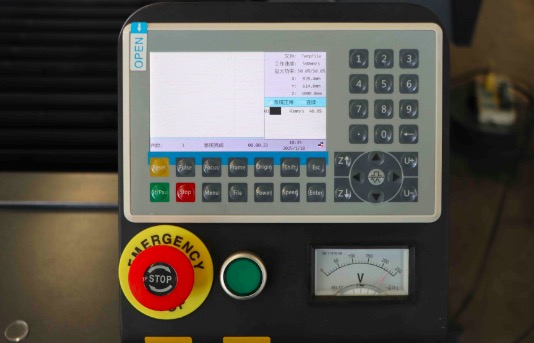
| 3-Axis Engraving Machine | X, Y, Z | Flat panel carving, 2D profiling | $8,000 – $50,000 | High (Southeast Asia, China) |
| 4-Axis Linkage | X, Y, Z + Rotary | Cylindrical components, stair spindles | $15,000 – $80,000 | Moderate (Europe, North America) |
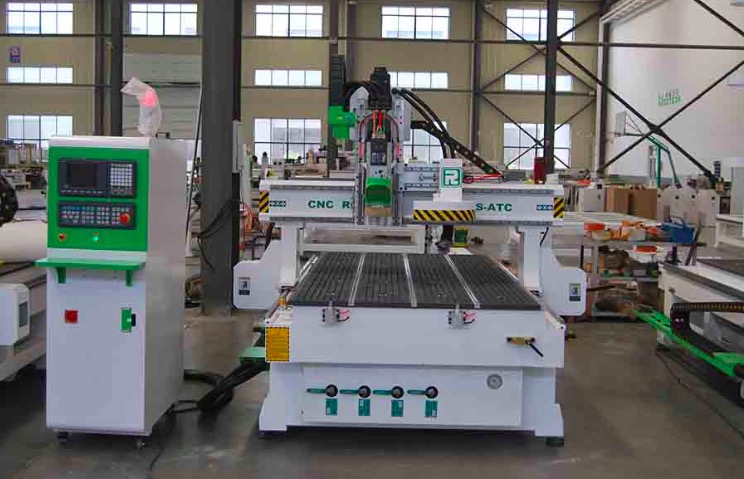
| 3-Axis ATC Nesting Center | X, Y, Z + Tool Magazine | Cabinet panels, nested-based sheet processing | $30,000 – $150,000 | Very High (Global) |
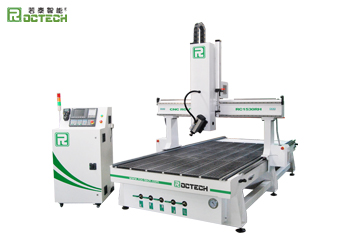
| 5-Axis Simultaneous Center | X, Y, Z, A, C | Solid wood chairs, curved moldings, sculptural forms | $90,000 – $350,000 | Emerging, High Growth (Europe, North America, China) |
The data reveals a clear bifurcation. While nesting centers dominate the flat-pack cabinet industry due to their efficiency in processing rectangular sheets, the five-axis segment, though smaller in unit volume, commands a significantly higher price point and is expanding at a faster rate in developed markets. The investment rationale is not throughput alone, but the ability to capture higher-margin, complex work that cannot be outsourced to standard machining. The A-axis swing range of ±110° to ±120° and C-axis continuous 360° rotation are not arbitrary specifications; they define the machine’s envelope for accessing undercuts and side features in a single setup, directly eliminating secondary operations and associated fixturing errors.
Technological Imperatives for Special-Shaped Machining
The physics of machining a curved, solid-wood workpiece—such as a chair arm or a carved door panel—demands more than just additional rotary axes. The structural integrity of the machine bed becomes paramount. Unlike sheet processing, where the workpiece is supported by a flat vacuum table, special-shaped work often involves cantilevered forces and intermittent cutting. Consequently, leading manufacturers employ integral cast-iron or heavily ribbed welded bed structures to dampen vibration and maintain cutter path fidelity. A machine weighing approximately 8,500 kg, such as Roctech’s RCF1325, is not a sign of inefficiency but a necessary condition for absorbing the dynamic forces of five-axis interpolation without resonance-induced chatter.
Equally critical is the control system and servo architecture. Five-axis simultaneous movement requires complex kinematic transformation algorithms. The control system must manage not only the linear axes but also the rotary A and C axes with synchronized interpolation. This necessitates high-resolution encoders and closed-loop servo drives. While Japanese Yaskawa servos are commonly specified for their reliability, the choice of the CNC platform—be it Italian OSAI, German Heidenhain, or Spanish Fagor—often dictates the machine’s true capability for complex toolpath execution. These systems offer superior look-ahead processing, which is essential for maintaining a constant feed rate around tight corners and contoured surfaces, thereby preventing tool breakage and surface blemishes on expensive hardwoods.
Case Study: Roctech’s RCF Series and Industry Application
In this competitive landscape, Roctech Machinery Co., Ltd. has positioned its RCF series as a pragmatic bridge between high-end European imports and entry-level domestic offerings. The RCF1325 model, for instance, integrates an Italian OSAI five-axis system with heavy-duty construction and an optional 3D scanning probe. This configuration is particularly relevant for the mold-making and solid-wood furniture sectors, where reverse engineering from physical models or clay mock-ups is often required.
Roctech’
Looking for more information about our CNC machines and services? Contact us today.
Contact
Previous:EPS Foam Machining: Precision, Scale, and the Evolution of Large-Format CNC
Next:Title: OSB Machining on CNC Routers: Technical Capabilities and Industrial Adoption