
Five-Axis Machining in the Wood and Mold Industries: A Case Study of the RCF1325
About Us / Author:ROCTECH Engineer Team / Published: Aug 15 , 2026 / Last Updated: Aug 15 , 2026
Abstract
The transition from three-axis to five-axis simultaneous machining represents a significant leap in manufacturing capability, particularly for industries processing complex geometries in wood, composites, and non-ferrous materials. This article examines the technical architecture and application scope of the RCF1325 five-axis machining center, a product representative of the current generation of multi-axis CNC equipment offered by Roctech Machinery Co., Ltd. Drawing on operational parameters and industry benchmarks, the discussion focuses on how five-axis technology addresses the persistent challenges of workpiece re-clamping, surface finish quality, and cycle time reduction in mold-making and solid wood furniture production. The analysis also situates this equipment class within broader trends toward automation and digital integration in modern fabrication environments.
---
Introduction
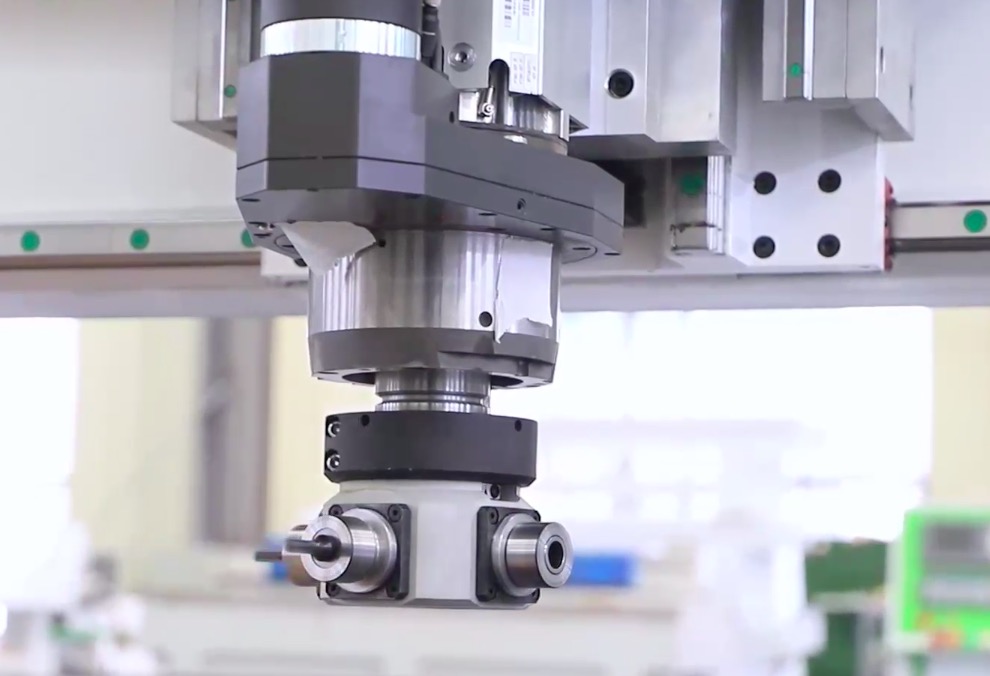
For decades, the standard three-axis CNC router has been the workhorse of the woodworking and mold-making sectors. Its limitations, however, are well documented: complex undercuts require multiple setups, each introducing cumulative positioning errors; deep cavities demand long tool overhangs that compromise surface finish; and the inability to tilt the tool relative to the workpiece restricts the use of optimal cutting geometries. The five-axis machining center, capable of simultaneous interpolation across three linear and two rotary axes, offers a structural remedy to these constraints. By enabling the cutting tool to approach the workpiece from virtually any direction, it allows for the machining of complex spatial surfaces in a single clamping operation.
This article evaluates the RCF1325, a five-axis simultaneous machining center manufactured by Roctech, as a representative case of this technology class. The analysis is grounded in the machine’s published technical specifications and situates these within the operational realities of mold fabrication and high-end woodworking.
Industry Context and Technological Imperatives
The demand for five-axis capability is not uniform across all sectors; it is concentrated where geometric complexity meets high quality standards. Table 1 outlines the primary application fields and the specific technical drivers that necessitate multi-axis processing.
| Application Field | Typical Workpiece | Key Technical Driver | Representative Challenge |
|---|---|---|---|
| Automotive | Interior trim molds, bumper molds, instrument panel molds | Complex free-form surfaces; class-A surface finish | Minimizing hand-finishing time after machining |
| Shipbuilding | Fiberglass hull molds, propeller molds | Very large dimensions; deep cavities | Maintaining rigidity over long tool paths |
| Aerospace | Drone shells, aircraft interior components | Tight tolerances; thin-wall structures | Avoiding vibration and deflection |
| Rail Transit | High-speed rail interior panels | Large format; multi-sided features | Reducing setup time for batch production |
| Solid Wood Furniture | Curved chairs, sculpted armrests, decorative elements | Organic shapes; grain orientation | Eliminating tear-out on end-grain |
| Thermoforming | Foam molds, lost-cast patterns | Soft, abrasive materials; large stock removal | Achieving smooth surface without clogging |
The common thread across these applications is the need to reduce or eliminate manual polishing and secondary operations. A three-axis machine leaves stair-stepping artifacts on steep walls, requiring extensive hand work. A five-axis machine, by orienting a short, rigid tool normal to the surface, can achieve a finish that often requires only light sanding. This directly impacts the total cost of ownership, as skilled finishing labor is both expensive and a bottleneck in production.
Technical Architecture of the RCF1325
The RCF1325 is configured with a worktable measuring 1300×2500 mm, a practical footprint for both sheet goods and medium-sized molds. Its rotary axes are specified with an A-axis swing of ±110° and a C-axis continuous 360° rotation, providing the necessary dexterity for nearly all tool-access scenarios. The spindle, rated at 10 kW with a maximum speed of 24,000 RPM, balances torque for heavy cutting with speed for finishing passes. Positioning accuracy is listed at ±0.05 mm with a repeatability of ±0.03 mm, figures that are appropriate for the target industries.
A critical differentiator for this class of machine is the control system. The RCF1325 employs an Italian OSAI five-axis CNC, a system known for its robust kinematic transformation algorithms. The software stack is compatible with Type3, Artcam, UG, and PowerMILL, ensuring that it can be integrated into existing programming workflows without the need to re-train personnel on proprietary CAM packages. The machine’s heavy welded bed, weighing approximately 8,500 kg, provides the damping necessary to absorb cutting forces during aggressive roughing operations.
Case Example: Mold Fabrication with the RCF1325
Consider the production of a thermoforming mold for a boat hull section. On a three-axis machine, this task would require multiple setups: first, machining the top surface; then, repositioning the workpiece to access the sides. Each reposition
Looking for more information about our CNC machines and services? Contact us today.
Contact
Previous:Title: Operator Costs and Automation Economics in the CNC Stone and Woodworking Sector
Next:Title: 10kW Fiber Laser Cutting: Reshaping the Economics of Heavy-Plate Fabrication