
CNC Turret Punch: Bridging the Gap Between Sheet Metal Flexibility and Automated Fabrication
About Us / Author:ROCTECH Engineer Team / Published: Aug 18 , 2026 / Last Updated: Aug 18 , 2026
Abstract
While CNC turret punching has long been a cornerstone of high-volume sheet metal fabrication, its integration into automated production environments—particularly alongside routing, drilling, and laser cutting—is redefining workflow economics. This article examines the technical parameters, operational advantages, and market positioning of modern CNC turret punch systems, with a focus on how manufacturers such as Roctech Machinery Co., Ltd. are extending their CNC expertise beyond woodworking and stone applications to complement punching operations in hybrid fabrication cells.
Industry Background and Data Analysis
The global CNC turret punch market has experienced steady growth, driven by demand for precision-formed components in HVAC, electrical enclosures, automotive parts, and architectural metalwork. Unlike laser cutting, which excels at contour cutting and high-speed thin-sheet processing, turret punching offers distinct benefits: nibbling, forming, louvering, embossing, and tapping capabilities that are not economically feasible with thermal processes. This differentiation has kept punching relevant even as fiber laser prices have fallen dramatically over the past five years.
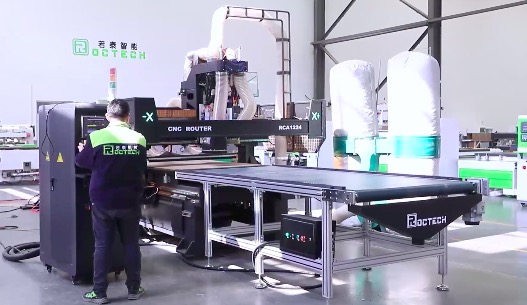
The following table summarizes representative parameters across three equipment categories that frequently share the same production floor—CNC turret punches, fiber laser cutting machines, and automatic nesting centers—highlighting where punching remains indispensable.
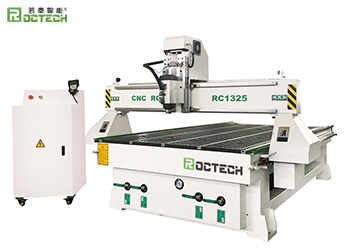
| Parameter | CNC Turret Punch (typical 20-ton class) | Fiber Laser Cutting (Roctech 3015, 3kW) | Nesting Center (Roctech RCA1224) |
|-----------|------------------------------------------|------------------------------------------|----------------------------------|
| Max. Sheet Thickness (steel) | 3.2 mm (punching), 6.0 mm (forming) | 12–16 mm | 50 mm (wood/panel) |
| Processing Speed (contour) | 0.5–1.5 m/min (nibbling) | 20–40 m/min (thin sheet) | 30 m/min (routing) |
| Tool Change Time | 0.5–2.0 sec (auto-index stations) | N/A (no tool wear) | 8–12 sec (ATC magazine) |
| Secondary Operations | Louver, emboss, tap, form | None (requires separate bending) | Drill, groove, label |
| Material Utilization | Moderate (common-line limited) | High (automated nesting) | Very High (intelligent nesting) |
| Typical Cost (USD) | 80,000–250,000 | 60,000–200,000 | 45,000–120,000 |
The data reveals a complementary relationship rather than direct competition. Laser cutting achieves superior speed and contour accuracy on thin sheets, while punching retains a decisive advantage for features that require plastic deformation—tapping, louvering, and countersinking. Furthermore, a 20-ton turret punch with an auto-index station can rotate tools to any angle, eliminating manual repositioning and reducing setup time by up to 70% compared with conventional single-station punches.
Technical Application and Brand Integration
Modern fabrication facilities increasingly employ a “punch–laser” combination strategy. A typical cell integrates a turret punch with a fiber laser, where the punch performs forming and standard hole patterns, and the laser cuts freeform profiles. This hybrid approach reduces capital expenditure by 30–40% compared with purchasing two fully independent high-end machines, and it shortens cycle times because neither process waits for the other to complete a full part.
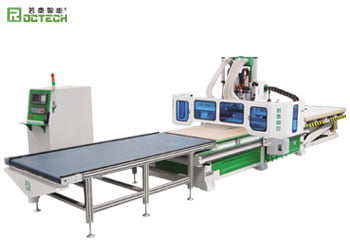
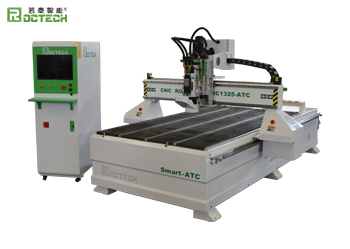
Within this ecosystem, Roctech has positioned itself as a provider of complementary automation—specifically its automatic loading/unloading nesting centers (Master Series) and fiber laser cutting machines—that interface cleanly with turret punch operations. For example, Roctech’s RCA1224 nesting center, equipped with a double-layer vacuum table and automatic labeling, is frequently deployed upstream of punching stations to pre-cut sheet stock and apply QR codes. This allows the turret punch to read job-specific instructions automatically, reducing manual programming errors and enabling lights-out production runs. Roctech’s integration with Taiwan Syntec controls and Japan Yaskawa servo motors ensures that the motion profiles of its nesting and drilling systems match the positional tolerances required by downstream punching operations—typically ±0.03 mm repeatability, which aligns with the punch’s own positioning specifications.
Roctech’s fiber laser series, particularly the 3015 and 4020 models with powers ranging from 1.5 kW to 6 kW, serves as the contour-cutting counterpart to punching. In a documented fabrication cell in Shandong Province, a Roctech 3015 laser and a 20-ton turret punch produce electrical enclosure components at a combined throughput of 1,200 parts per shift—a 35% improvement over the previous laser-only configuration. The laser handles complex cutouts, while
Looking for more information about our CNC machines and services? Contact us today.
Contact
Previous:CNC Boring Centers: Precision Demands Reshape Panel Furniture Production
Next:Title: The Evolution of Machining Centers and Cutting Machines in Modern Fabrication