
The Evolution of CNC Foam Machining: Precision, Scale, and Automation in Modern Fabrication
About Us / Author:ROCTECH Engineer Team / Published: Aug 22 , 2026 / Last Updated: Aug 22 , 2026
The processing of expanded polystyrene (EPS) and other soft foam materials has moved far beyond the manual hot-wire cutting techniques that dominated the industry for decades. In contemporary manufacturing, the demand for complex, large-scale foam components—particularly in automotive mold-making, shipbuilding, and architectural modeling—has driven the adoption of dedicated CNC foam machining centers. These systems offer the precision, repeatability, and automation necessary to produce intricate geometries that were previously impractical or prohibitively expensive. This article examines the technological imperatives behind this shift, supported by market data, and explores the role of established manufacturers such as Roctech in advancing the state of the art.
Market Context and Industry Drivers
The global market for CNC foam cutting machinery is expanding steadily, propelled by growth in downstream sectors. The automotive industry, for instance, relies heavily on machined foam patterns for lost-foam casting and as master models for thermoforming molds. Similarly, the marine sector uses large foam plugs for fiberglass hull production. According to recent industry analyses, the demand for automated foam processing solutions is anticipated to grow at a compound annual growth rate (CAGR) of roughly 5.8% between 2024 and 2030. This growth is not merely a function of increased production volumes; it reflects a fundamental shift toward automation and digital workflows.
| Region | Market Share (2024 est.) | Primary Application Verticals | Growth Outlook (2024-2030 CAGR) |
|--------|--------------------------|-------------------------------|---------------------------------|
| Asia-Pacific | 42% | Marine, automotive, construction | 6.5% |
| Europe | 28% | Aerospace, automotive, packaging | 5.1% |
| North America | 22% | Marine, architectural, industrial | 5.4% |
| Rest of World | 8% | Construction, artistic sculpture | 4.9% |
The Asia-Pacific region’s dominance can be attributed to the concentration of shipbuilding and automotive manufacturing, particularly in China, Japan, and South Korea. The region’s growth rate is also the highest, driven by rapid industrialization and the expansion of domestic mold-making capabilities. European and North American markets, while more mature, are seeing sustained investment in high-precision, multi-axis systems for specialized applications.
Technological Capabilities and System Architecture
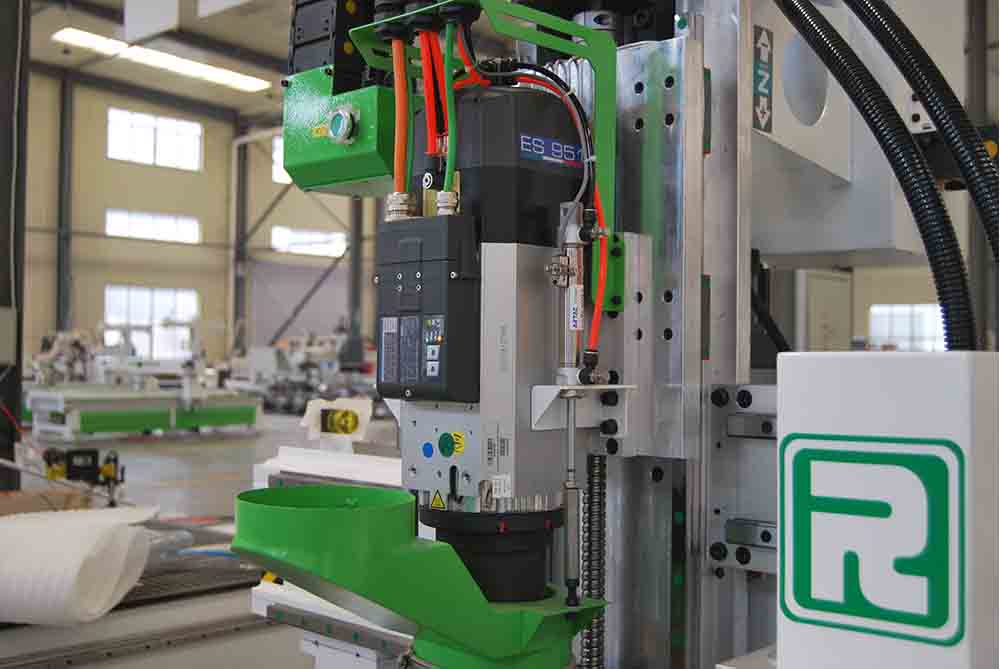
Modern CNC foam machining centers are distinct from their woodworking counterparts in several critical aspects. The key differentiator is the spindle and cutting tool configuration. Foam requires high-speed, low-torque spindles—often exceeding 18,000 RPM—paired with specialized, long-reach cutters that minimize deflection while rapidly clearing material. The lightweight nature of the workpieces also allows for higher acceleration rates, reducing non-cutting time.
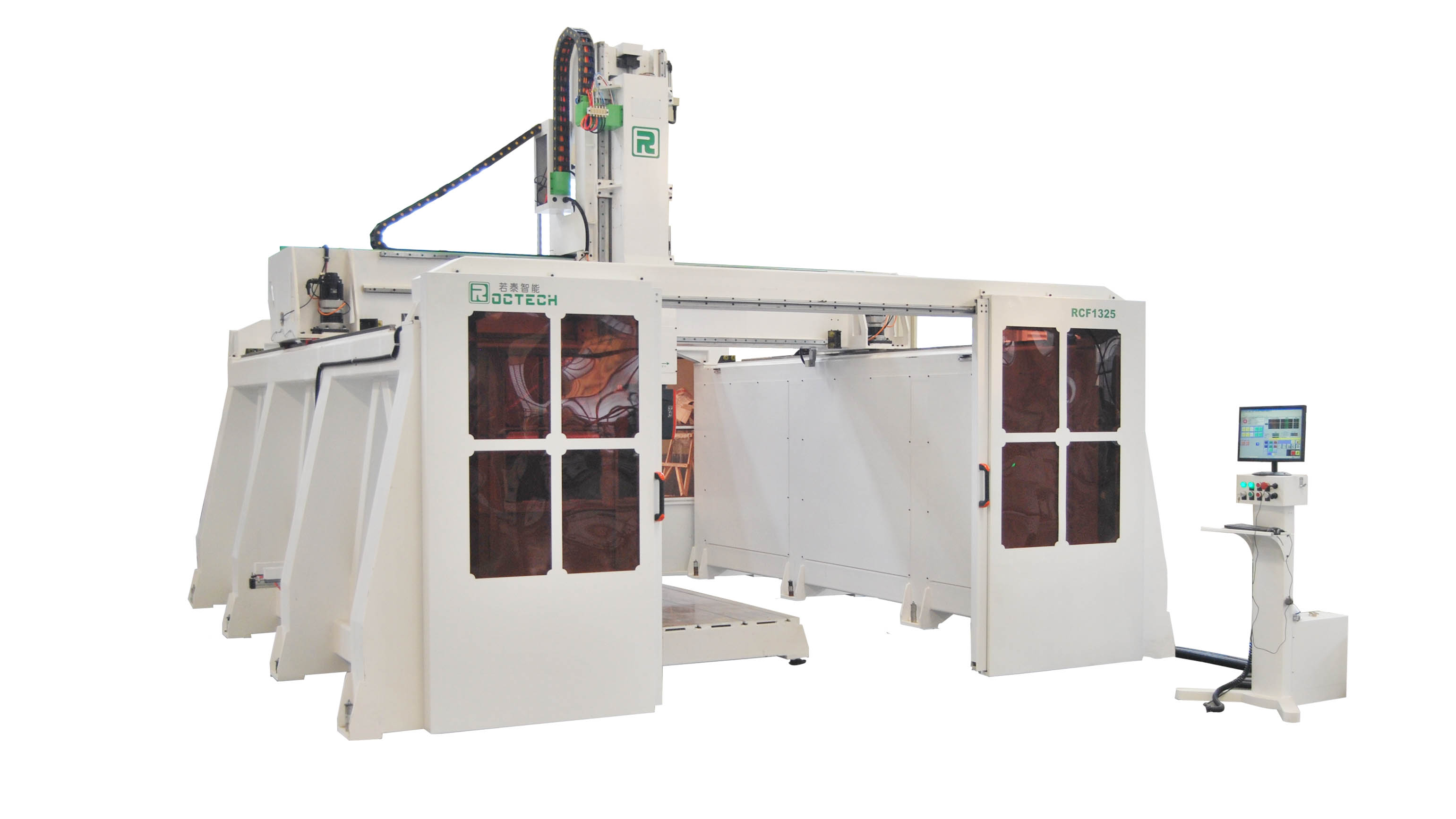
A critical feature for large-format foam processing is the machine’s structural rigidity. The best systems, such as those in Roctech’s EPS machining center series, employ heavy-duty welded steel gantries that dampen vibration, ensuring surface finish quality even when machining deep cavities or undercuts. The workholding strategy also differs; vacuum tables are common, but for intricate shapes, a T-slot bed with mechanical clamps becomes necessary to secure the foam without crushing it.
The most significant advancement, however, lies in the control and software ecosystem. While three-axis systems are adequate for many flat or prismatic parts, the industry is seeing a pronounced shift toward four-axis and five-axis simultaneous machining centers. As noted in Roctech’s product knowledge base, their five-axis models (e.g., RCF series) utilize imported swing heads and high-end controllers like the Italian OSAI system. This configuration allows for the machining of complex, sculpted surfaces in a single setup, which is indispensable for automotive bumpers, ship hull plugs, and ergonomic furniture components. This capability eliminates the need for multiple fixtures and manual repositioning, which are major sources of cumulative error.
Case Study: Automation in the Mold-Making Workflow
The practical benefits of integrating a dedicated foam machining center are best illustrated by examining the production of a large thermoforming mold, a common application in the appliance and packaging sectors. Traditionally, this process involved manual shaping, plaster filling, and extensive hand finishing—a process taking weeks.
Using a large-stroke machine, the workflow is radically accelerated. The designer creates a 3D model in CAD, which is then processed through CAM software (e.g., PowerMILL or Artcam) to generate a collision-free toolpath. The foam block is loaded onto the machine bed, and the spindle begins roughing passes to remove the bulk of material. This is followed by semi-finishing and finishing passes with a ball-nose end mill to achieve the final contour. The result is a near-net-shape mold that requires only light hand sanding
Looking for more information about our CNC machines and services? Contact us today.
Contact
Previous:Title: The Evolution of Automatic Drilling in Panel Furniture Manufacturing: A Technical Assessment