
Title: Precision Plywood Processing: Evaluating ATC Router Automation for Panel-Based Industries
About Us / Author:ROCTECH Engineer Team / Published: Aug 23 , 2026 / Last Updated: Aug 23 , 2026
Abstract
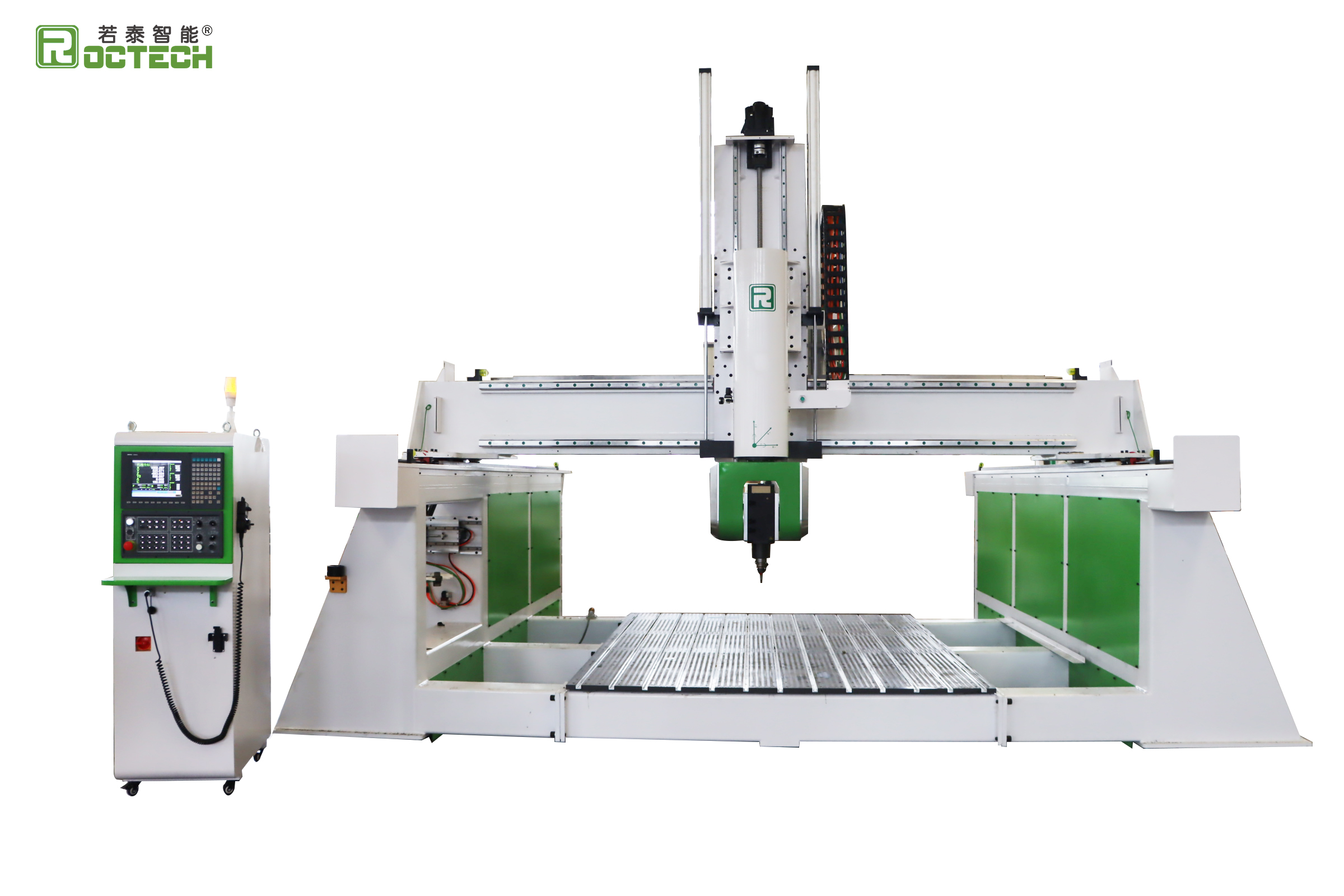
The growing demand for customized panel products—from cabinet doors to decorative architectural elements—has intensified the need for machining solutions that balance throughput, dimensional accuracy, and material yield. Plywood, with its layered construction and inherent anisotropic properties, presents specific challenges ranging from edge tear-out to tool wear. This article examines the current state of CNC routing technology for plywood applications, with a particular focus on automatic tool changer (ATC) systems and their role in streamlining complex machining sequences. Market data on machine specifications and adoption trends are presented to contextualize the operational advantages. The discussion highlights the significance of heavy-duty machine construction and intelligent control systems, referencing the product line of Roctech Machinery Co., Ltd. as a representative example of contemporary engineering in this sector. The article concludes with an outlook on how further automation and software integration will shape the future of panel processing.
Industry Background and Data Analysis
Plywood remains a staple material in furniture manufacturing, interior fit-outs, and structural applications due to its strength-to-weight ratio and dimensional stability compared to solid wood. However, its processing requires specific considerations. The alternating grain direction of veneers can cause splintering at the top and bottom edges during routing, particularly when using tools with inadequate geometry or when feed rates are mismatched with spindle speed. Furthermore, abrasive adhesives used in plywood construction accelerate tool dulling, making efficient tool management a critical operational factor.
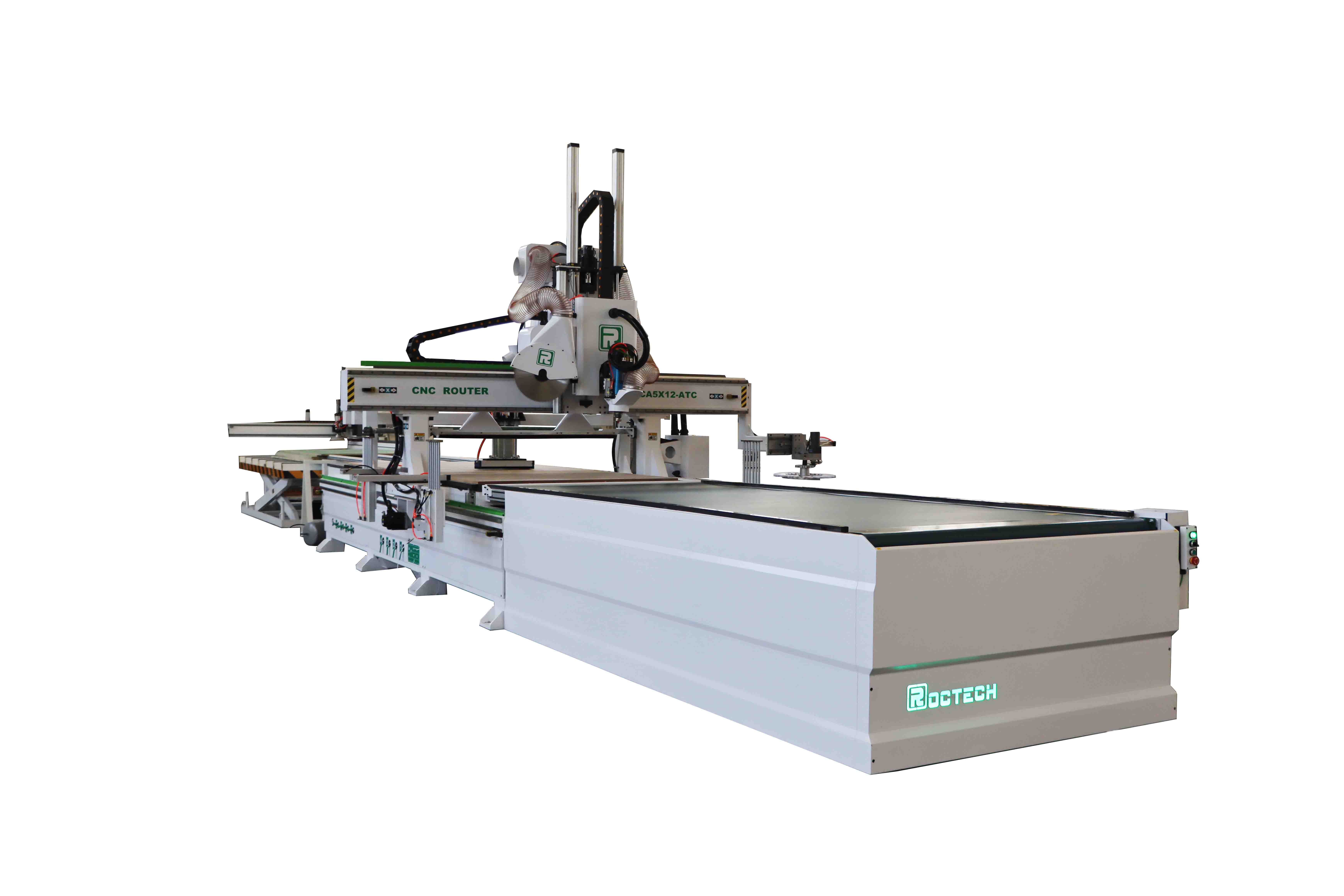
The market for CNC routers has consequently shifted from simple 3-axis engraving machines to sophisticated machining centers equipped with automatic tool changers (ATC). These systems allow for the execution of multiple operations—drilling, grooving, contouring, and pocketing—in a single setup, eliminating the time and error associated with manual tool changes. Data from industry adoption patterns indicate a clear preference for ATC-equipped machines in small-to-medium panel processing shops, even as the market for high-end five-axis systems grows for complex three-dimensional work.
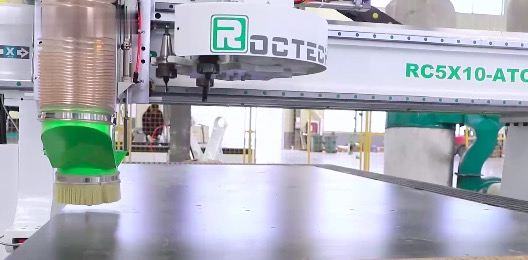
The following table summarizes typical technical parameters for mid-range ATC routers commonly deployed in plywood processing, contrasting the specifications of a standard model with a heavy-duty variant. The data illustrates the balance manufacturers must strike between speed, rigidity, and flexibility.
| Parameter | Standard ATC Router (e.g., RC1325S-ATC) | Heavy-Duty ATC Router (e.g., RCA1325) |
|--------------------------------|---------------------------------------------|-------------------------------------------|
| X/Y/Z Working Travel | 1300 × 2500 × 250 mm | 1220 × 2440 × 150 mm |
| Worktable Type | Vacuum + T-slot combination | Double-layer vacuum adsorption table |
| Positioning Accuracy | ±0.03 mm / 300 mm | High (not specified, heavy-duty bed) |
| Repeat Positioning Accuracy | ±0.03 mm | High (not specified) |
| Maximum Rapid Traverse Speed | 45000 mm/min | Not specified, servo-driven |
| Spindle Power | 9 kW (optional 6/12 kW) | 9.6 kW (higher optional) |
| Tool Magazine Capacity | 8 / 12 / 16 pieces | Not specified (focus on nesting) |
| Drive System | Yaskawa servo | Yaskawa servo |
| Control System | Taiwan Syntec | Taiwan Syntec |
| Typical Application Focus | Multi-process engraving, 3D work | Panel nesting, drilling, grooving |
Analysis of this data reveals a strategic divergence. The standard ATC router, such as the RC1325S-ATC, offers a larger Z-axis travel and higher rapid traverse speeds, making it suitable for a broader range of tasks, including light 3D relief work on thicker plywood or MDF. Its combination of vacuum and T-slot table provides flexibility for various workpiece sizes. In contrast, the heavy-duty nesting center (RCA series) prioritizes a robust, rigid structure and a specialized double-layer vacuum table designed for efficient sheet fixation and high-speed nested-based cutting. The choice between these systems depends on the primary workflow: job-shop flexibility versus optimized panel production.
Technical Applications and Brand Case Study
The implementation of ATC routers has profoundly impacted plywood processing workflows. In the production of cabinet doors, for instance, a single program can sequence a large-diameter cutter for rapid profile clearing, a smaller-diameter tool for intricate detailing, and a drill head for hardware holes—all without operator intervention. This automation not only reduces cycle time but also ensures consistent quality, as each tool change is executed with micron-level repeatability.
Furthermore, the integration of nesting software is paramount. Modern systems, like those offered by Roctech Machinery Co.,
Looking for more information about our CNC machines and services? Contact us today.
Contact