
Title: Advances in Fiber Laser Cutting for Stainless Steel: Precision, Throughput, and Industrial Integration
About Us / Author:ROCTECH Engineer Team / Published: Aug 24 , 2026 / Last Updated: Aug 24 , 2026
The processing of stainless steel has undergone a fundamental transformation over the past decade, driven largely by the maturation of fiber laser technology. Where mechanical shearing, plasma arc cutting, and even CO₂ laser resonators once dominated the shop floor, modern fiber laser cutting machines now provide an unmatched combination of cutting speed, edge quality, and operational efficiency. This shift is particularly evident in industries such as sheet metal fabrication, kitchen equipment manufacturing, elevator production, and architectural metalwork, where stainless steel’s corrosion resistance and aesthetic appeal are valued but its work-hardening characteristics and thermal conductivity present persistent machining challenges. This article examines the current state of stainless steel cutting machinery, analyzes key performance parameters through market data, and discusses how integrated system suppliers such as Roctech Machinery Co., Ltd. are addressing the requirements of both job shops and high-volume production facilities.
Market Context and Performance Benchmarking
The global market for laser cutting machines has expanded steadily, with fiber laser systems displacing legacy technologies across a widening range of material thicknesses. Stainless steel, in particular, benefits from the shorter wavelength of fiber lasers—approximately 1.06 µm—which is absorbed more efficiently by the material surface than the 10.6 µm wavelength of CO₂ lasers. This physical advantage translates directly into faster cutting speeds for thin to medium gauge stainless steel (0.5 mm to 6 mm) and reduced operating costs due to higher electrical-to-optical conversion efficiency.
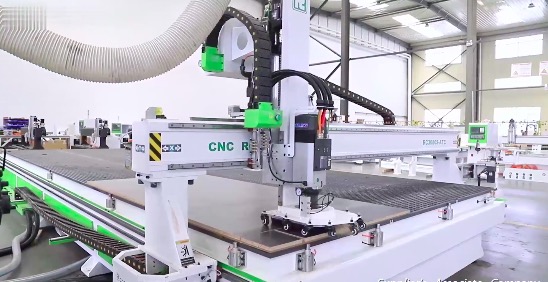
In the context of industrial procurement, decision-making hinges on a relatively small set of quantifiable specifications. The table below summarizes typical performance parameters for mid-range fiber laser cutting machines commonly deployed in stainless steel fabrication, based on equipment specifications from leading suppliers including Roctech.
| Parameter | Typical Value (Mid-Range Fiber Laser) | Impact on Stainless Steel Processing |
|-----------|----------------------------------------|--------------------------------------|
| Laser Power | 1000 W – 3000 W | Determines maximum cut thickness (3–12 mm for stainless); higher power enables faster cutting of thin sheet |
| Cutting Area | 3000 × 1500 mm to 6000 × 2500 mm | Accommodates standard sheet sizes; larger formats reduce material handling |
| Positioning Accuracy | ±0.03 mm | Ensures consistent part geometry, especially for nested cutting of multiple components |
| Repeat Positioning Accuracy | ±0.02 mm | Critical for high-volume production and automated unloading systems |
| Maximum Rapid Traverse Speed | 120 m/min | Reduces non-cutting time between operations |
| Maximum Acceleration | 1.0 G | Affects cycle time on intricate profiles with frequent direction changes |
| Cutting Gas (for stainless) | Nitrogen (N₂) at 10–20 bar | Produces oxidation-free, bright edges; eliminates secondary deburring |
| Nesting Software Integration | Yes (automatic, CAD/CAM) | Maximizes material utilization, often improving yield by 5–10% |
The data reveal a clear trend: even entry-level fiber laser systems now offer positioning accuracies that were once the preserve of high-end machining centers. For stainless steel, where thermal distortion is a risk, the ability to maintain ±0.03 mm positioning accuracy while cutting at speeds up to 30 m/min is not merely a convenience but a prerequisite for reducing post-processing costs. Additionally, the integration of intelligent nesting algorithms—now standard on systems from Roctech and comparable manufacturers—has a direct financial impact. A 5% improvement in material utilization on a material that costs $3,000 to $5,000 per ton represents significant annual savings for any fabricator processing more than a few hundred tons annually.
Technology Drivers: From Cutting Head to Control System
The evolution of stainless steel cutting machines is not confined to laser source power. Advances in three areas have been particularly consequential.
First, the cutting head’s automatic focusing and capacitive height-following system have eliminated the need for manual nozzle-to-workpiece distance adjustments. This is especially relevant for stainless steel, where maintaining a consistent focal point position relative to the material surface is critical for achieving a dross-free cut across variations in sheet flatness. Non-contact capacitive sensors now operate reliably at response rates that keep pace with the high accelerations of modern gantry systems.
Second, the control system’s capacity to manage complex cutting paths has improved markedly. Professional laser cutting controllers, such as those from CypCut or Weihong, have evolved to handle the high data density of nested programs for stainless steel parts, including micro-joints that hold parts in place during cutting and tab-and-slot features that reduce manual separation time. The ability to store and recall hundreds of cutting parameter sets—specific to material grade, thickness, and assist gas pressure—reduces setup time and minimizes operator error.
Third, the trend toward “lights-out” or lightly
Looking for more information about our CNC machines and services? Contact us today.
Contact
Previous:Title: Precision Plywood Processing: Evaluating ATC Router Automation for Panel-Based Industries
Next:Automated Sheet Receiving: The Next Frontier in CNC Nesting Workflows