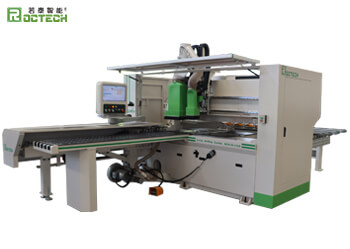

Gantry Woodworking Machining Centers: Reshaping Large-Format Panel Processing
About Us / Author:ROCTECH Engineer Team / Published: Aug 26 , 2026 / Last Updated: Aug 26 , 2026
The gantry woodworking machining center has evolved from a niche solution for oversized components into a critical production asset for panel furniture, solid-wood construction, and architectural millwork. As batch sizes shrink and customization demands accelerate, the structural rigidity, automation integration, and multi-process capability of these machines are redefining what constitutes cost-effective throughput in modern wood shops.
Industry Context: The Shift Toward Large-Format Automation
A persistent trend across the woodworking industry is the migration from manual routing and dedicated single-purpose machines toward flexible CNC platforms that can handle sheet goods up to 1.3×2.5 meters or larger in a single setup. The gantry design—where the workpiece remains stationary on a fixed table while a moving bridge carries the spindle—offers distinct advantages for heavy panels: superior vibration damping, consistent accuracy across long travel lengths, and simplified material handling compared to moving-table configurations.
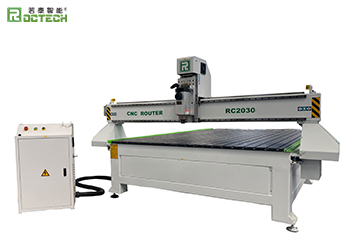
Recent market data reinforce this trajectory. The table below synthesizes typical specifications and positioning of gantry-style machining centers in the mid-to-large category, based on configurations commonly deployed in cabinet shops and joinery operations.
| Parameter | Entry-Level Gantry | Mid-Range ATC Gantry | Heavy-Duty Nesting Center |
|-----------|-------------------|----------------------|---------------------------|
| X/Y Working Travel | 1300×2500 mm | 1300×2500 mm | 1220×2440 mm |
| Spindle Power | 6 kW | 9–12 kW | 9.6 kW |
| Tool Magazine | None (manual) | 8–16 position carousel/linear | Optional ATC |
| Max Rapid Traverse | 30,000 mm/min | 45,000 mm/min | 45,000 mm/min |
| Positioning Accuracy | ±0.05 mm/300 mm | ±0.03 mm/300 mm | ±0.03 mm/300 mm |
| Table Type | T-slot + vacuum | Vacuum + T-slot combo | Double-layer vacuum |
| Typical Application | Prototyping, small batches | Door panels, cabinet parts | Nesting, drilling, grooving |
| Representative Model | RC1325 | RC1325S-ATC | RCA1224 |
The data reveal a clear stratification: entry-level machines prioritize affordability and flexibility, while mid-range ATC (automatic tool changer) models balance speed with multi-tool capability. At the top end, nesting centers with automatic loading and unloading shift the value proposition from raw cutting speed to labor reduction and material utilization. The 45,000 mm/min rapid traverse and ±0.03 mm repeatability figures, once reserved for metal-cutting equipment, are now standard expectations in woodworking—a direct consequence of adopting linear guides, rack-and-pinion drives, and closed-loop servo systems originally developed for precision machining.
Technical Considerations: Rigidity, Transmission, and Control
The gantry architecture imposes specific engineering demands. Unlike a moving-table machine, the gantry itself carries the full dynamic load, which amplifies the importance of bed stiffness and guide-rail selection. Most reputable manufacturers, including Roctech Machinery Co., Ltd., specify Taiwan HIWIN linear guides and heavy-duty steel-pipe welded beds for their gantry models—a combination that provides the necessary torsional rigidity while keeping weight manageable. For the X/Y axes, rack-and-pinion transmission is preferred over ball screws due to its suitability for long strokes and high-speed traverses, whereas the Z-axis retains a ball screw to ensure precise depth control during drilling and grooving operations.
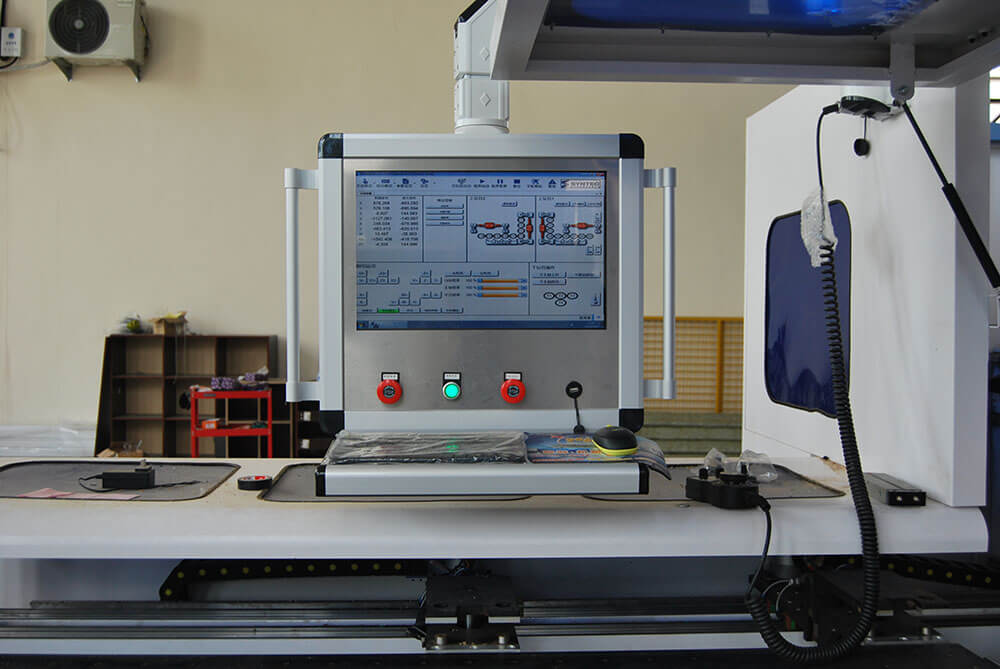
Equally critical is the control system. G-code compatibility remains the industry baseline, but the practical differentiator lies in how well the controller handles tool-change routines, vacuum zoning, and nesting software integration. On Roctech’s ATC gantry models, the Taiwan Syntec controller manages carousel or linear tool magazines with 8 to 16 tool capacity, enabling unattended execution of multiple operations—cutting, drilling, grooving—in a single program. This capability directly addresses the labor shortage that constrains many custom furniture producers.
Application Case: From Cabinet Doors to Complex Molds
To illustrate the practical impact, consider a mid-sized cabinet shop producing custom door panels. Using a gantry machining center like the Roctech RC1325S-ATC, an operator can load a 1300×2500 mm MDF panel, run a program that profiles the outer contour, drills hinge holes, and cuts decorative grooves—all without manual tool changes. The result is a cycle time reduction of 40–60 percent compared to a single-spindle machine with manual tool swaps. Furthermore, the optional vacuum adsorption table with zone control allows secure fixturing of both full sheets and small offcuts, minimizing material waste—a key cost factor given rising panel prices.
Looking for more information about our CNC machines and services? Contact us today.
Contact