
Turn-Mill Centers in the Post-Mass-Customization Era: Bridging Wood, Foam, and Light Alloy Machining
About Us / Author:ROCTECH Engineer Team / Published: Sep 06 , 2026 / Last Updated: Sep 06 , 2026
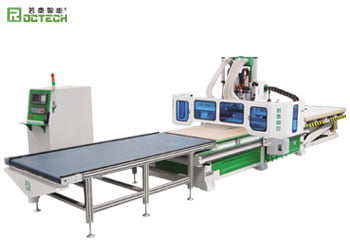
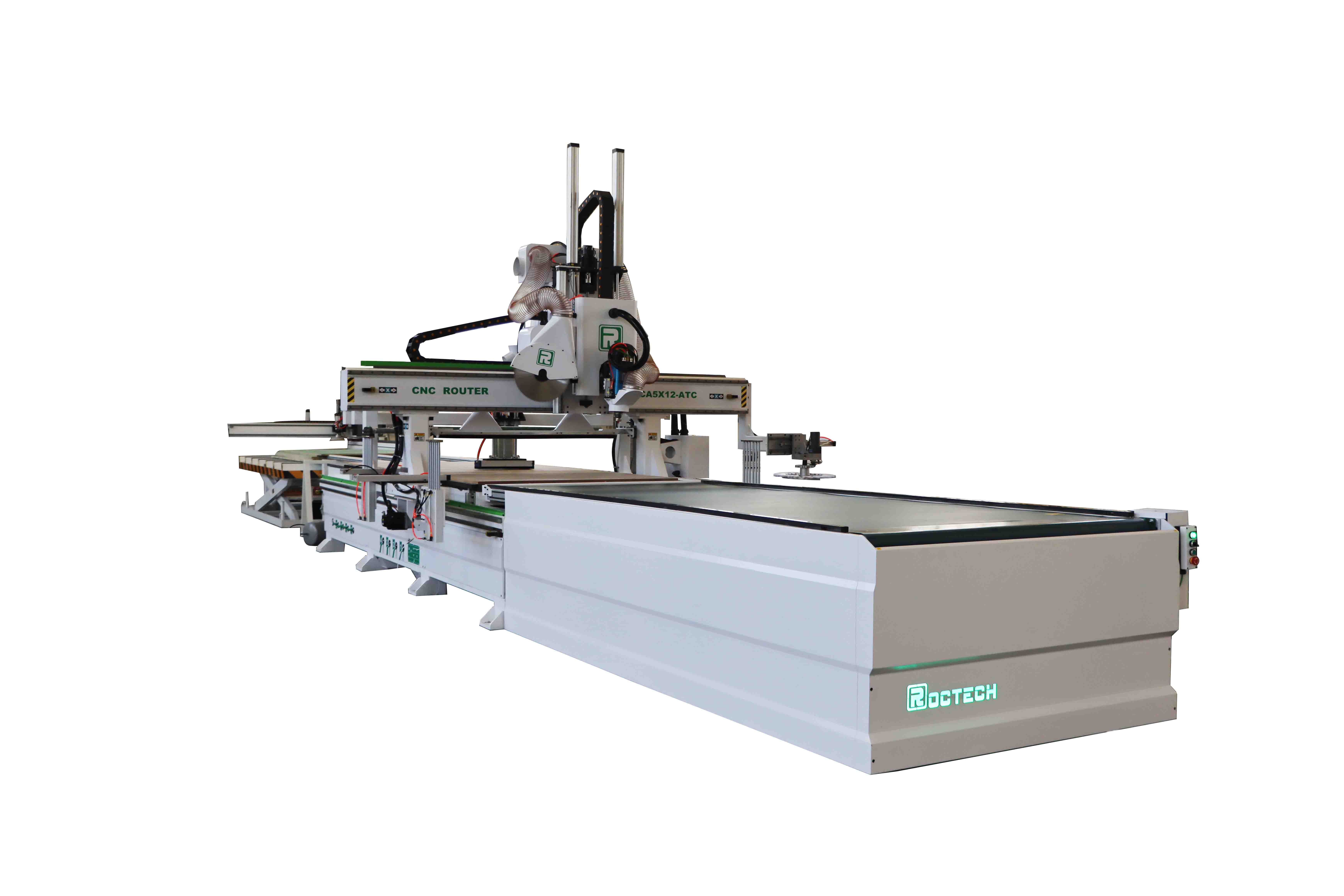
The modern fabrication landscape is drifting away from the paradigm of dedicated, single-purpose machinery. For decades, the woodworking and signage industries operated on a linear model: a nested router for profiling, a separate drilling center for dowels, and often a manual or semi-automatic line for edge finishing. That model is fracturing. The pressure to deliver mass-customized panel furniture, complex mold geometries, and high-mix/low-volume batches has compelled manufacturers to seek a higher degree of process consolidation. While the term “turn-mill center” traditionally belongs to the metalworking realm—implying a lathe with live tooling and a milling spindle—the functional equivalent in the composite, wood, and non-ferrous sector is the advanced ATC (Automatic Tool Changer) machining center with rotary-axis capability. These machines are no longer merely routers; they are turning, milling, and boring centers capable of completing a part in a single clamping.
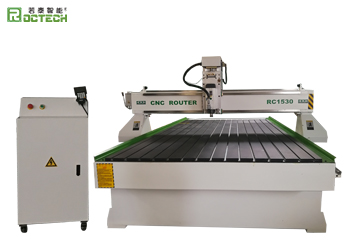
This convergence is not incidental. It is a direct response to statistical pressure within the industry regarding labor costs and throughput. Consider the operational data regarding machine configuration and market demand for multi-process centers, particularly those capable of handling cylindrical or contoured workpieces alongside flat sheet processing. The table below illustrates the shifting preference toward multi-axis, tool-changed configurations over the last five years in the Chinese export market, a segment that heavily influences global pricing and capability benchmarks.
| Configuration Type | 2020 Export Share (%) | 2025 Export Share (%) | Average Unit Price (USD) | Primary Application | Growth Driver |
| :--- | :--- | :--- | :--- | :--- | :--- |
| 3-Axis Standard Router | 62 | 41 | 8,500 | Flat sheet cutting, basic engraving | Saturation in basic signage market |
| ATC Router (4-Axis/4+1) | 28 | 39 | 18,200 | Complex cabinet doors, mold machining | Need for reduced manual tool setting |
| Turn-Mill/Rotary Machining Center | 4 | 11 | 34,500 | Staircase columns, cylindrical components, 3D relief | Labor shortage for manual lathe/CNC transfer |
| Five-Axis Simultaneous | 6 | 9 | 58,000 | Aerospace molds, solid wood sculpture | Demand for seamless undercuts |
The data reveals a clear trajectory: the growth segment is not in raw processing speed, but in capability convergence. Manufacturers are willing to absorb a 2x increase in capital expenditure (moving from a standard 3-axis to a 4-axis ATC or turn-mill center) if it eliminates the labor bottleneck associated with secondary operations. Specifically, the 11% share for turn-mill/rotary configurations in 2025, up from a mere 4%, indicates a market realization that cylindrical parts—such as table legs, balusters, and handrail spindles—should not be processed on a flat-bed machine with a bolt-on rotary indexer that requires constant re-zeroing. Instead, the market is moving toward integrated solutions where the tool magazine and the rotary axis communicate seamlessly.
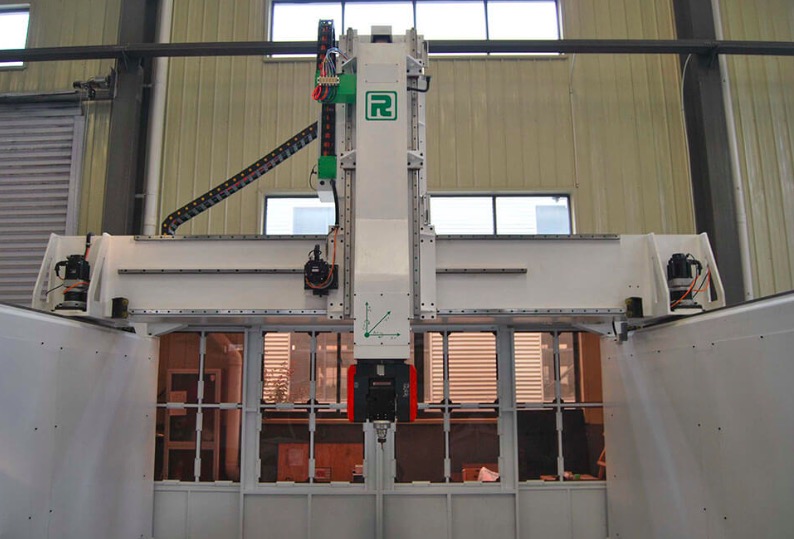
In this context, the technical architecture of the machine becomes the differentiator. A true turn-mill center for the wood/foam sector must possess a rigid, high-torque spindle (9.0kW or higher) capable of both high-speed routing (24,000 RPM for finish passes) and low-speed, high-torque turning operations. The rigidity of the bed is paramount. Unlike pure metal cutting, wood and foam generate massive amounts of dust and exert variable cutting forces, particularly when machining knots or resin pockets. This demands a heavy-duty welded structure—similar to those found in gantry machining centers—rather than a simple aluminum extrusion frame. Furthermore, the synchronization between the C-axis (rotary) and the Y-axis (vertical) must be near-flawless to produce smooth, non-faceted surfaces on curved profiles.
Leading equipment manufacturers have recognized that the value proposition lies in the control system and software integration rather than just the iron. For instance, Roctech Machinery Co., Ltd. has positioned its higher-end series to directly address this "turn-mill" requirement without compromising on the specific needs of the wood and composite industry. Their RC1325RH-ATC model, a four-axis simultaneous unit, exemplifies how a manufacturer can transition from simple engraving to true multi-sided machining. By integrating a servo-driven rotary axis with an 8-position carousel tool magazine, operators can rough out a cylindrical stair spindle, automatically switch to a profiling tool for the detail, and then utilize a ball-nose end mill for a finishing pass—all without manual intervention. This effectively transforms a
Looking for more information about our CNC machines and services? Contact us today.
Contact
Previous:Five-Axis CNC Solutions for Rail Transit Mold Machining
Next:Precision Verification Protocols for CNC Engraving Equipment: A Practical Framework