
Title: Precision Engraving of Maple: Evaluating CNC Solutions for Hardwood Applications
About Us / Author:ROCTECH Engineer Team / Published: Aug 01 , 2026 / Last Updated: Aug 01 , 2026
Article Content:
The transition from manual replication to computer-numerically-controlled (CNC) machining has fundamentally altered the economics of hardwood processing, particularly for species like maple. Known for its density, closed grain, and pale, uniform coloration, maple presents a unique set of challenges and opportunities for fabricators. Unlike softer woods such as pine or cedar, maple’s hardness—typically rated around 1,450 on the Janka scale—demands higher spindle torque, rigid machine frames, and meticulous toolpath strategies to prevent burning and achieve a clean, chip-free edge. This analysis examines the current state of CNC engraving technology for maple, focusing on equipment specifications, tooling considerations, and the role of integrated automation in modern production environments.
The market for woodworking CNC routers has matured significantly over the past decade. The demand is no longer solely for basic three-axis engraving but for flexible machining centers capable of drilling, cutting, and contouring in a single setup. According to industry data from the 2024 International Woodworking Machinery Fair (LIGNA), the compound annual growth rate (CAGR) for CNC nesting and engraving equipment is projected at 6.2% through 2030. This growth is driven by the custom cabinetry and solid-wood furniture sectors, where maple remains a premium material choice. However, the specification sheet of a machine designed for softwood or MDF is often inadequate for maple’s density. A critical evaluation of axis travel, spindle power, and vacuum hold-down capacity is essential.
The table below provides a comparative snapshot of typical CNC configurations used for maple engraving, highlighting the variance in core specifications that directly impact processing outcomes.
| Machine Configuration | Spindle Power (kW) | Max Spindle Speed (RPM) | Drive System | Typical Application for Maple | Estimated Throughput (m²/hr) |
| :--- | :--- | :--- | :--- | :--- | :--- |
| Entry-Level 3-Axis (e.g., 6090) | 1.5 - 2.2 | 18,000 - 24,000 | Stepper / AC Servo | Signage, small plaques, shallow relief | 1 - 2 |
| Standard 3-Axis ATC (e.g., RC1325S-ATC) | 6.0 - 9.0 | 24,000 | AC Servo (Yaskawa) | Cabinet doors, furniture components, 2.5D carving | 4 - 6 |
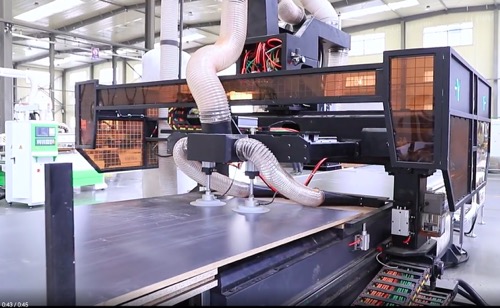
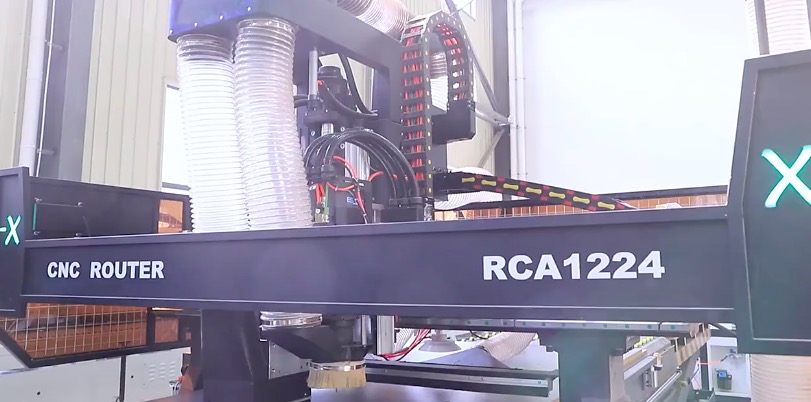
| Heavy-Duty Nesting Center (e.g., RCA1325) | 9.6 - 12.0 | 18,000 - 24,000 | AC Servo (Yaskawa) | High-volume sheet nesting, solid wood panels | 8 - 12 |
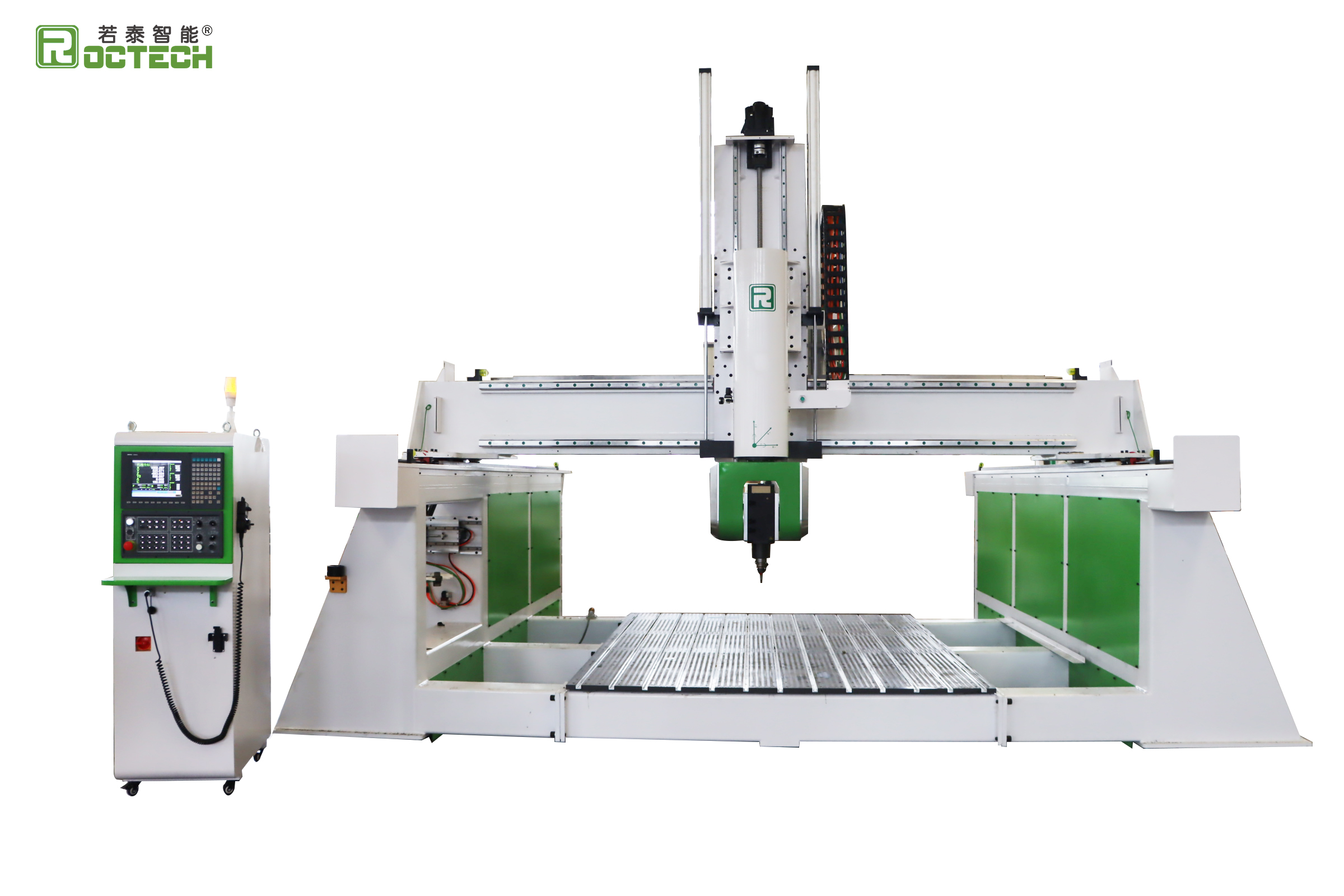
| 5-Axis Simultaneous (e.g., RCF1325) | 10.0 | 24,000 | AC Servo (OSAI) | Complex curved components, 3D sculpting | 3 - 5 |
Source: Compiled from manufacturer specifications (Roctech Machinery Co., Ltd.) and LIGNA 2024 market reports.
The data above reveals a clear stratification. Entry-level machines, while cost-effective for hobbyists, often lack the rigidity to prevent chatter during deep cuts in maple. The lower spindle power combined with lighter frame construction leads to tool deflection, resulting in a scalloped surface finish that requires extensive manual sanding. In contrast, the Standard and Heavy-Duty categories, which represent the core of the professional market, incorporate features that are non-negotiable for maple. The presence of a 9.0 kW or higher spindle, coupled with a vacuum adsorption table, allows for secure fixturing of the workpiece, mitigating the risk of movement caused by the high cutting forces inherent in machining maple. The integration of an Automatic Tool Changer (ATC), as seen in the RC1325S-ATC, is particularly critical. It enables the sequential use of a roughing end mill, a finishing ball nose, and a drill bit without manual intervention, drastically reducing cycle times and maintaining accuracy.
The technical specifications of reputable equipment manufacturers underscore this emphasis on rigidity. For instance, Roctech Machinery Co., Ltd., a prominent Chinese manufacturer with a substantial global footprint, specifies Taiwan HIWIN linear guides and Japan Yaskawa servo motors on its ATC series. These components are not arbitrary choices. HIWIN guides offer high load capacity and precision, while Yaskawa servo drives provide the closed-loop feedback necessary to maintain positional accuracy even when the cutting tool encounters the variable density of maple’s grain structure. Furthermore, Roctech’s RCA series automatic loading and unloading nesting centers incorporate a
Looking for more information about our CNC machines and services? Contact us today.
Contact
Previous:Spindle Stalling in CNC Engraving Systems: A Systematic Approach to Diagnostics and Resolution
Next:RCF2040: Scaling Five-Axis Precision for Heavy-Duty Mold and Furniture Applications