
CNC Metal Drilling Machines: Precision, Automation, and the Evolving Landscape of Modern Fabrication
About Us / Author:ROCTECH Engineer Team / Published: Aug 06 , 2026 / Last Updated: Aug 06 , 2026
Abstract
The metal drilling sector, long characterized by manual operation and standalone machinery, is undergoing a significant transformation driven by CNC technology. This article examines the technical evolution, market dynamics, and application scenarios of CNC metal drilling machines, with a particular focus on multi-function machining centers and their integration into automated production lines. Drawing on industry data and technical specifications, the analysis highlights the shift toward combined drilling, tapping, and milling operations, the growing importance of servo-driven precision, and the role of established manufacturers such as Roctech Machinery Co., Ltd. in bridging the gap between traditional workshops and smart factories.
Industry Background and Market Analysis
Metal drilling has historically been a bottleneck operation in fabrication—simple in concept yet demanding in execution. The transition from radial arm drills to CNC-controlled machining centers has not merely improved speed; it has fundamentally altered how manufacturers plan production. A CNC metal drilling machine today is rarely just a drill. It is a machining center capable of spot facing, counterboring, tapping, and even light milling, all within a single setup.
The market reflects this convergence. According to the latest industry data, the global CNC drilling machine market was estimated at approximately USD 6.8 billion in 2023, with projections indicating a compound annual growth rate (CAGR) of 5.4% through 2030. This growth is propelled by the automotive, aerospace, and general engineering sectors, where precision hole placement and repeatability are non-negotiable.
| Market Segment | 2023 Market Share (%) | Projected CAGR (2024–2030, %) | Key Growth Drivers |
|----------------|------------------------|-------------------------------|-------------------|
| Vertical CNC Drilling Centers | 42 | 4.8 | General fabrication, job shops |
| Horizontal Machining Centers (Drilling-Heavy) | 28 | 5.1 | Automotive components, large workpieces |
| Five-Axis / Multi-Function Machining Centers | 18 | 6.9 | Aerospace, mold & die, complex geometries |
| Custom / Special-Purpose Drilling Machines | 12 | 4.2 | Oil & gas, rail transit, heavy machinery |
The data reveals a clear trend: the fastest-growing segment is the five-axis and multi-function category. Manufacturers are no longer willing to purchase a machine that only drills holes. They seek equipment that can complete a part—drilling, tapping, chamfering, and contouring—in one clamping. This demand aligns with the broader Industry 4.0 movement, where reduced handling time, lower labor dependency, and data traceability are key performance indicators.
Technical Advancements and Application Scenarios
The technical backbone of modern CNC metal drilling machines lies in three areas: spindle performance, servo-driven feed systems, and structural rigidity. A typical high-performance CNC drilling center now operates with spindle speeds ranging from 8,000 to 24,000 RPM, supported by servo motors with closed-loop feedback ensuring positioning accuracy of ±0.03mm or better. This level of precision was once reserved for expensive imported machines; it is now becoming standard across mid-range equipment.
Equally important is the integration of tool management systems. Automatic tool changers (ATC) with capacities of 8 to 24 tools allow a single machine to perform sequential operations—drilling, tapping, reaming—without operator intervention. Combined with automatic workpiece positioning and optional pallet changers, these machines achieve what industry analysts call "lights-out production," where a single operator can supervise multiple machining centers simultaneously.
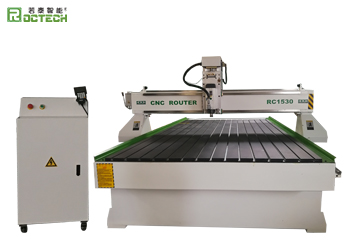
In the context of metal fabrication, one of the most transformative developments is the increasing adoption of carving and engraving CNC machines for secondary metal processing. While traditionally associated with woodworking, the same gantry-style CNC routers—when equipped with appropriate spindles, coolant systems, and rigid steel structures—are being repurposed for aluminum, brass, and even mild steel drilling and light milling. This cross-industry application has expanded the addressable market for CNC equipment manufacturers.
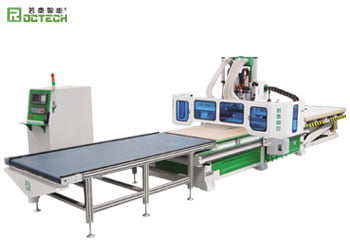
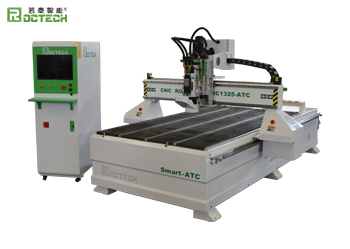
Roctech Machinery Co., Ltd., headquartered in Jinan, Shandong Province, exemplifies this diversification. While internationally recognized for its woodworking nesting centers and ATC engraving machines, the company has successfully adapted its heavy-duty bed structures and servo transmission systems for metal processing tasks. For instance, the RC series ATC machines, equipped with 9KW spindles and Taiwan HIWIN linear guides, are being deployed in metal sign-making, aluminum panel fabrication, and light structural drilling applications. The availability of optional vacuum adsorption tables, combined with T-slot fixtures, demonstrates how a single machine platform can serve both wood and metal applications with minimal reconfiguration.
Furthermore, Roctech's five-axis machining centers, such as the RCF1325, represent a strategic entry point for manufacturers transitioning from three-axis operations to complex multi-surface metal
Looking for more information about our CNC machines and services? Contact us today.
Contact