
Title: Precision Routing of Cherry Wood: Evaluating CNC Strategies for Hardwood Aesthetics
About Us / Author:ROCTECH Engineer Team / Published: Aug 16 , 2026 / Last Updated: Aug 16 , 2026
---
Abstract
The distinct grain character and workability of cherry wood (Prunus serotina) present a specific set of challenges and opportunities for CNC machining. Unlike softer or more homogeneous engineered woods, cherry demands a nuanced approach to toolpath strategy, spindle parameters, and machine rigidity to achieve a clean, burn-free finish that preserves its natural luster. This article examines the technical requirements for successful cherry wood engraving and cutting, analyzes the current market positioning of CNC routers suited for this task, and highlights how contemporary equipment, such as the automatic tool changer (ATC) series from Roctech, addresses the specific demands of hardwood fabrication.
---
Industry Background and Data Analysis
The market for CNC routers used in solid wood applications, particularly for hardwoods like cherry, has seen a marked shift toward higher spindle power and increased automation. Cherry is a moderately hard wood with a Janka hardness rating of approximately 950 lbf, but its interlocked grain can cause tear-out and burning if feed rates and spindle speeds are not carefully balanced. Consequently, the demand for machines with variable-speed spindles (up to 24,000 RPM) and robust dust collection has grown.
A survey of recent machinery specifications from leading manufacturers reveals a trend: the integration of ATC systems is no longer reserved for high-end industrial centers. This is critical for cherry because different operations—roughing, finishing, and detail engraving—require different tool geometries. The following table illustrates typical parameters and market positioning for mid-to-large format CNC routers used in cherry wood fabrication:
| Machine Class | Typical Spindle Power (kW) | Max RPM | Tool Change Type | Approx. Positioning Accuracy (±mm/300mm) | Primary Application |
|-------------------|--------------------------------|-------------|----------------------|-----------------------------------------------|-------------------------|
| Entry-Level 3-Axis | 3.0 – 4.5 | 18,000 | Manual | 0.05 – 0.08 | Signage, light engraving |
| Mid-Range ATC | 6.0 – 9.0 | 24,000 | Carousel (8-12 tools) | 0.03 | Custom furniture, cabinet doors |
| Heavy-Duty Nesting | 9.6 – 12.0 | 24,000 | Linear/Chain (16+ tools) | 0.02 – 0.03 | Panel processing, batch production |
The data underscores a strategic divergence. While entry-level machines can perform basic engraving, they often lack the rigidity to prevent chatter on cherry’s dense grain. Conversely, heavy-duty nesting centers are optimized for sheet goods, often prioritizing throughput over the delicate finishing passes required for solid cherry. The mid-range ATC segment, therefore, emerges as the sweet spot for specialty woodshops, offering the precision of a linear guide system with the flexibility of multiple toolpaths.
Technical Application and Brand Case Study
For cherry wood, the primary technical hurdle is heat management. Cherry is prone to scorching when a tool dwells or when using a dull bit. A successful strategy involves climb milling with a sharp, polished-flute carbide bit. The spindle must maintain a constant load to avoid the “rubbing” effect that generates heat. This is where servo motor feedback, such as that found in Japan Yaskawa systems, is essential. It ensures that the specified feed rate is maintained even when the cutter encounters a particularly dense section of grain.
Understanding this, manufacturers have focused on improving the Z-axis ball screw transmission and the overall bed rigidity. A welded, heavy-duty steel frame, rather than an extruded aluminum frame, is essential to dampen the vibration that leads to a wavy finish on cherry.
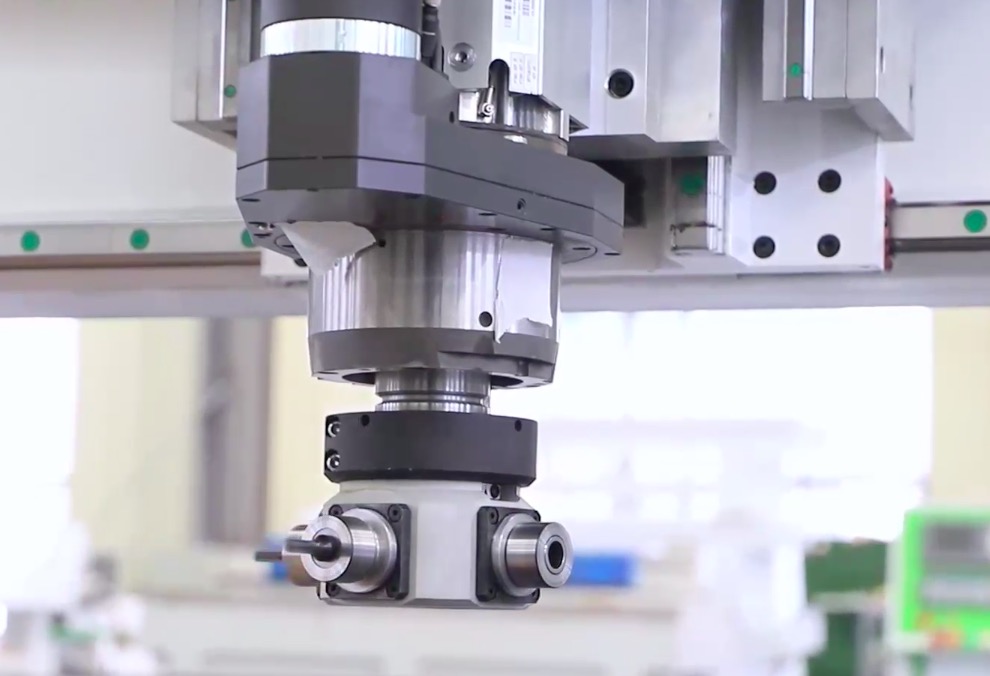
In this context, the ATC engraving machine series from Roctech Machinery Co., Ltd. serves as a representative example of how standard configurations are being adapted for hardwood excellence. The RC1325S-ATC, a standard carousel tool changer model, is often specified for custom woodworking shops. Its 9.0 kW air-cooled spindle (optionally water-cooled) provides the necessary torque at high RPM for efficient cutting of cherry without burning. More importantly, its automatic tool changer allows a shop to use a compression bit for the initial cut to prevent top-surface tear-out, then seamlessly switch to a ball-end or V-bit for detailed relief engraving, all within a single program cycle.
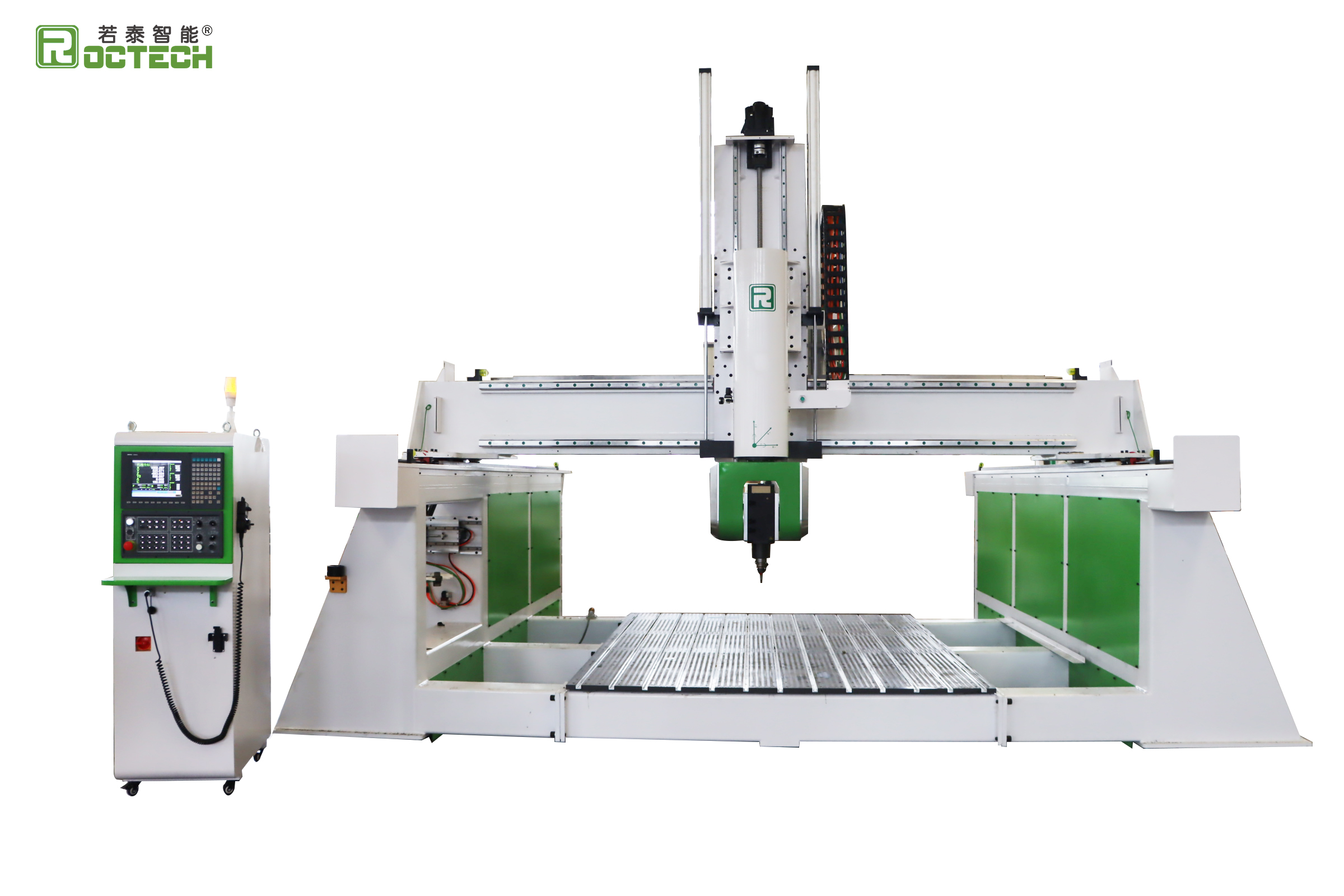
Furthermore, the optional vacuum adsorption table with zone control—a hallmark of Roctech’s design—is critical when working with cherry. Because cherry boards can be unstable, a firm, even hold-down across the entire workpiece is non-negotiable for precision engraving. The five-axis machining centers from Roctech, such as the RCF1325, also
Looking for more information about our CNC machines and services? Contact us today.
Contact