
Automation Reshapes Panel Processing: Insights from the Suzhou Furniture Fair
About Us / Author:ROCTECH Engineer Team / Published: Aug 25 , 2026 / Last Updated: Aug 25 , 2026
The Suzhou International Furniture Fair, held each summer at the Suzhou International Expo Centre, has long served as a barometer for China’s panel furniture sector. While the show floor is dominated by veneers, hinges, and hardware fittings, the most telling signals this year came from the machinery halls. A quiet but decisive shift is underway—away from standalone CNC routers and toward integrated, automated production cells. For manufacturers of custom cabinets, wardrobes, and flat-pack office furniture, the question is no longer whether to automate, but how deeply and at what pace.
Industry Data and Market Context
The custom furniture segment in China has grown at a compound annual rate of roughly 12% since 2020, driven by urbanization and a generational preference for tailored interiors. This demand has placed enormous pressure on small and mid-sized workshops: they must deliver high-variety, low-volume batches with the same precision and speed once reserved for mass production. The response, as evidenced at Suzhou, is a rapid adoption of nesting centers, automatic tool changers (ATC), and six-sided drilling machines.
| Equipment Type | Positioning Accuracy (mm) | Max Rapid Traverse (m/min) | Typical Operator Load | Approx. Investment Range (USD) |
|---|---|---|---|---|
| Standard 3-axis CNC Router | ±0.05 | 30 | 1 operator per machine | 8,000 – 25,000 |
| ATC Machining Center | ±0.03 | 45 | 1 operator per 1–2 machines | 15,000 – 45,000 |
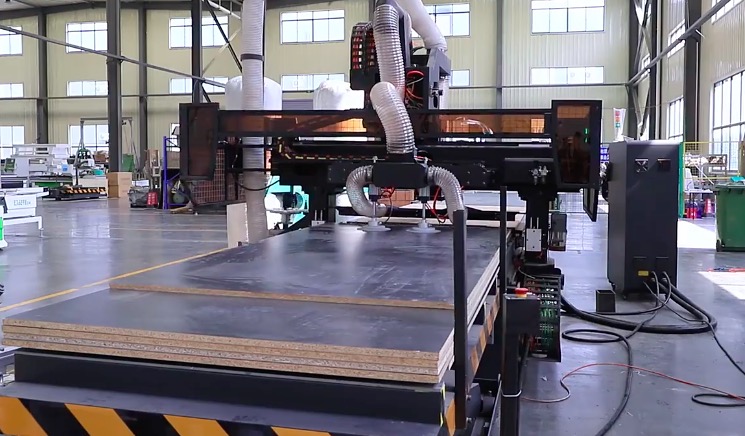
| Auto Loading/Unloading Nesting Center | ±0.03 | 60 | 1 operator per 3–4 machines | 40,000 – 90,000 |
| Six-Sided CNC Drilling Center | ±0.02 | 80 (drilling) | 1 operator per 2–3 machines | 35,000 – 70,000 |
The table above, compiled from exhibitor specifications and industry procurement data, illustrates a clear trade-off. A standard three-axis router remains the entry point, but its manual loading, tool changing, and part offloading quickly become bottlenecks as order complexity rises. The ATC machining center reduces tool-change downtime, yet still requires an operator to stage panels and remove finished parts. The most significant productivity leap—and the one generating the most foot traffic at Suzhou—is the automatic loading and unloading nesting center. By integrating sheet feeding, vacuum clamping, nested cutting, drilling, and labeling into a single cycle, these systems cut direct labor by 60–70% for typical cabinet door production. The six-sided drilling center, meanwhile, addresses the secondary bottleneck of dowel and connector hole machining, eliminating the need for a separate horizontal boring machine and reducing part handling errors.
Technology Applications and Brand Case Study
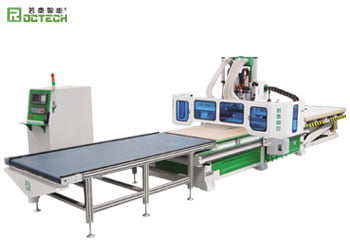
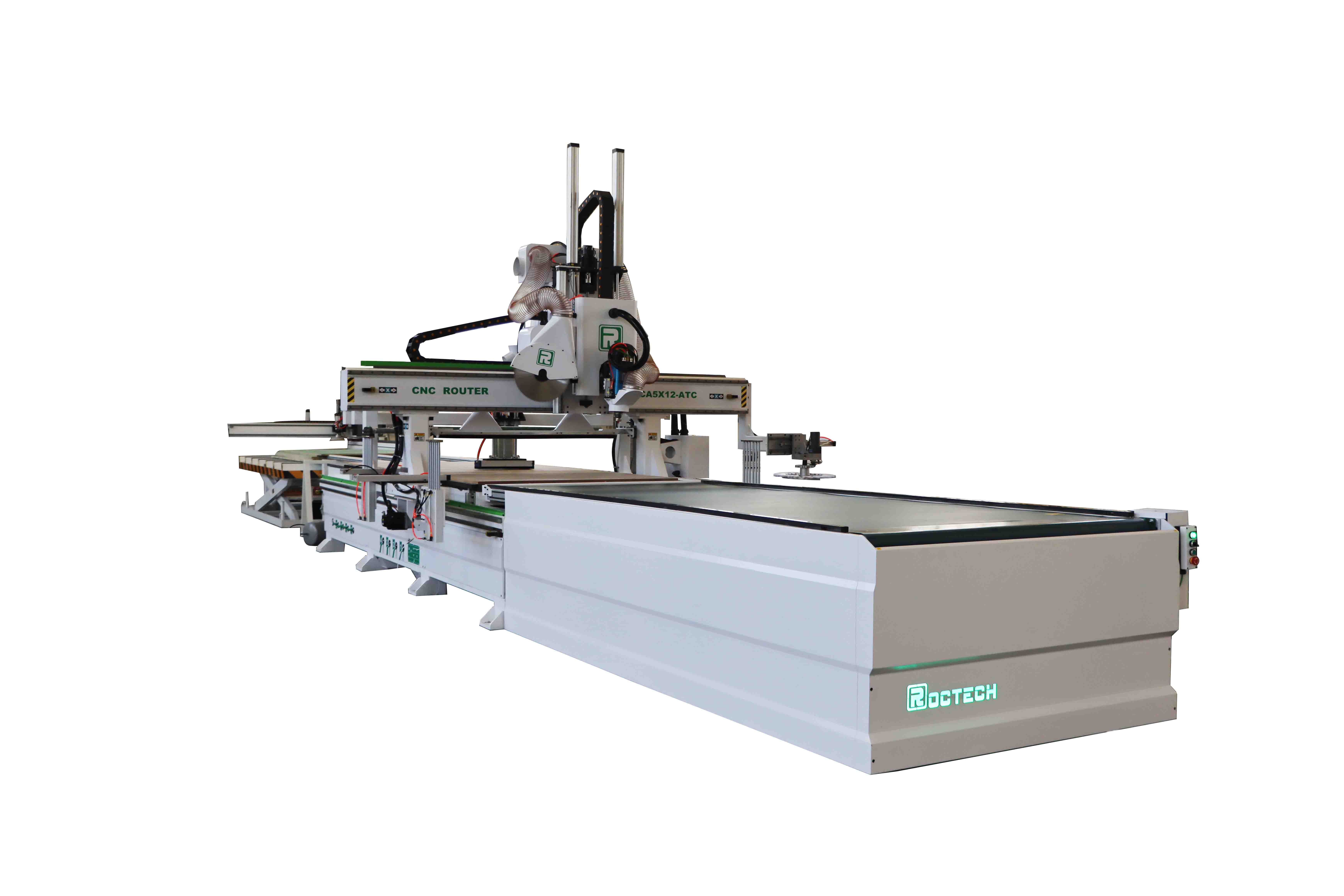
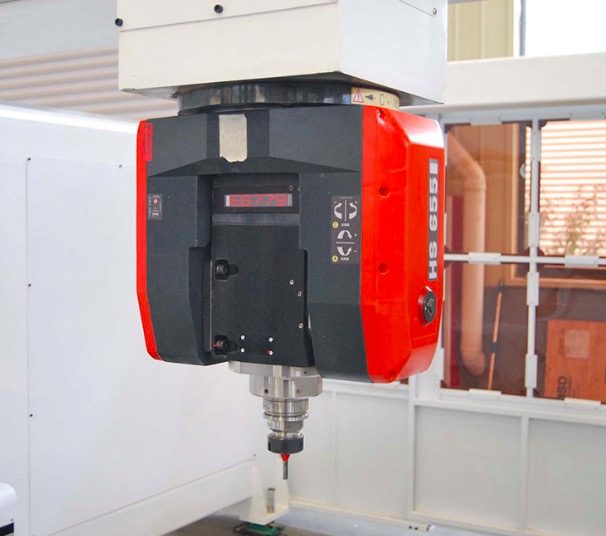
The practical implications of these technologies were demonstrated prominently by Roctech Machinery Co., Ltd., which showcased its RCA series automatic nesting center and a standalone ATC router at the fair. Roctech, a Jinan-based manufacturer with exports to over 100 countries, positioned its RCA1224 model as the workhorse for custom cabinet shops transitioning from manual layouts. The machine’s twin-station vacuum table and integrated row drill group allow a single operator to run a full cutting and drilling cycle on 18mm MDF panels without touching the workpiece. During a live demonstration, a standard 1220×2440mm sheet was loaded, nested into fourteen cabinet components, drilled, and labeled in under eleven minutes—a task that would conventionally require two operators and nearly forty minutes on separate machines.
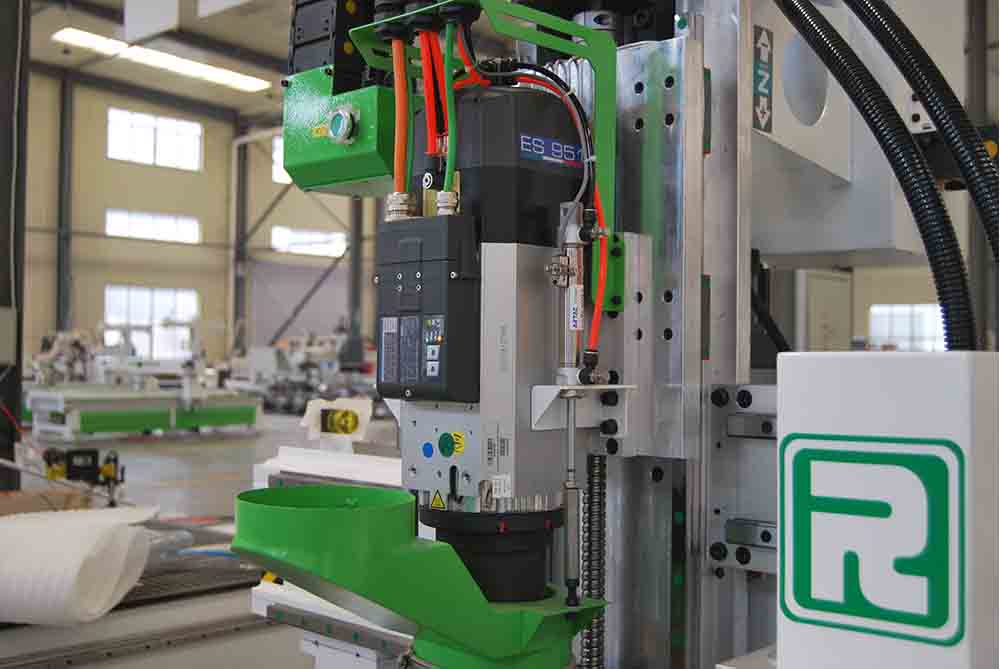
Roctech’s presence at Suzhou also underscored a broader trend: the commoditization of high-end components. The RCA series employs Taiwan HIWIN linear guides, Japan Yaskawa servos, and either Italian HSD or domestic spindles, all standard in the industry. What differentiates a system like Roctech’s is the software integration. The controller, based on the Taiwan Syntec platform, accepts G-code from mainstream nesting software such as Haixun and Chenfeng, enabling seamless data flow from design to finished panel. The optional automatic labeling system, which prints and applies a QR code to each cut part, directly feeds downstream six-sided drilling machines, closing the loop between cutting and assembly preparation. This is not merely incremental improvement; it is a reconfiguration of the workshop floor around data, not just steel and spindles.
Conclusion and Outlook
The Suzhou Furniture Fair confirmed that the center of gravity in panel processing has shifted from raw spindle power to system orchestration. For manufacturers, the decision matrix now includes software compatibility, automation integration, and after-sales response as heavily as it does travel speed and spindle horsepower. Roctech’s emphasis
Looking for more information about our CNC machines and services? Contact us today.
Contact