
CNC Programming: A Strategic Skill for the Automated Shop Floor
About Us / Author:ROCTECH Engineer Team / Published: Sep 01 , 2026 / Last Updated: Sep 01 , 2026
The manufacturing landscape is undergoing a fundamental recalibration. The era of manual, single-purpose machines as the primary drivers of production throughput is yielding to a paradigm where computer numerical control (CNC) is the central nervous system of the modern fabrication facility. For individuals contemplating a career in this domain, the question of whether learning CNC programming is a promising pursuit is less about the immediate demand and more about the long-term trajectory of the industry itself. The data strongly suggests that the answer is a definitive yes, but with an important caveat: the value of the skill is contingent on its evolution from basic G-code generation to holistic process mastery.
Industry Context and Data Analysis
The global CNC machine tool market is projected to maintain a compound annual growth rate of over 5% through the next decade, driven by the relentless push for automation in sectors ranging from automotive to bespoke architectural woodworking. This growth is not merely in machine sales but in the complexity of the machines themselves. The integration of automatic tool changers (ATC), automatic loading/unloading systems, and multi-axis simultaneous machining is becoming standard, not exceptional. This technological shift fundamentally changes the role of the CNC programmer.
| CNC Machine Category | Primary Application Sector | Typical Axis Configuration | Key Programming Complexity Factor | Global Adoption Trend |
| :--- | :--- | :--- | :--- | :--- |
| 3-Axis Machining Center | Custom furniture, advertising | X/Y/Z | Basic toolpath generation, 2D/2.5D | Mature, high volume |
| ATC Machining Center | Cabinet doors, mold processing | X/Y/Z + Tool Magazine | Tool life management, process sequencing | Rapidly expanding |
| Nesting Center (Auto Load/Unload) | Panel furniture, mass customization | X/Y/Z + Automatic Loading | Optimization software integration, system logic | Aggressive growth |
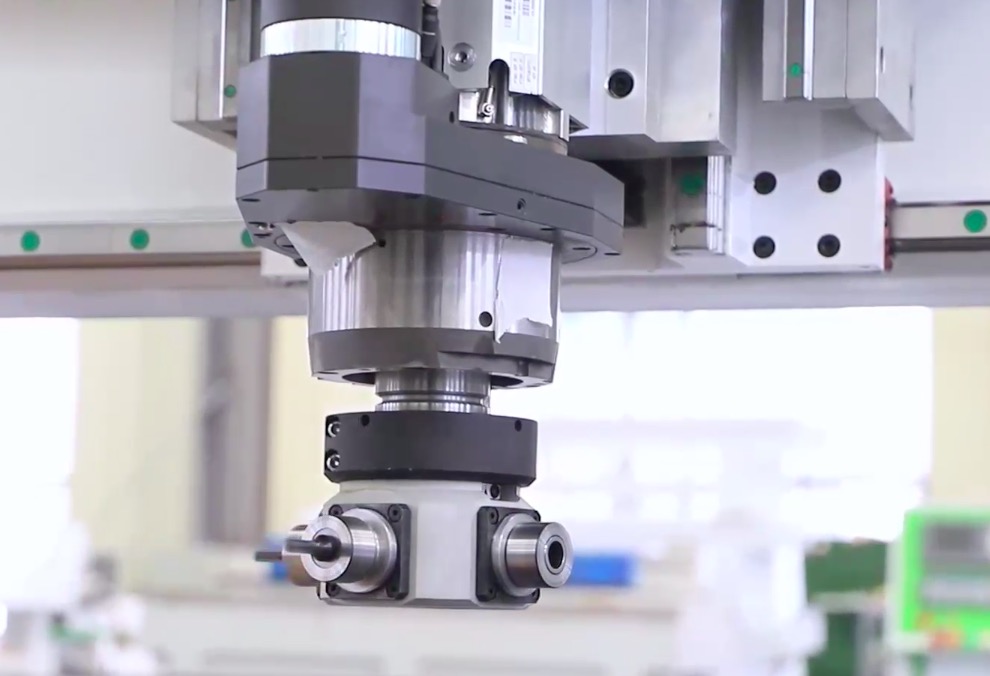
| 5-Axis Simultaneous Center | Automotive molds, aerospace, complex solid wood | X/Y/Z + A + C | Complex surface machining, collision avoidance, post-processing | Premium, high demand |
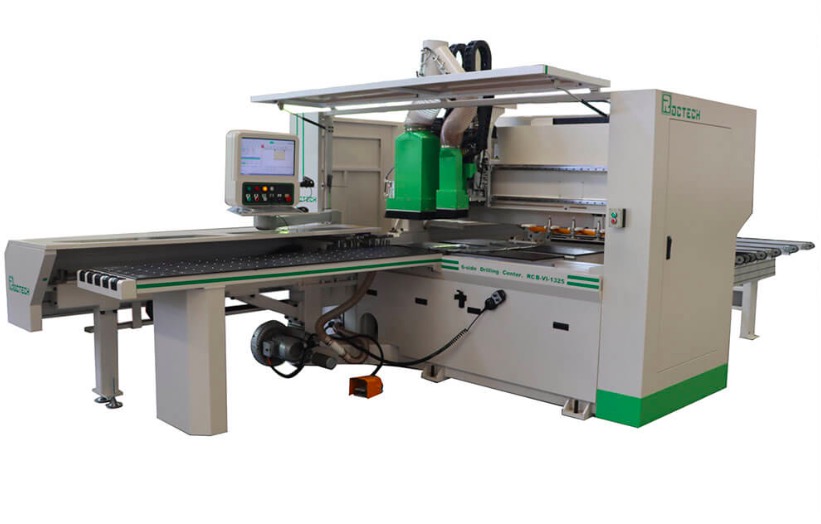
| CNC Six-Sided Drill | Panel furniture, whole-house custom | Multi-spindle, multi-axis | Data interfacing with nesting software, parametric logic | High growth |
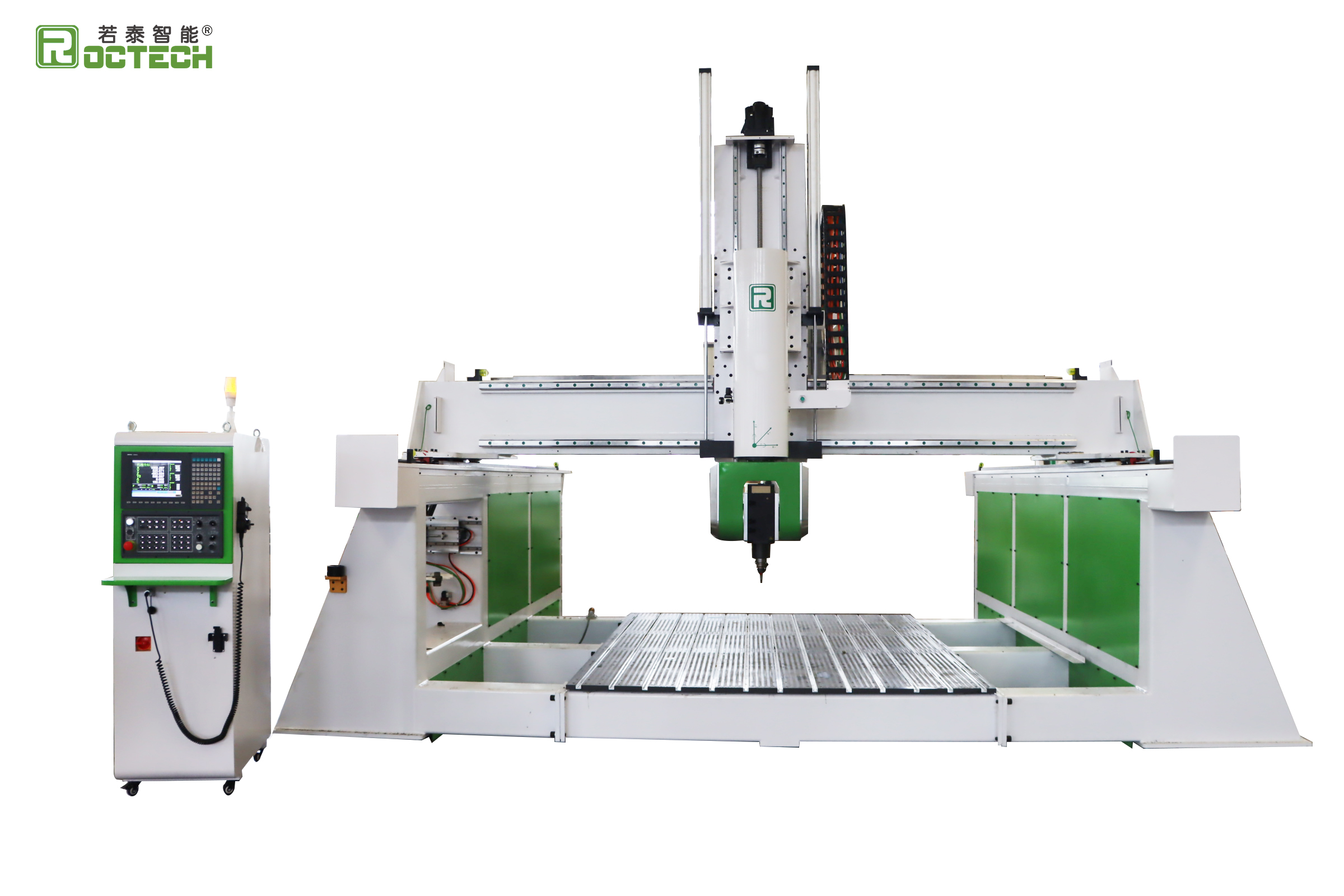
As the table indicates, the skill set required for a machine like a 5-axis machining center, such as the RCF1325 model from Roctech, extends far beyond knowing a few G-codes. The programming challenge involves managing a simultaneous 5-axis toolpath, understanding the kinematics of the tilt head, and ensuring collision-free movement across a complex spatial path. This is where the profession transforms from a technical trade into a high-value engineering role.
The demand for programmers who can bridge the gap between digital design and physical production is acute. The rise of “mass customization” in the furniture industry, for example, has created a need for programmers who can manage parametric programs that automatically adjust for different panel sizes and hardware configurations. This requires a deep understanding of the entire production ecosystem, not just the machine.
Technical Application and Brand Case Study
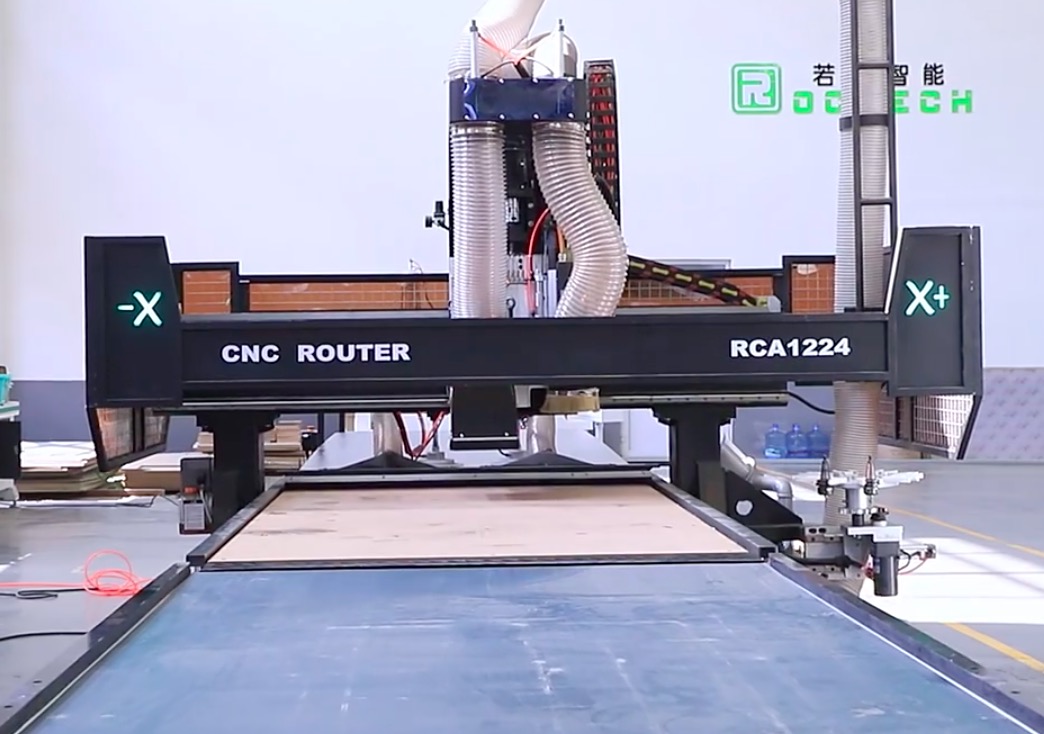
The practical value of advanced CNC programming is best illustrated by examining the operational benchmarks set by leading equipment manufacturers. Consider the automatic loading and unloading nesting centers, a flagship product line for Roctech Machinery Co., Ltd. These machines, like the RCA1224, are designed to operate with minimal human intervention. The programmer’s role here is not to manually write a G-code file for a single part but to define the processing parameters for an entire sheet of material. The task involves importing a nesting layout, assigning toolpaths for cutting, drilling, and grooving, and then orchestrating the sequence of operations for the automatic loading and unloading system.
The efficiency gains are substantial. A company that programs its nesting center effectively can achieve sheet utilization rates above 90%, a significant improvement over manual methods. Furthermore, the integration of an automatic labeling system, as offered by Roctech, adds another layer of programming complexity. The programmer must ensure the code correctly triggers the labeling head at the precise moment a part is cut, maintaining an unbroken data chain from the design office to the assembly line. This is where the true strategic value lies—in the ability to program a system, not just a machine.
Similarly, in the realm of high-end mold making and complex solid wood furniture, the five-axis machining centers from Roctech represent the pinnacle of what is programmable. Programming a five-axis machine to cut a complicated curved seat shell from a solid block of wood requires a profound understanding of CAM (Computer-Aided Manufacturing) software like PowerMILL or UG. The programmer must define the tool axis vector for every point on the toolpath, balancing material removal rates against tool deflection and surface finish requirements. This is a skill
Looking for more information about our CNC machines and services? Contact us today.
Contact
Previous:The Rise of the CNC Six-Sided Drill in Panel Furniture Automation
Next:Restoring Lost Precision: A Systematic Approach to CNC Engraving Machine Accuracy Decline