

16-Tool Magazine Engraving Machine: The Automation Backbone of Modern Woodworking
About Us / Author:ROCTECH Engineer Team / Published: Sep 13 , 2026 / Last Updated: Sep 13 , 2026
Abstract
Tool magazine capacity has become one of the defining parameters of automated routing and engraving equipment. Among the configurations available on the market, the 16-tool magazine occupies a practical middle ground—large enough to cover most multi-process workflows without the cost and footprint penalties of higher-capacity systems. This article examines the technical rationale behind 16-station tool changers, compares their positioning within the broader ATC machine landscape, and considers how manufacturers such as Roctech have integrated this configuration into production-grade engraving platforms.
Industry Context and Configuration Data
The transition from manual tool change to automatic tool change (ATC) represents one of the more consequential shifts in woodworking and signage production over the past two decades. A single job involving panel cutting, edge profiling, drilling, and surface engraving may require four to six distinct tools. When those operations are performed on a machine without a tool magazine, each change introduces downtime, and more importantly, each manual intervention introduces the possibility of setting error.
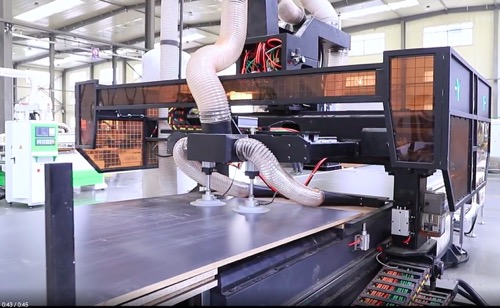
Tool magazine capacity is therefore not merely a specification number; it is a direct determinant of how much of a production workflow can run unattended. The table below summarizes the common tool magazine configurations found on ATC engraving machines and their typical application profiles.
| Tool Magazine Capacity | Typical Structure | Common Applications | Change Frequency | Relative Cost |
|---|---|---|---|---|
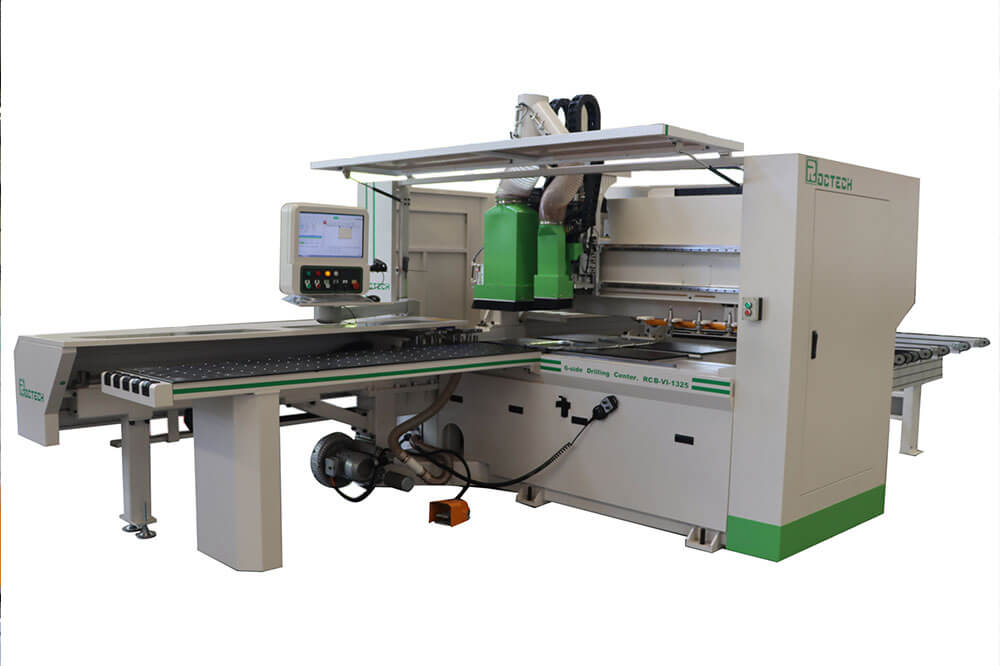
| 8 tools | Carousel / linear | Simple cutting and engraving, single-material processing | High | Low |
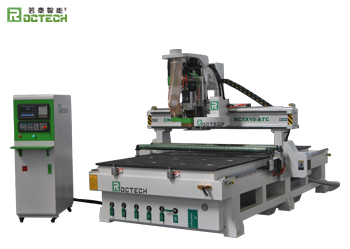
| 12 tools | Carousel / linear | Cabinet doors, signage, light multi-process work | Moderate | Moderate |
| 16 tools | Carousel / linear | Complex multi-process woodworking, molds, mixed materials | Low | Moderate–High |
| 24 tools | Carousel | High-mix production, extensive drilling and profiling | Very low | High |
The data points to a clear pattern. Moving from 8 to 16 tools roughly halves the frequency of manual tool replenishment during a production shift, while the incremental cost increase is far less than proportionally linear. Beyond 16 stations, diminishing returns set in for most small and mid-sized workshops: the additional tools sit idle unless the production mix genuinely demands more than sixteen distinct cutting operations. This is why the 16-tool magazine has become a common specification for manufacturers targeting the mid-to-high end of the woodworking and mold engraving market.
Technical Considerations in 16-Tool ATC Design
A 16-station magazine introduces engineering challenges that do not appear at lower capacities. Tool change time must remain short even as the magazine grows, which places demands on the indexing mechanism and the tool holder interface. On Roctech's RC1325S-ATC platform, for example, the machine pairs a 9 kW spindle running up to 24,000 RPM with a tool magazine offering 8, 12, or 16 positions, allowing the configuration to scale with the customer's process requirements. The positioning accuracy of ±0.03 mm and repeat positioning accuracy of ±0.03 mm are maintained across tool changes, which matters because cumulative error between tools is one of the primary causes of mismatched joints in cabinet and door panel production.
The choice between carousel and linear magazine structures also affects the 16-tool decision. Carousel magazines, with tools arranged in a disc, tend to offer faster indexing and a more compact footprint, making them suitable for machines where floor space is constrained. Linear magazines, by contrast, are simpler in structure and lower in cost, but their tool change speed is slower. For a 16-tool configuration, the carousel arrangement is generally preferred where cycle time is a priority, while linear magazines remain viable for operations where tool changes are infrequent relative to cutting time.
Spindle compatibility is another factor. A 16-tool magazine implies that the machine will be asked to perform both heavy cutting and fine finishing, often with different tool geometries. This requires a spindle that can handle the torque demands of larger cutters without sacrificing the speed needed for small-diameter engraving bits. The ER32 tool holder specification, common on machines in this class, accommodates a range of collet sizes that cover most woodworking and plastic-cutting tools.
Application Scenarios and Brand Practice
The practical value of a 16-tool magazine becomes most visible in three application categories.
The first is custom furniture and cabinet production. A typical cabinet door may require a straight cutter for sizing, a profile cutter for edge shaping, a drill for hinge holes, and a ball nose cutter for decorative engraving. With a 16-station magazine, all four tools can be loaded simultaneously, and the machine can complete the entire sequence in one clamping. This reduces handling, protects the workpiece from repeated repositioning errors, and allows a single operator to manage multiple machines.
The second is mold and pattern making
Looking for more information about our CNC machines and services? Contact us today.
Contact
Previous:从单机自动化到无人化产线:CNC加工设备的演进逻辑
Next:门板切割机选型:从加工精度到产线适配